West and South of France 2025
Starting back in Lyon, we traveled west in the steps of Eleanor of Aquitaine and then South to Andorra, and east to Marseilles. Our trip was a blend of medieval and ancient. We visited popular favorites like Avignon, and less traveled to (at least by US tourists) sites like Poitiers.
This page will be a little different due to the nature of the trip. I’m combining more stuff since we had a lot less time in each location. But I’ll do my best, as always!
Lyon and West
Did you know you can take a train directly from CDG airport in Paris to the Lyon train station? We started there, wandered over to the Abbaye d’Hautecombe, and then over towards Poitiers. It was a busy first couple of days where we were mostly trying to head across France. But we made to stop and check out some of the most interesting religious sites I’ve been to in France.
Something that I noticed during this trip is how different the churches of France can be, since many of them were stripped of much of their interior. It makes the space seem extra large.
Another interesting thing about this trip is that we technically traveled between countries. Many of the places we visited had been part of their own kingdoms or duchies with their own leadership that had changing relationships with “France” as a political entity. It was particularly noticeable in the first few days since we went through multiple of these regions.
The First Three Days
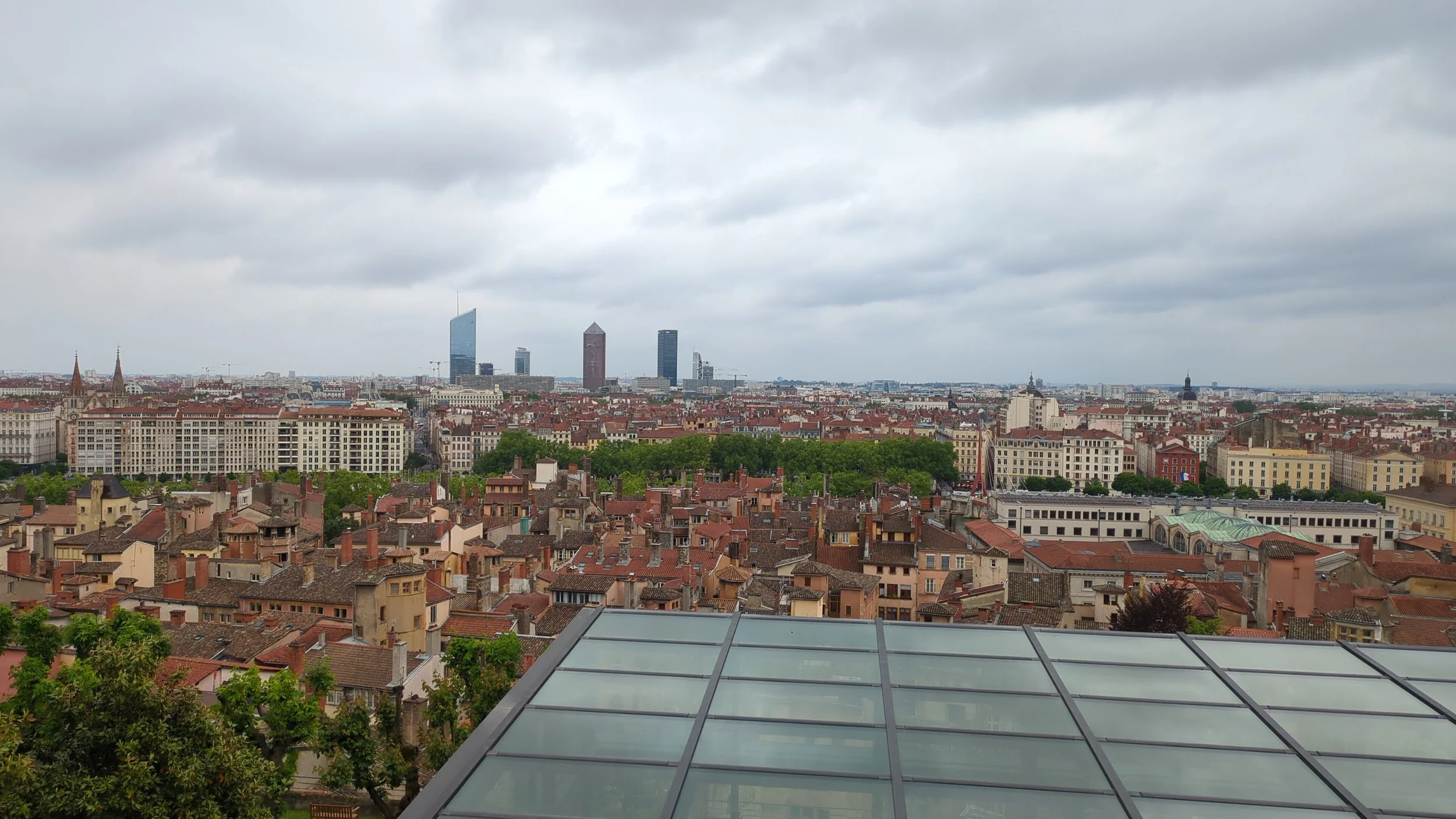
Okay, honesty first. We started off the trip, after our night in Lyon, heading East. We didn’t really have much time in Lyon (though I’ll tell you about our new favorite hotel in Lyon at the end) but it was an excellent starting and ending point. We stayed at the Radisson Blu (also known as Le Crayon or the Pencil due to its shape) which has an excellent location within walking distance of the train station. Excellent views from the rooms and the restaurant. We enjoyed our time there, but it will be much easier to get to once all the construction is done.
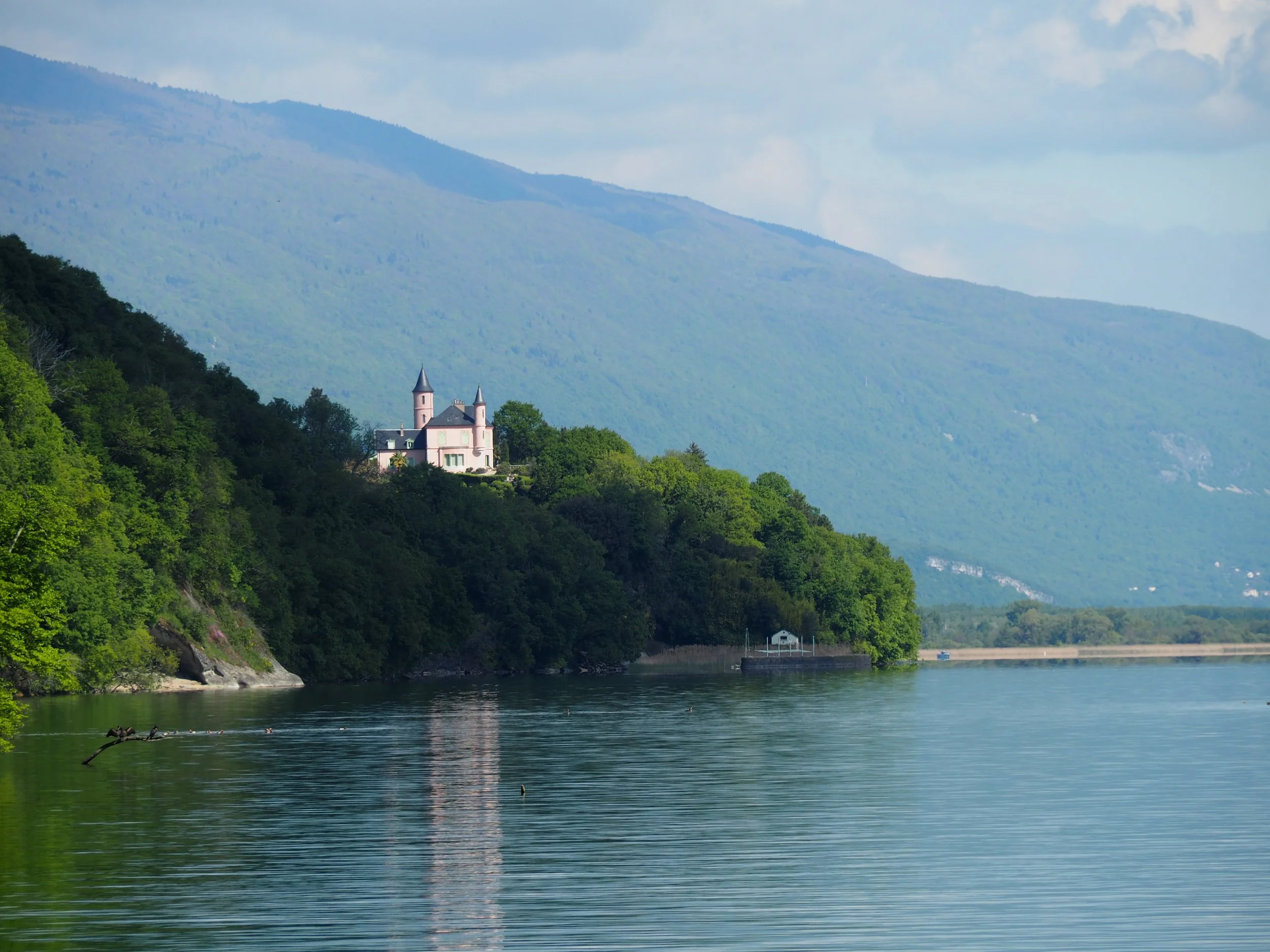
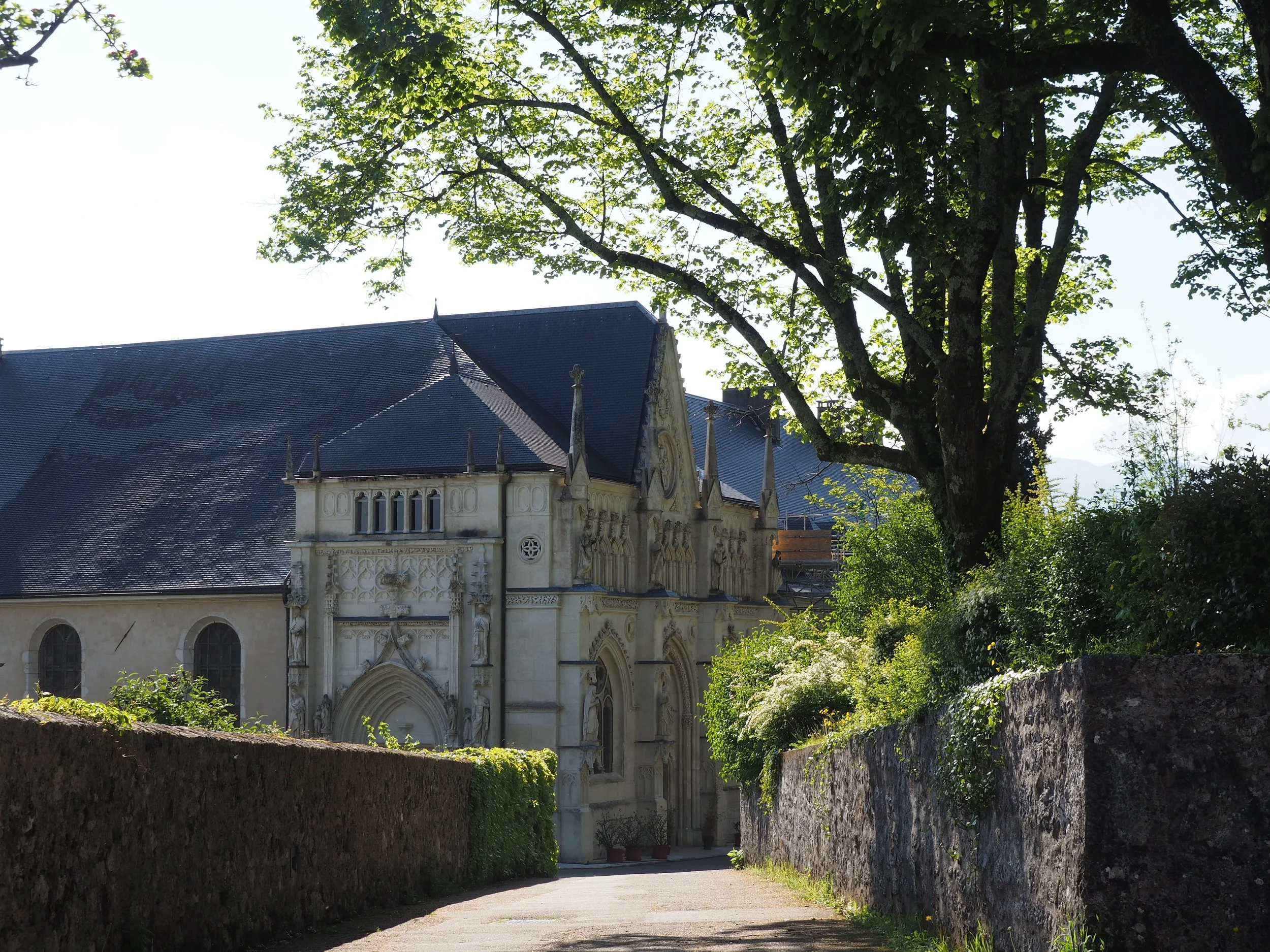
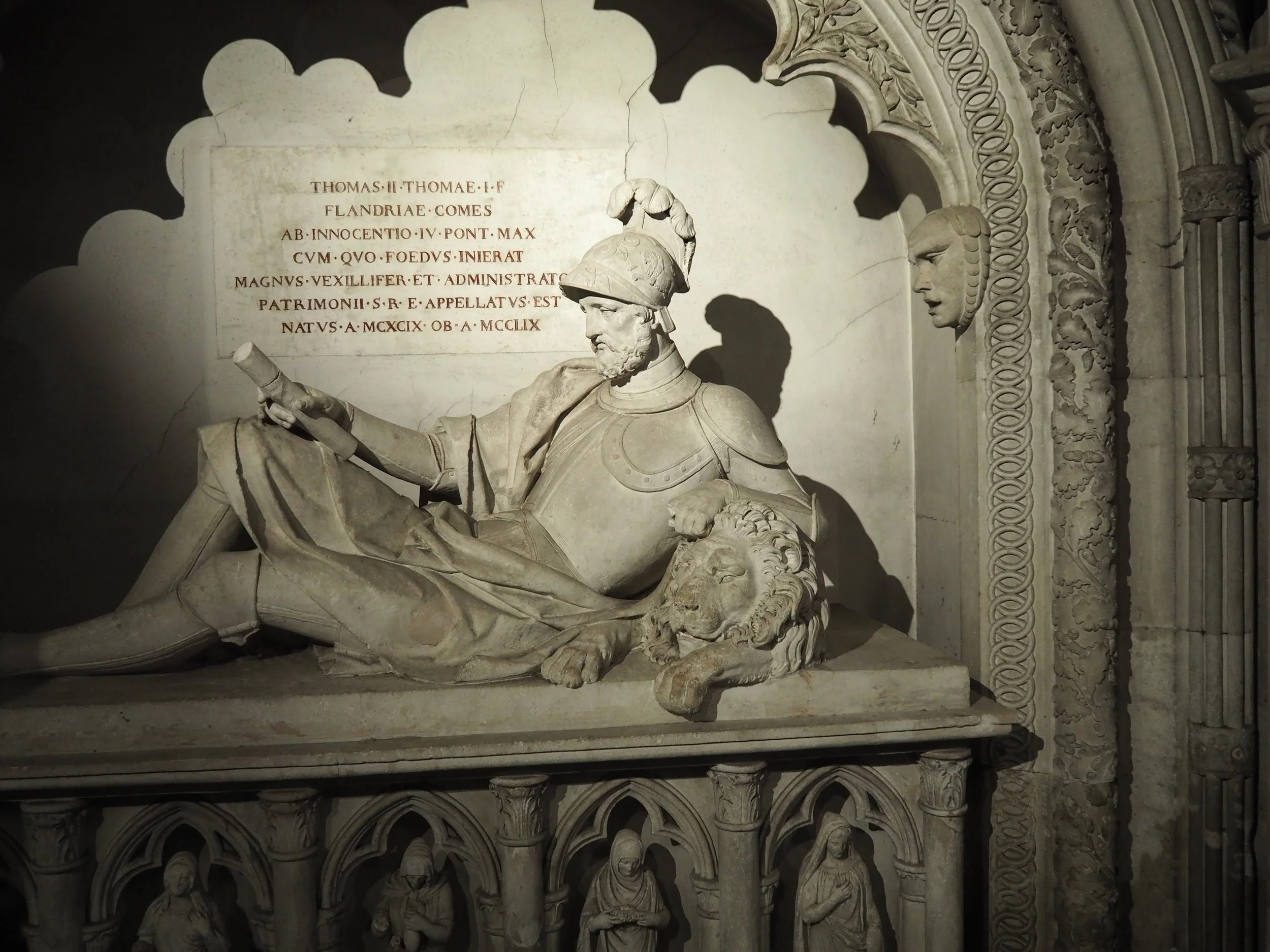
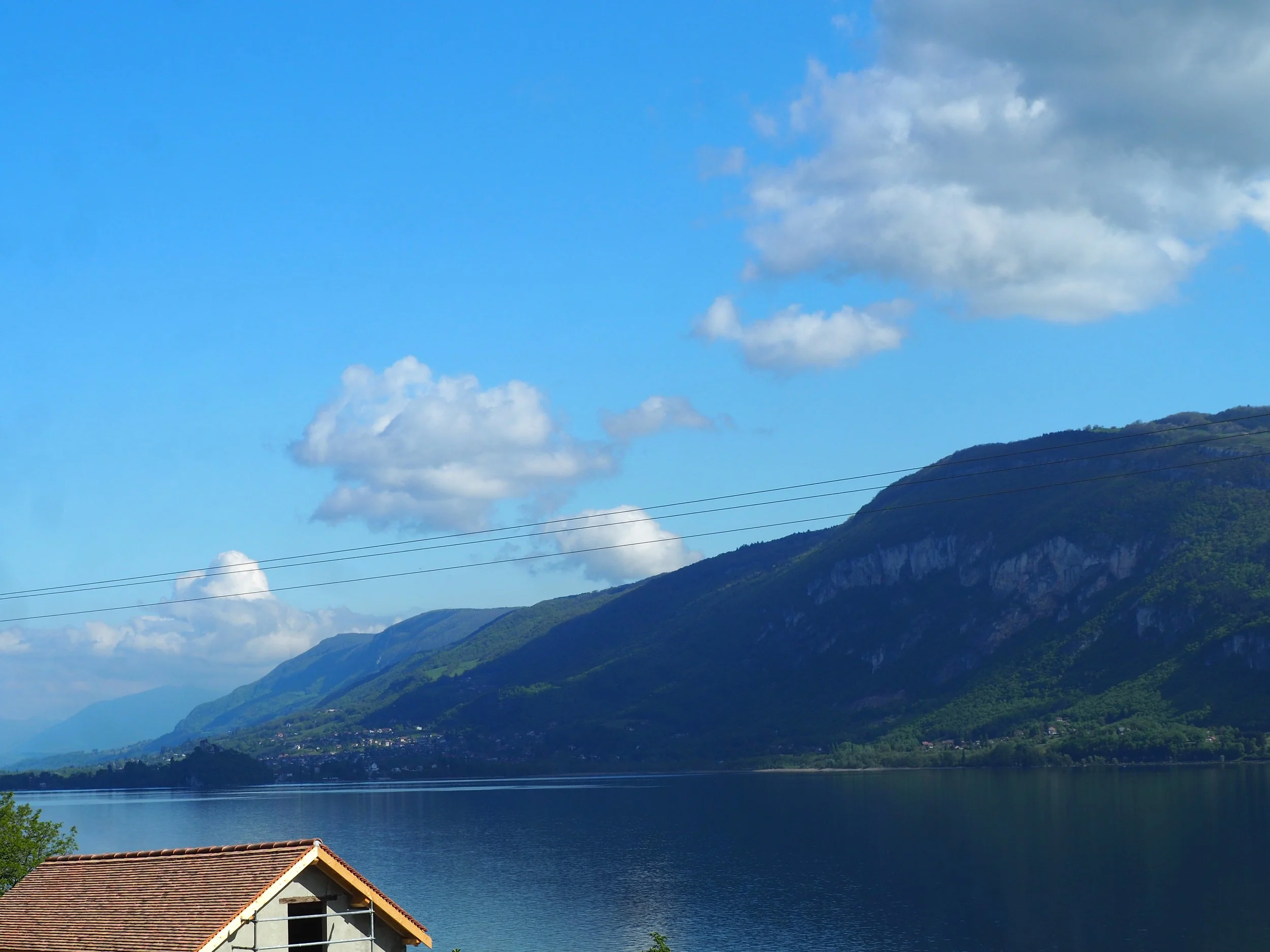
As I just said, we actually started off the next day heading East. We were heading to Abbaye d’Hautecombe. I found this Abbaye when we were taking the train from Annecy to Geneva. It’s located on Lac d’Bourget. It was the location for the burial of the Counts of Savoy. It was founded in the 1100’s and restored around 1750. It homes a number of burials dating from the 1200s through the 1600s. It also houses the last king and queen of Sardinia. Small world. Much of the decoration had fallen into disrepair over the years, so what is visible is a mix of restored and original. The excellent audio guide you can get at the entrance is quite worth listening to and will tell you what is what, and who is whom. It’s also just lovely ground. It’s right along the lake and you can take a boat there during the summer. They sell a delicious sparkling wine, which I highly recommend.
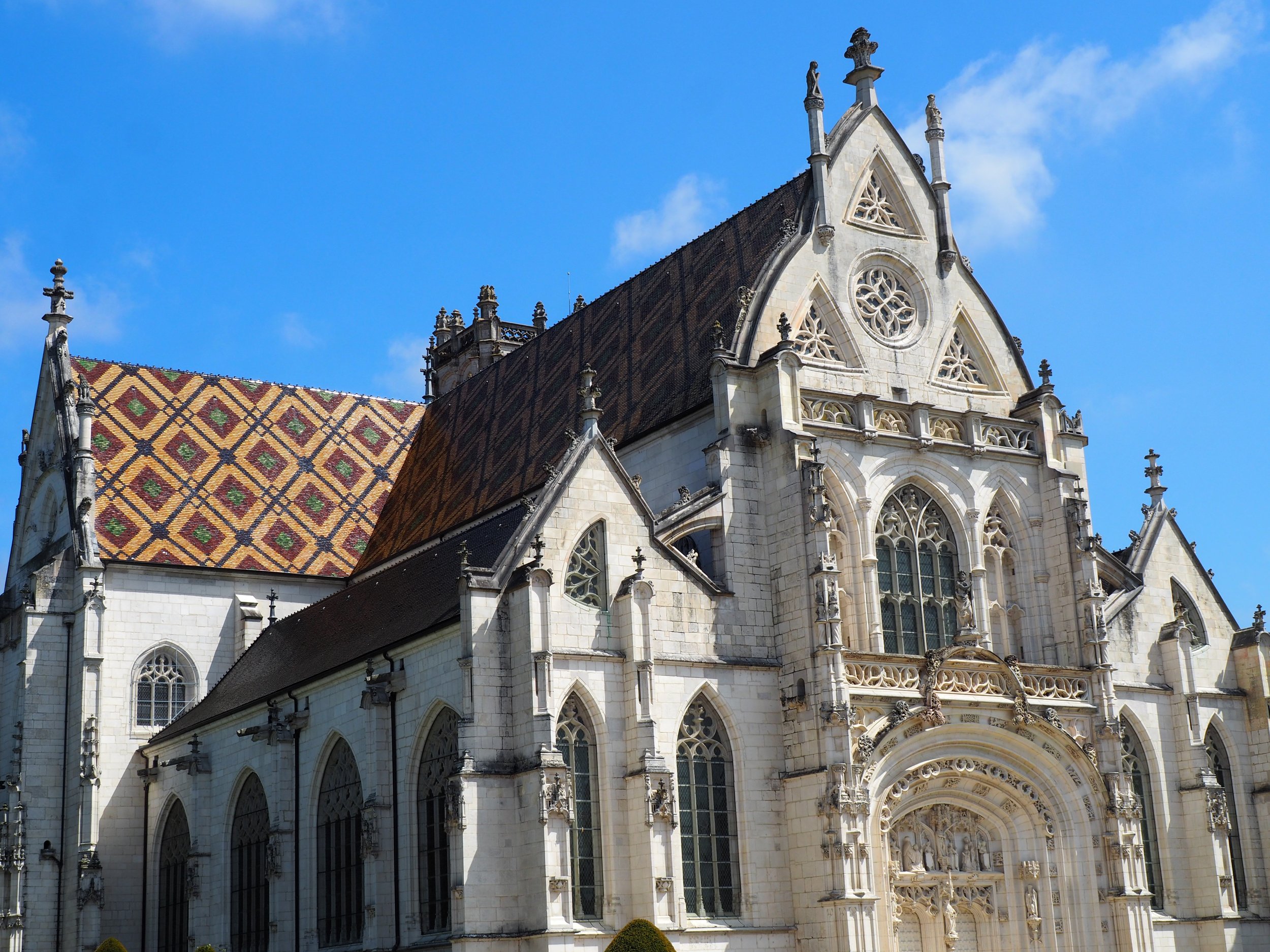
From there, we were heading West. Instead of driving for five hours straight, we stopped by the Royal Monastery of Brou. Parking there is very easy and we had lunch at an adorable restaurant called Restaurant L’Authentique. It was wonderful and the service was super friendly. The monastery itself is really impressive. It has distinct decorative roof tiling which is striking on a sunny day. Inside, more illustrious dead people. More dukes and duchesses (and counts?) of Savoy, along with Margaret of Bourbon (not the Countess of Navarre, but instead the grandmother of Francis I of France.) It was founded by Margaret of Austria, daughter of the Roman Emperor Maximilian I in the early 1500s. It is really impressive and beautiful, and well worth a quick visit.
From there, we were off to the Spa! Okay, if you’ve read enough of this blog, you know we’re not really Spa people. But we stayed overnight at La Grand Hotel, The Originals Relais. This is one of those spas from the time when spas were a thing. We had a bit of trouble getting there - Google tried to get us to drive down a stairway. We were able to call and they gave us better directions (though I’m glad we went the wrong way first because we ended up by a deer park.) It was a bit of a challenge to get up to check in when the spa was busy, but otherwise, it was excellent. The restaurant was wonderful as was the service.
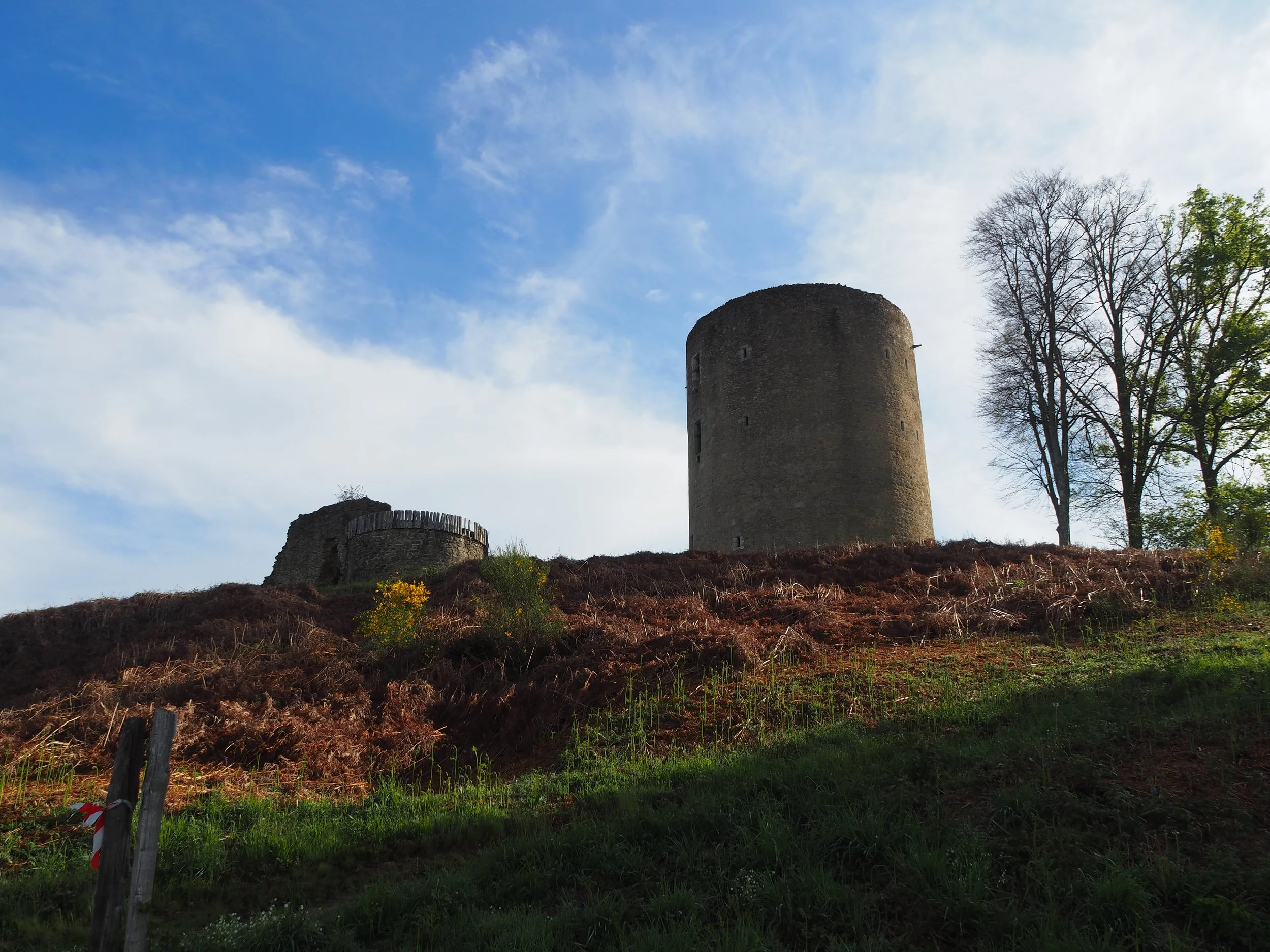
The next morning we headed out on our way to Portiers, with many stops. It was a bit of a drive to our first major location, Chateau de Chenonceau. So I picked a medieval tower (Site medieval de la Tour de Bridiers) as a spot to stop for a quick stretch. It’s not really a site? We ended up driving up the long path to below the tower. Not really sure if we were allowed to, but there wasn’t a sign or blockage. It was actually a very cool stop and worth visiting. Not much information about it, other than that it was a tower built during the Middle Ages.
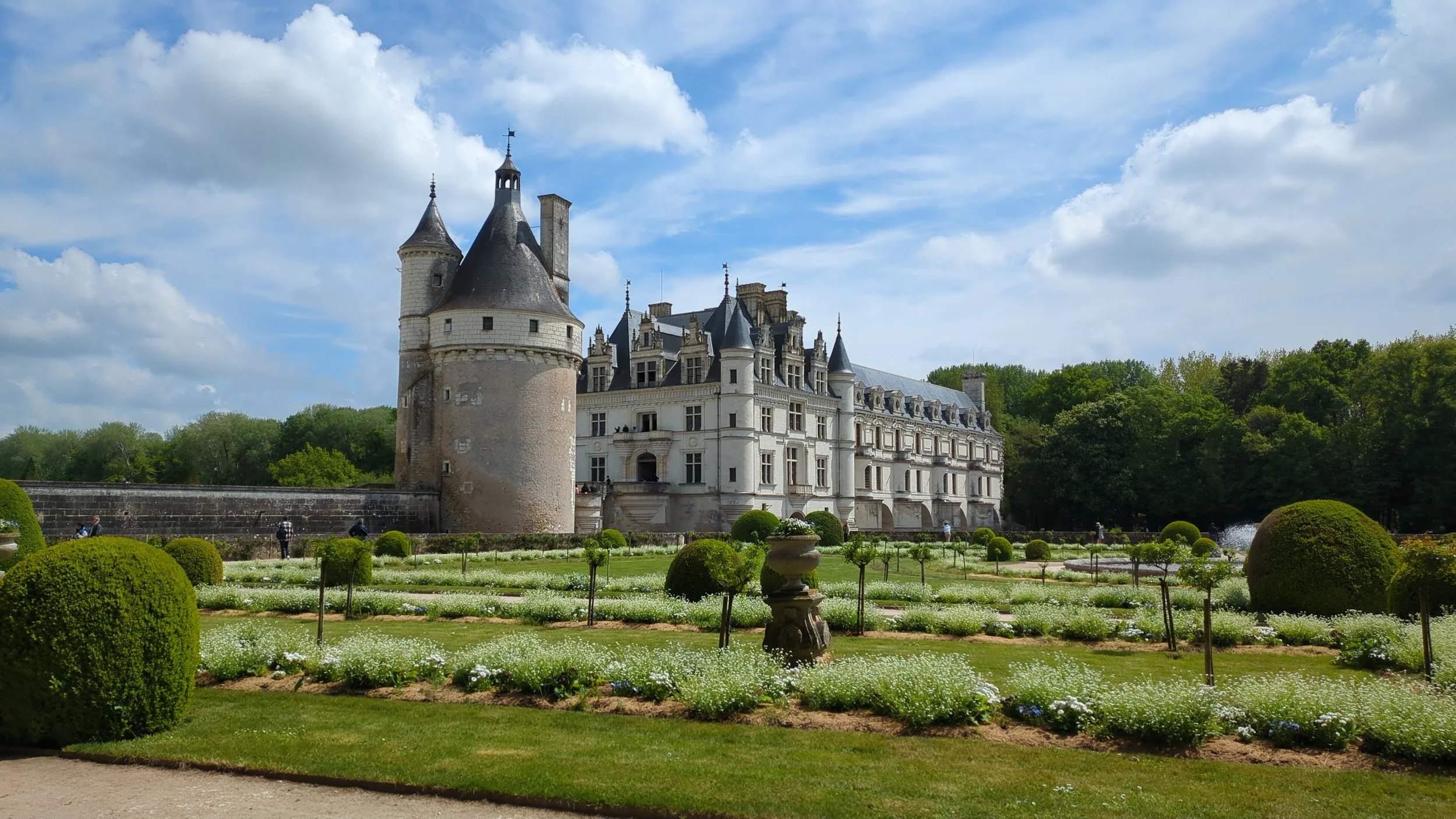
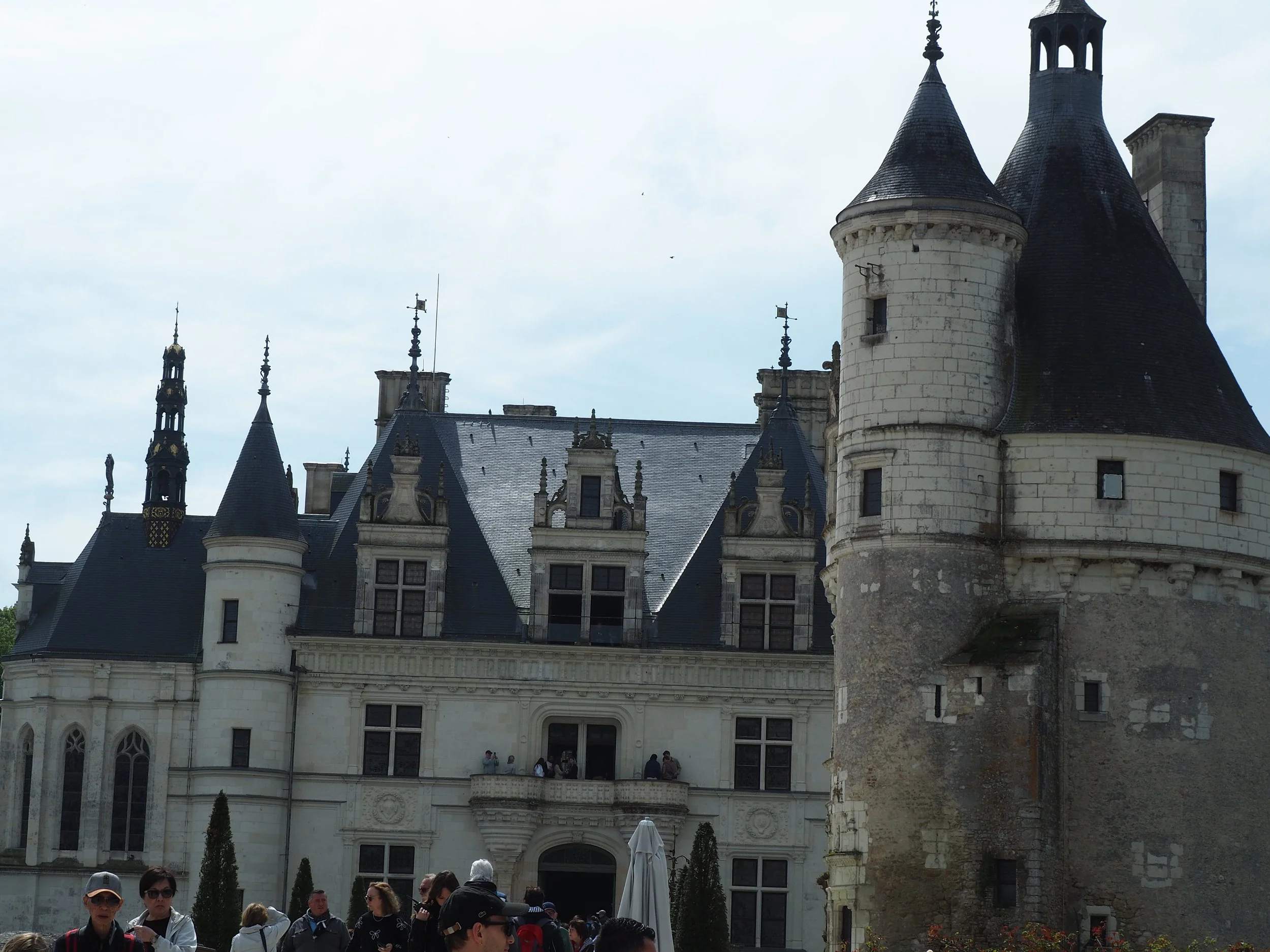
That took us on to Chateau de Chenonceau. This place is much more of a site. First of all, it’s super popular. I wouldn’t even try this place on a weekend in the summer. It’s amazing, and totally worth visiting, but it was busy when we were there. It is famous because it belonged to Diane de Poitiers before she traded it to Catherine de’ Medici in exchange for a different Chateau. It is located on a riverbank and part of it extends over the river to the park on the other side. Crazy fact - this was literally the border between Nazi-occupied France and the free zone. It was bombed during that time, but you’d never know it looking at it now. It is truly impressive and probably one of the most beautiful buildings I’ve ever seen. There are also two sets of gardens (the Diane and Catherine gardens) and reading about the various super petty stuff Catherine got up to once she had control of it is pretty funny. They also have a wonderful restaurant on site. It’s buffet, but the food is excellent, and of course, you can try their very own wines. I’ve actually found Chenonceau wine here in the US and do by it regularly. There’s also acres upon acres of grounds to explore, and specialty gardens along with an animal park, with donkeys. You could easily spend a day here. But of course, we had more famous dead people to visit!
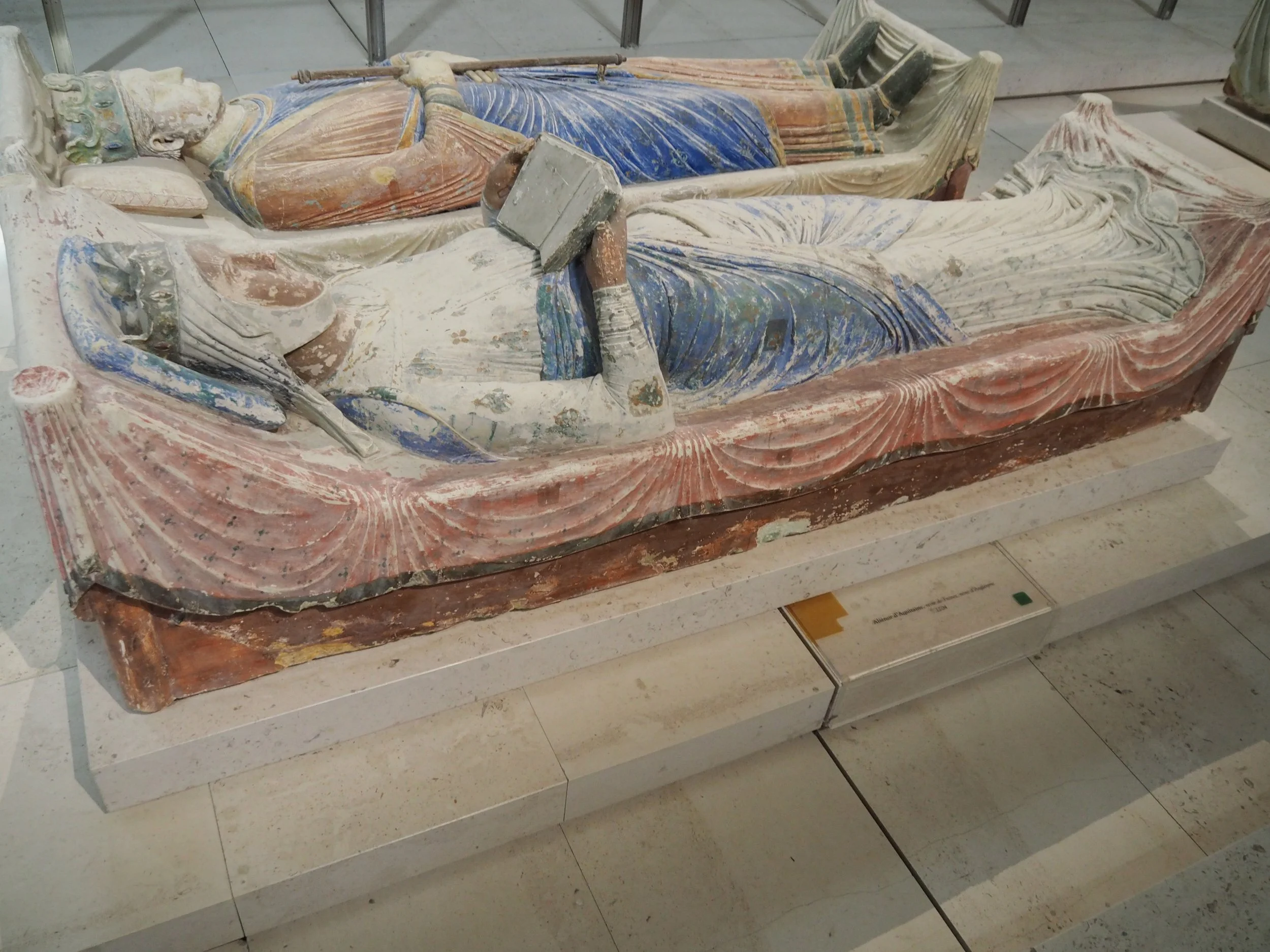
It’s not a long drive from Chenonceau to Abbaye Royale de Fontevraud. And of course, we wanted to visit the Abbaye to see the final resting place of Eleanor of Aquitaine. If you don’t know Eleanor, well, I recommend you fix that. There’s a great series about her from Our Fake History Podcast, which we listened to on our trip. The Abbaye is in a very cute town. We parked near the library and walked over. It did end up raining on us, but I don’t blame Eleanor for that. It’s an interesting location in part because the interior is so stripped. Eleanor and three others (her husband Henry II, son Richard Lionheart both of England, and Isabella of Angouleme) are located toward the front of the structure, and are almost the only things inside the space. Eleanor is famous in that her tomb effigy has her reading a book. The whole history of the Abbaye and Eleanor’s life and all of the drama that surrounded her role as both Queen of France and Queen of England, and ruler of Aquitaine in her own right is fascinating, as are the stories of why her late husband and her son are there as well. I won’t spoil it. I also recommend reading up on Isabella of Angouleme, another woman who had power in her own right and was totally fine with pulling some shenanigans to improve her or her family’s position.
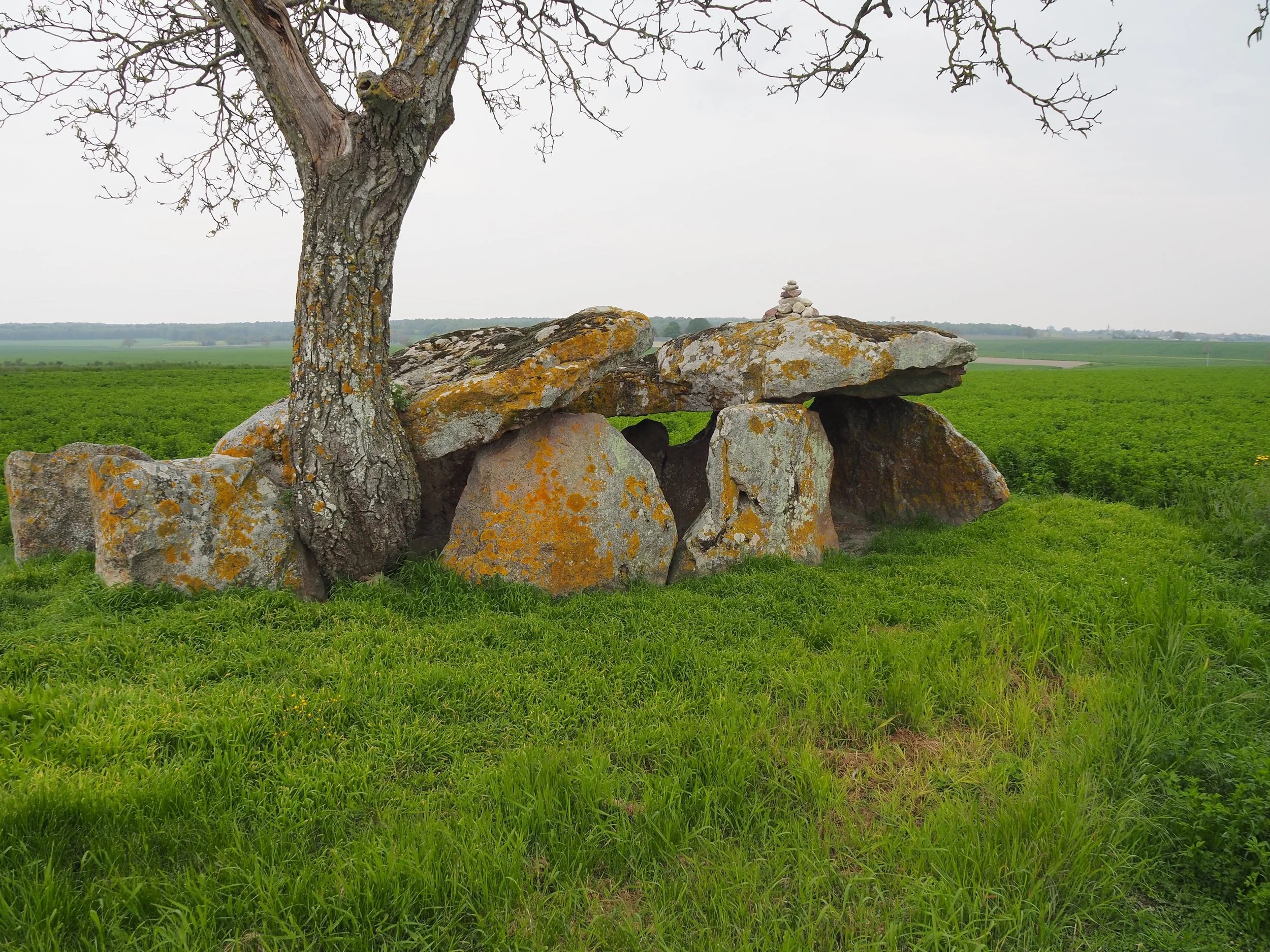
From there, we drove through the rain with a quick stop at a nearby Dolmen (an ancient burial location marked by stones and basically just out in a field.) We ended up at our next stop, Le Pigeonnier Du Perron hotel, in the driving rain. The woman who helped us check in was a delight, and we had dinner there as it is kind of not near anything. It’s stunning though, when not raining. It is famous for being the home of Rene Descartes. It is also amazingly beautiful, super comfortable, and the rooms were surprisingly reasonable. If you stay, make sure to book their restaurant for dinner. The food was excellent and homey and unbeatable for the price!
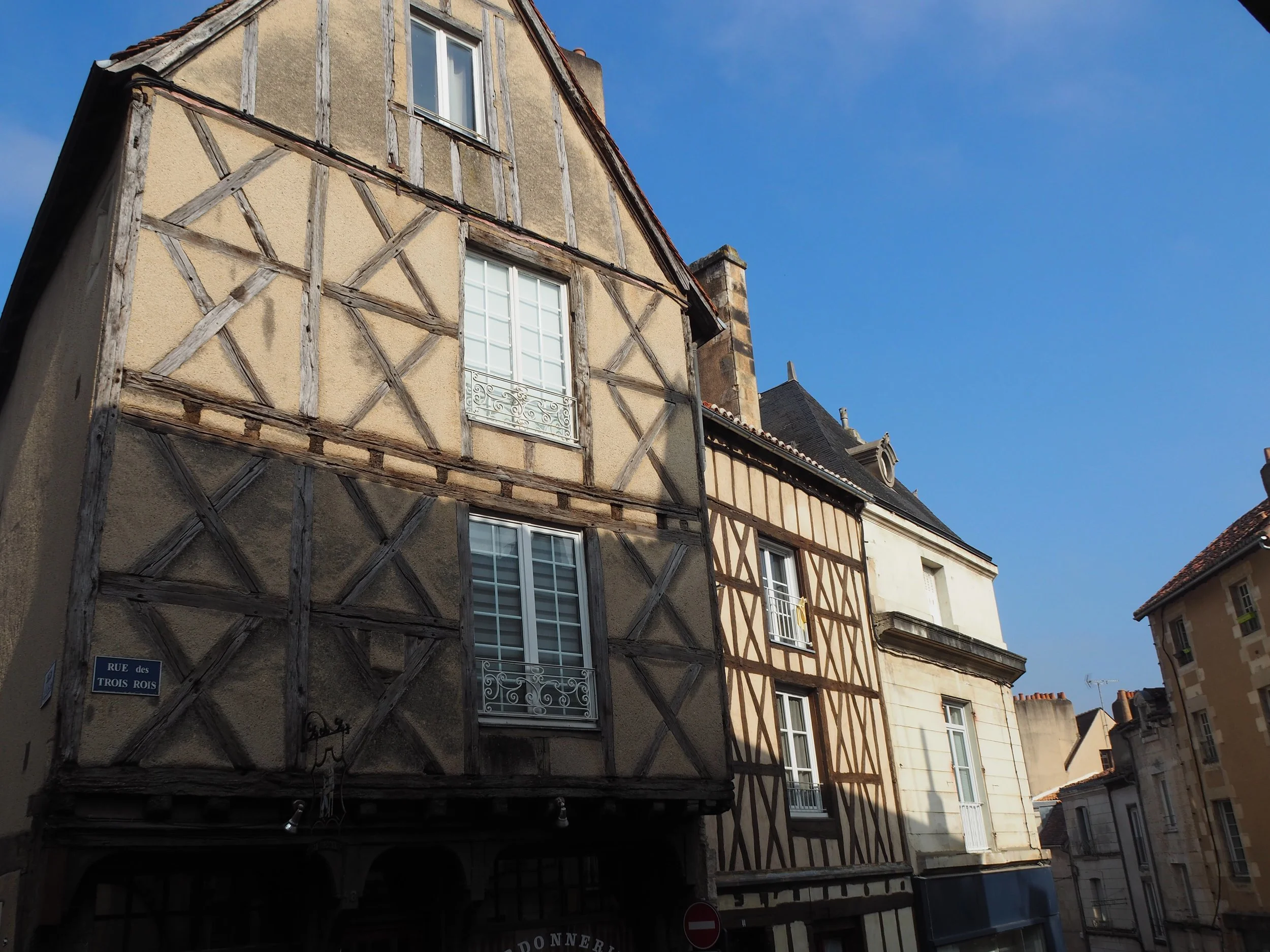
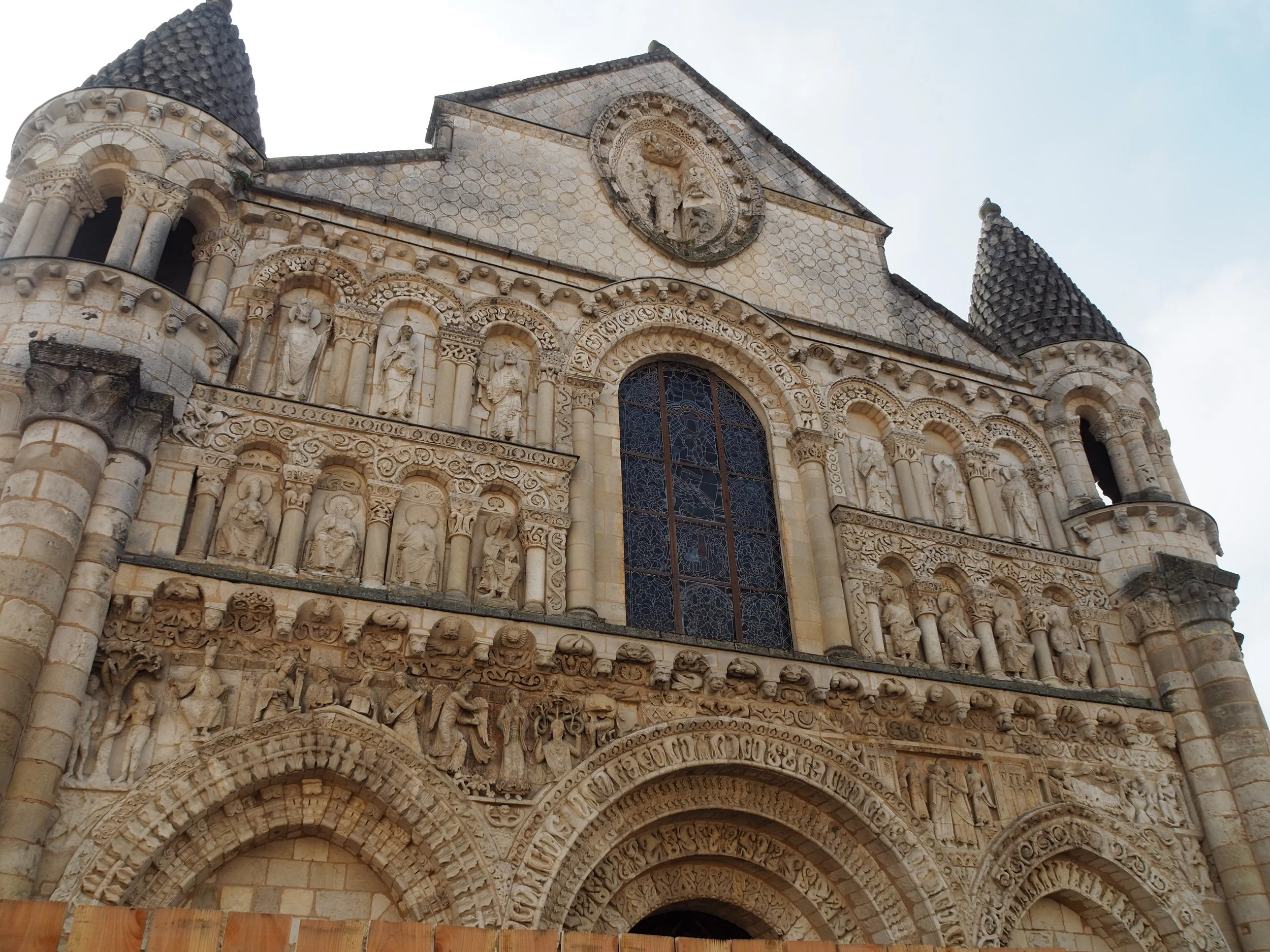
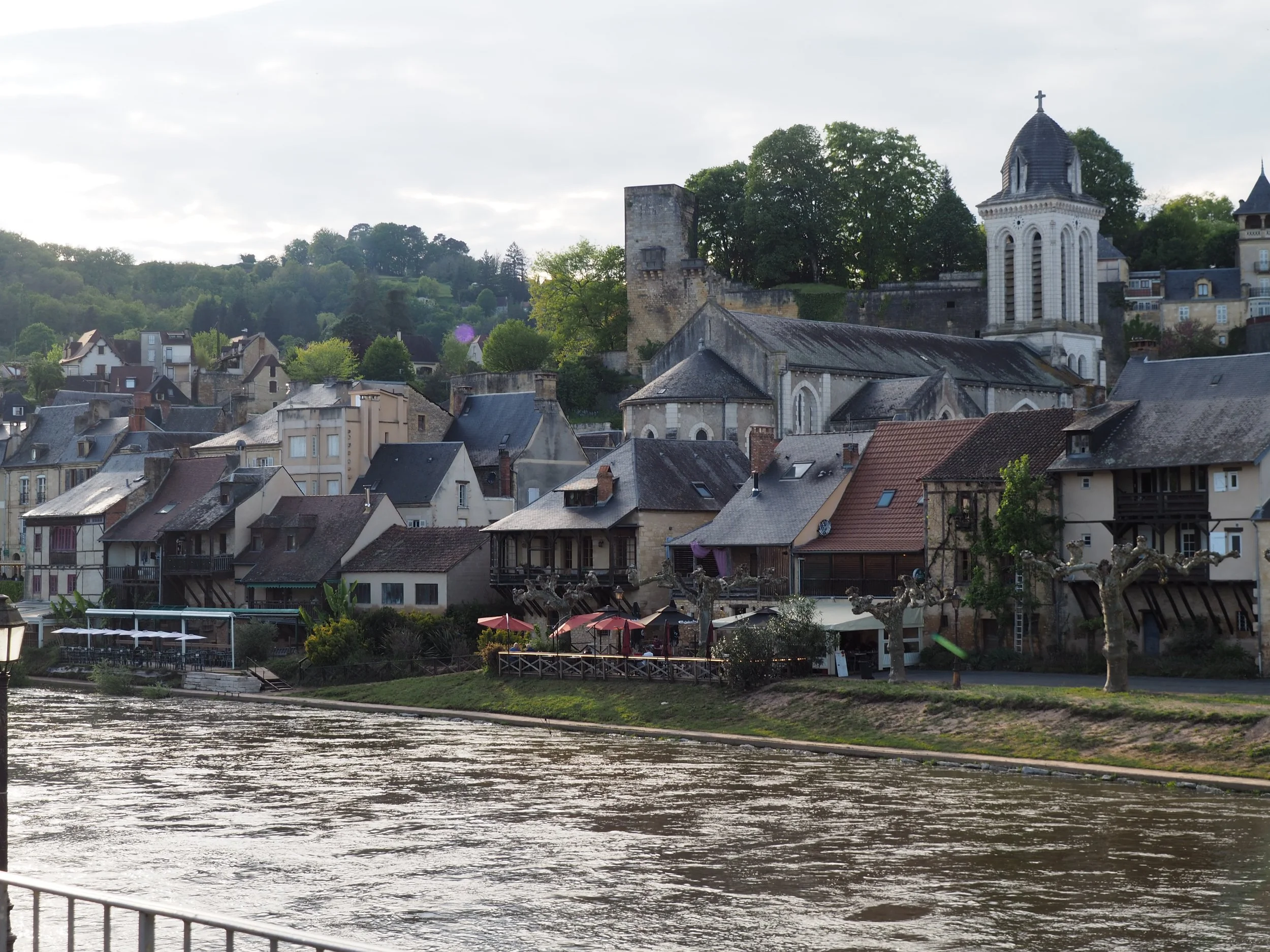
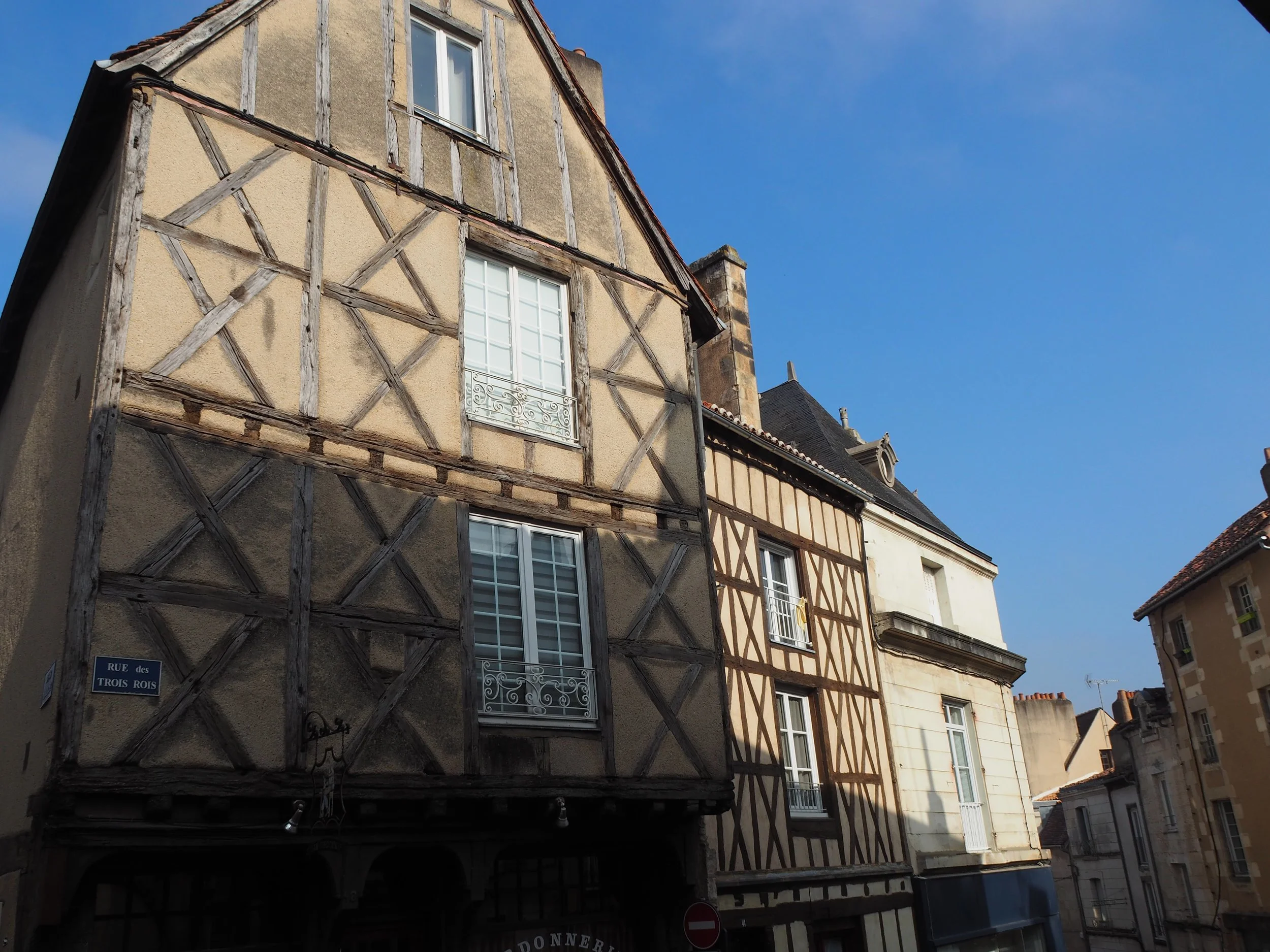
The next day, with the rain having left us, we headed down to Poitiers. I’ll be honest, I don’t think they get many tourists there. I tried booking a walking tour and Tours by Locals had no one. But I’m glad we went. The reason we went, of course, was Eleanor. Her home, before she lived all over, was in Poitiers, at the Palace of the Dukes of Aquitaine. The city itself is quite charming. They have a university there, so lots of restaurants and bars and stuff to do. Part of the town, around 36 Rue Jean Bouchet has some old half-timbered buildings, looking much like those seen in east France in places like Strasbourg. For even older stuff, there are the remains of Roman buildings (called the Poitiers Amphitheatre, but I’m not sure if that’s accurate.) The two main locations to visit are the Cathedral Saint-Pierre de Poitiers, which is absolutely stunning. It was founded by Eleanor (and Henry) in the 12th century and it is truly beautiful with amazing stained glass. It’s still an active Cathedral, so make sure you time it so you aren’t kicked out for services. The other location we visited is the Palace of the Dukes of Aquitaine. The outside is well preserved (and huge) but unfortunately there isn’t much inside. The main gallery is open and astonishingly large. Just huge and open and big. There are some galleries preserved on either side, but not much. There is currently an effort to raise money to start restoring the building, and I’d love to see that. It was wonderful to be there, though.
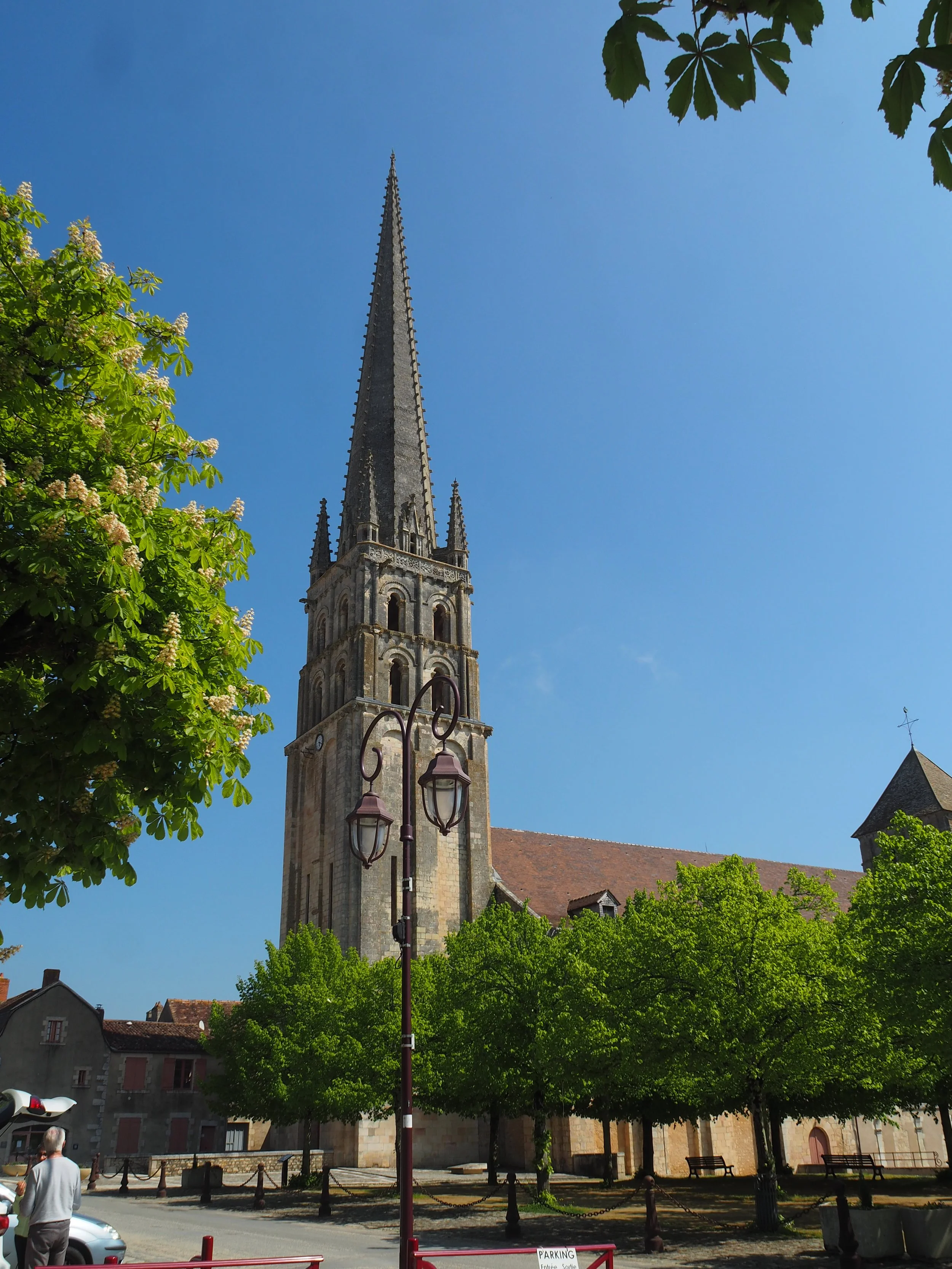
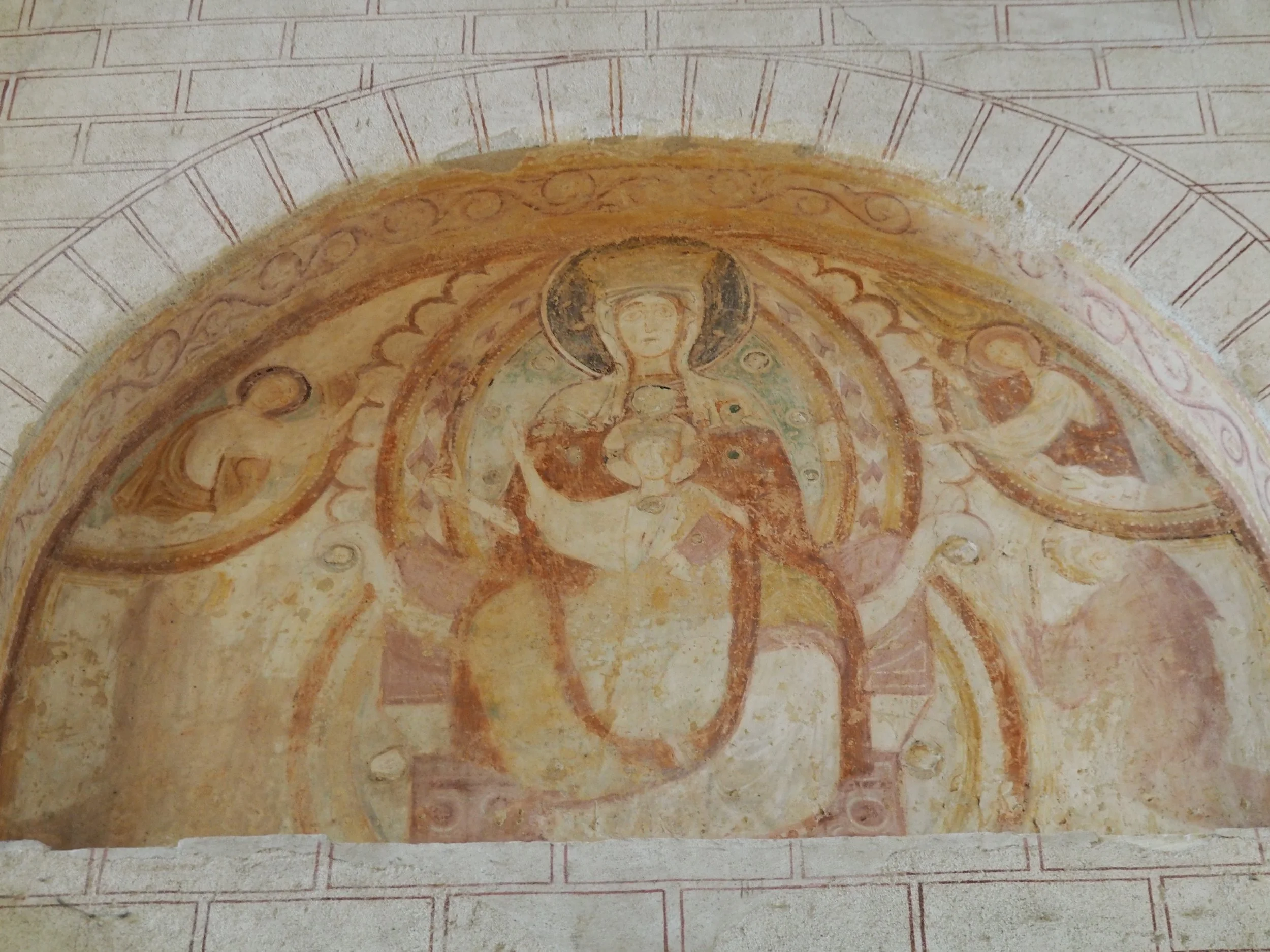
After leaving Poitiers, we headed to the Abbaye de Saint-Savin, known as the Sistine Chapel of France. Inside are some of the best-preserved frescoes from the 11th and 12th centuries in Europe. They really are absolutely stunning. I also love the style of frescoes of that age. There’s something always a little off about the proportions. They are closed around lunch, so we stopped at Le Saint-Savin for lunch. It’s such an excellent place to stop. Easy parking, restaurants right on the square, and an impressive view of the Abbaye. The Abbaye itself is easy to navigate. You can have an audio guide which really gives you some excellent history. Much of the signage is only in French, but that’s less of an issue now with lot of the apps that will translate what you’re looking at. I’m very glad we visited since frescoes from this period are so rare and these are so well preserved.
After enjoying this lovely location, we headed south towards to Dordogne region. We were going really back in time to the caves with some of the oldest art ever discovered.
Lascaux and Bordeaux
We traveled from Poitiers to the oldest sites we were visiting on this trip - the Neolithic caves around Lascaux. From there, we headed over to Bordeaux to enjoy the city and its’ famous wine.
The Truly Ancient and the More Modern
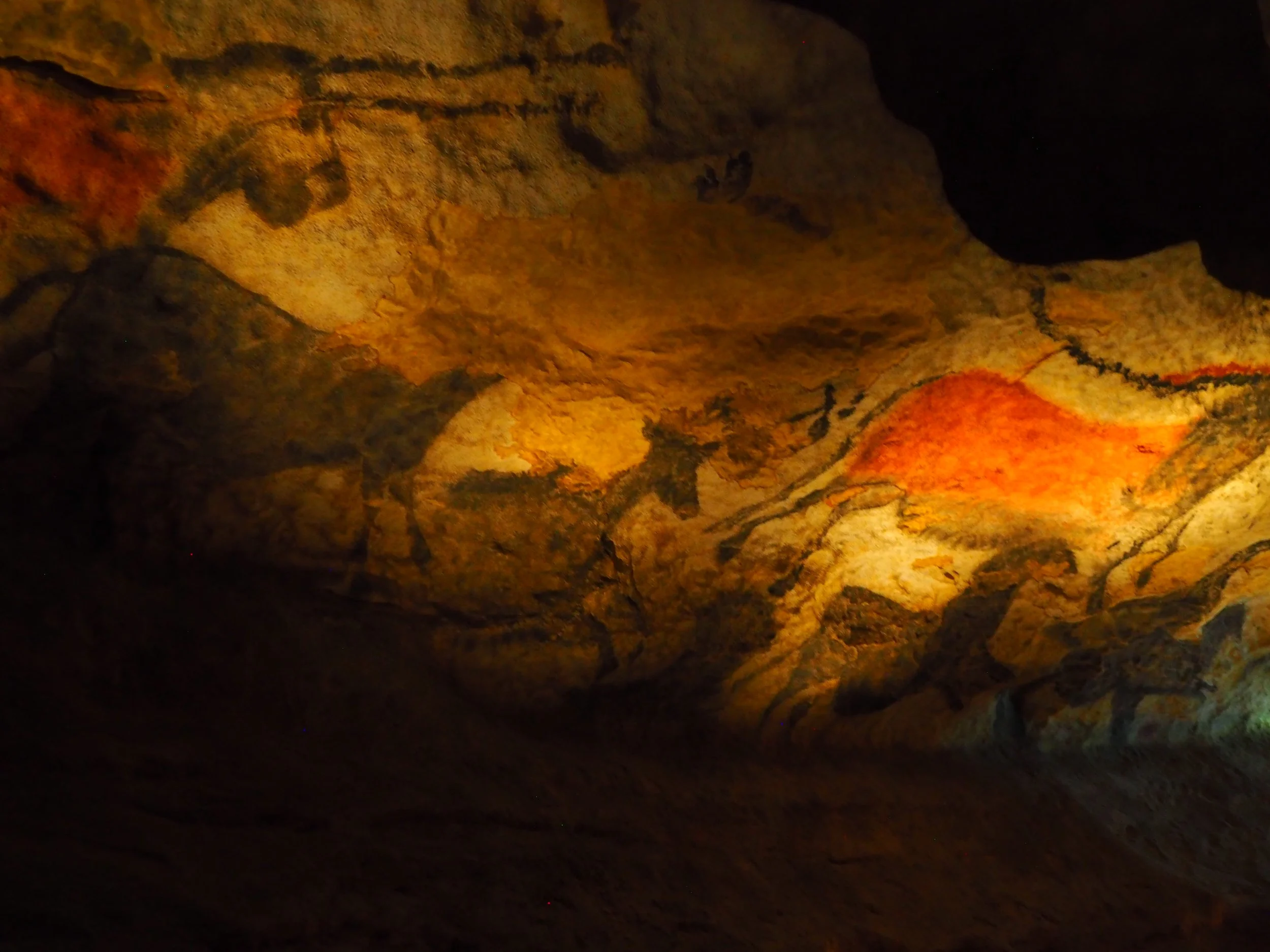
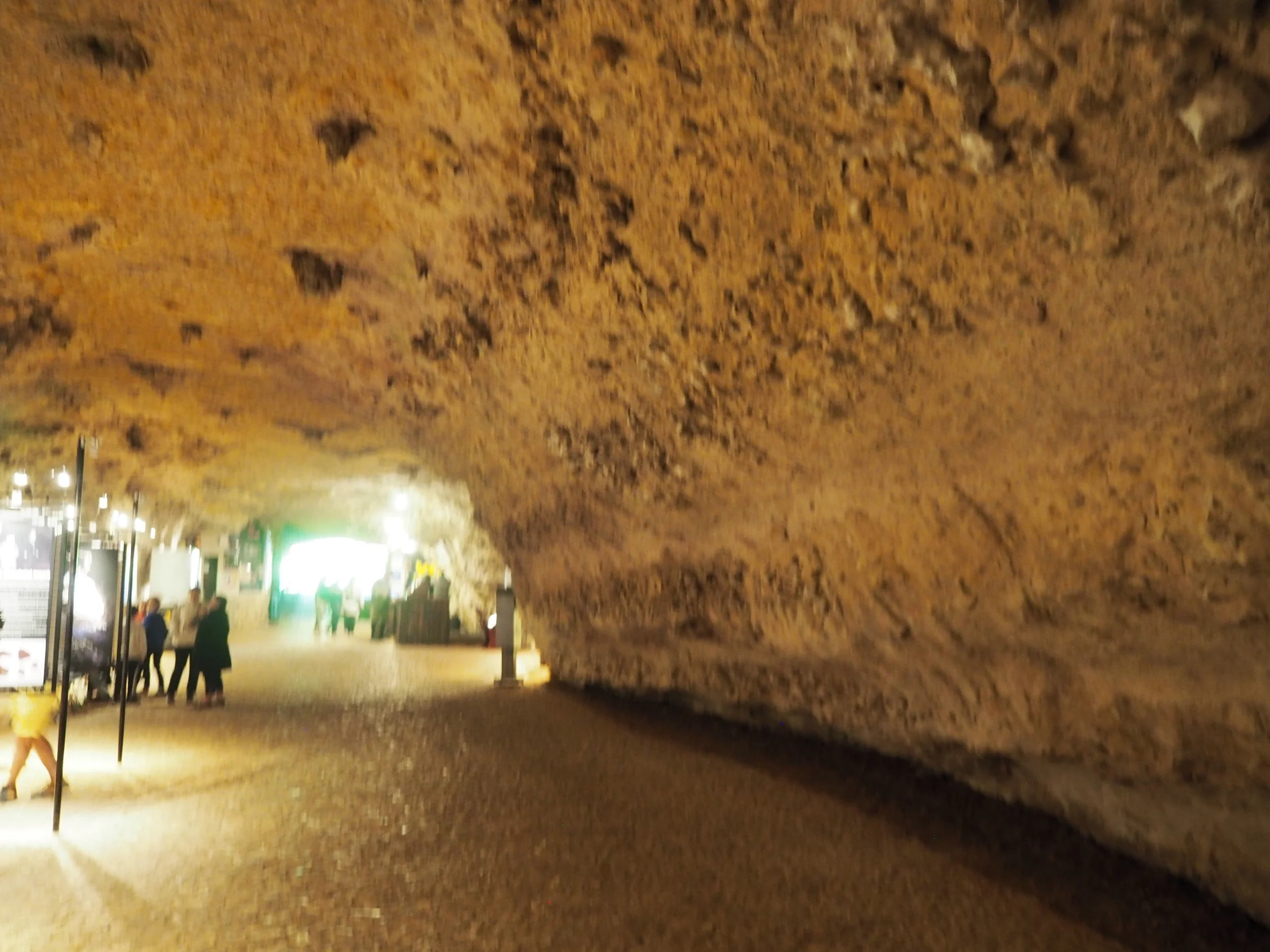
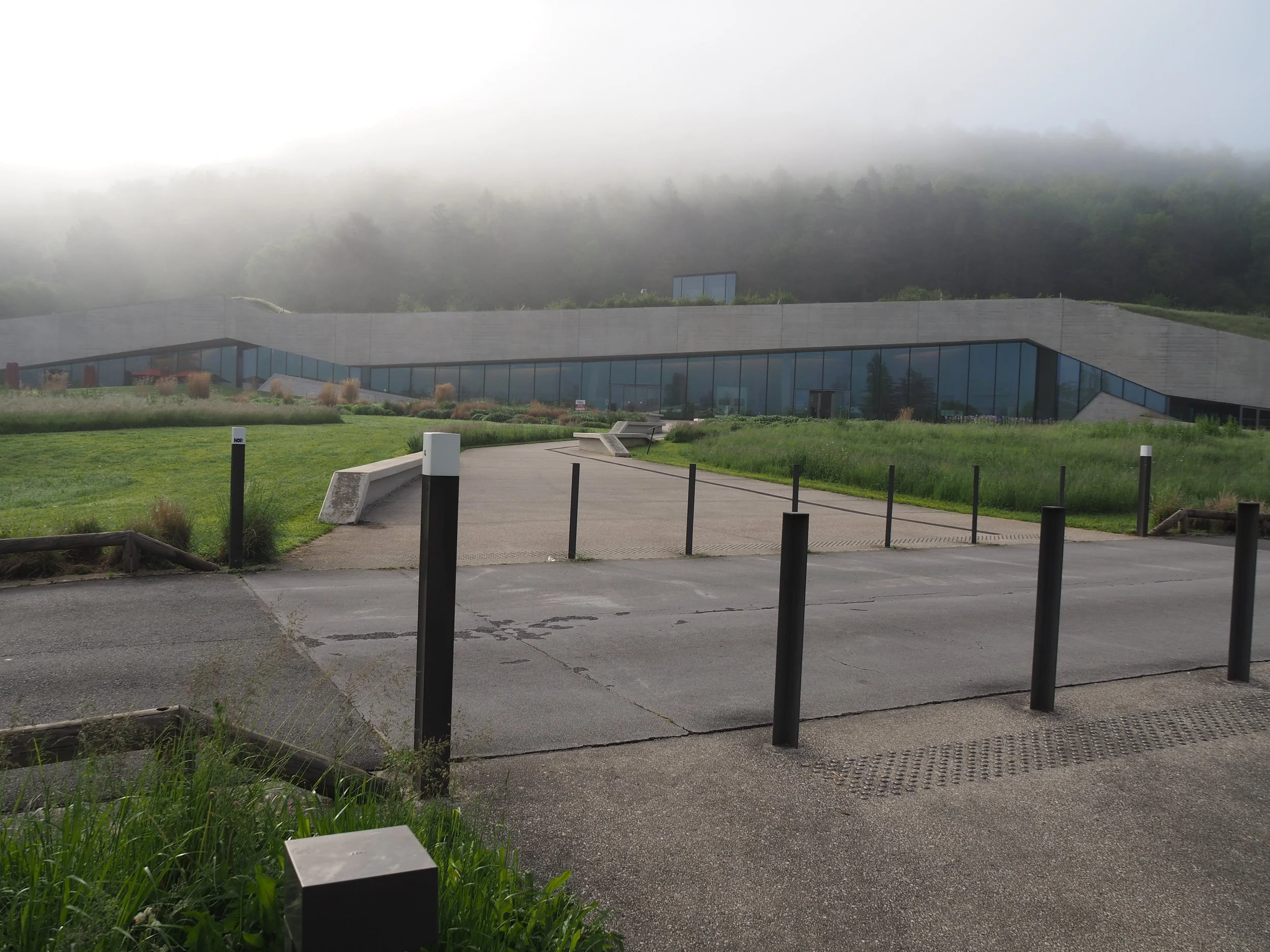
Something to note about Lascaux - you can’t go into the original cave any longer. This makes a lot of sense when you think about it. The art is very delicate and the number of people visiting every day is immense. So they’ve gone through the process of creating two different copies of the caves. Lascaux II and Lascaux IV are the ones near the original cave. Lascaux IV is the most recently created and it’s very impressive. It is connected to the main museum which is very modern and very technologically advanced. We ended up having to visit during a French language tour, but it was fine. I’d recommend visiting Lascaux IV if you have issues with tight places, since it has been expanded to fit more people and be easier for visitors and visitors with mobility issues.
Lascaux II is up on a hill right near the actual cave. It’s much smaller and was made longer ago. Honestly, I think that I prefer Lascaux II since it is an almost exact replica with the size being as small as the original. This makes it a much tighter space and this replica doesn’t include all of the original (though Lascaux IV doesn’t either, though it has more) but it has that extra layer of feeling dark and tight that gives a more accurate impression of the original cave.
There are way more caves in this region than Lascaux. I honestly wish I had researched it more, but then again, you only have so much time on a trip and can only see so many things. We ended up visiting Rouffignac Cave, which is nearby and privately owned. It has a small train that takes you around to see the cave art. This is more recent (about 500 years more recent) but it is the original art and it’s main claim to fame is the depiction of mammoths. The art is almost entirely done in black lines, so the colors aren’t as interesting or vivid as Lascaux, but it offers a different type of cave art and I was happy we visited.
During our stay in the Dordogne region, we stayed at Chateau de Puy Robert. This is a converted palace (Chateau) that is not too far outside the town of Lascaux. It was far enough that we needed to drive into town, but parking was easy. Lascaux itself is very cute, with a number of restaurants right along the river. It was before the peak tourist season so some places were still not open, but the selection of restaurants was good. Also many thanks to the kind gentleman at the grocery store that allowed us to run in and buy ice just as he was closing.
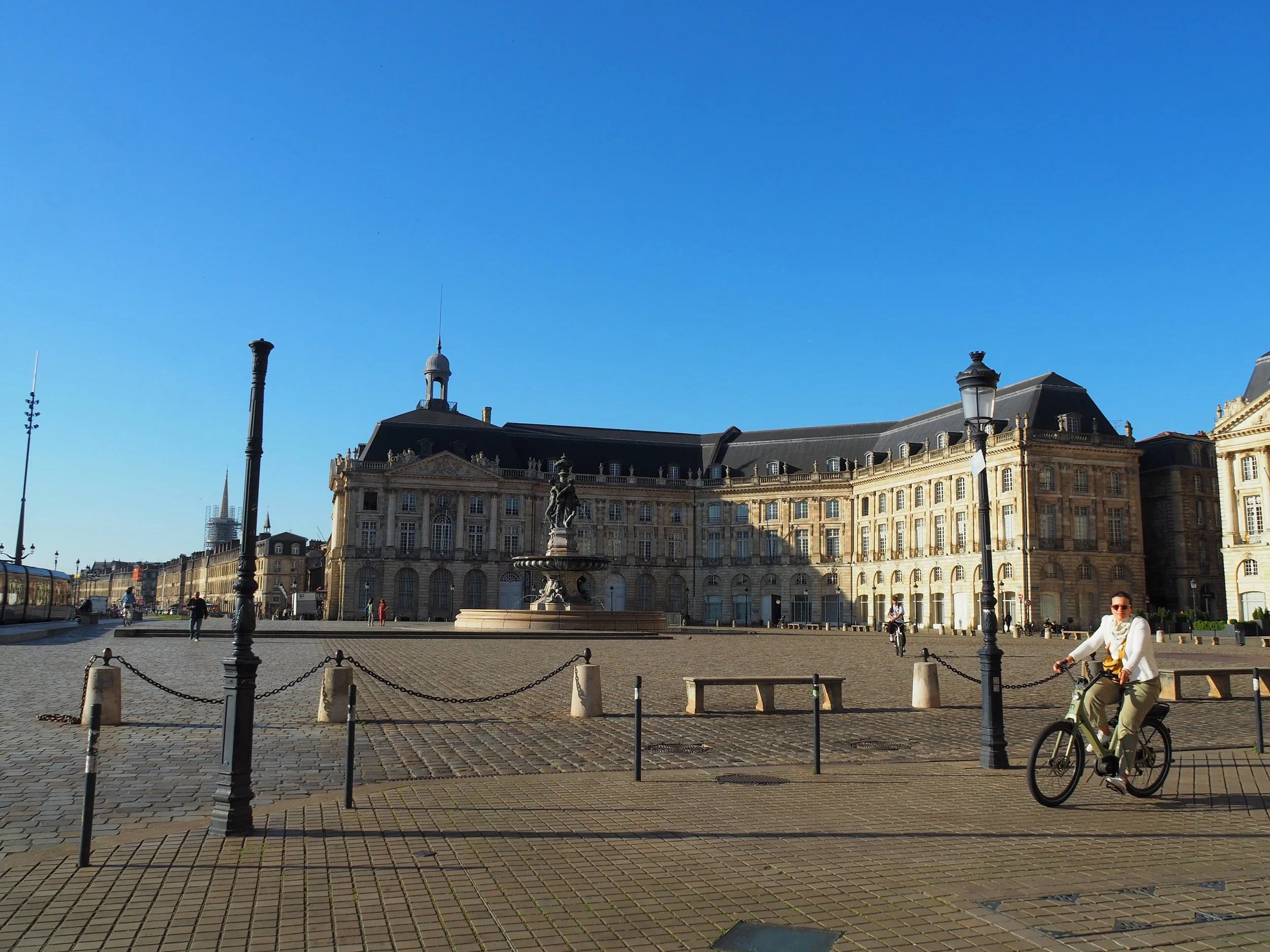
After our time in Lascaux, we headed on to Bordeaux. It’s a very pretty and very easy drive. We stayed at the Renaissance Bordeaux Hotel, which turned out to be a lovely hotel, but its location did make things a little challenging. That part of Bordeaux is more busy on the weekends and during the day, so on a Monday night, there weren’t a lot of restaurants nearby that were open and serving dinner. Otherwise, it was a beautiful hotel and it was right on a metro line into the main part of the city, making it easy to get in the next day.
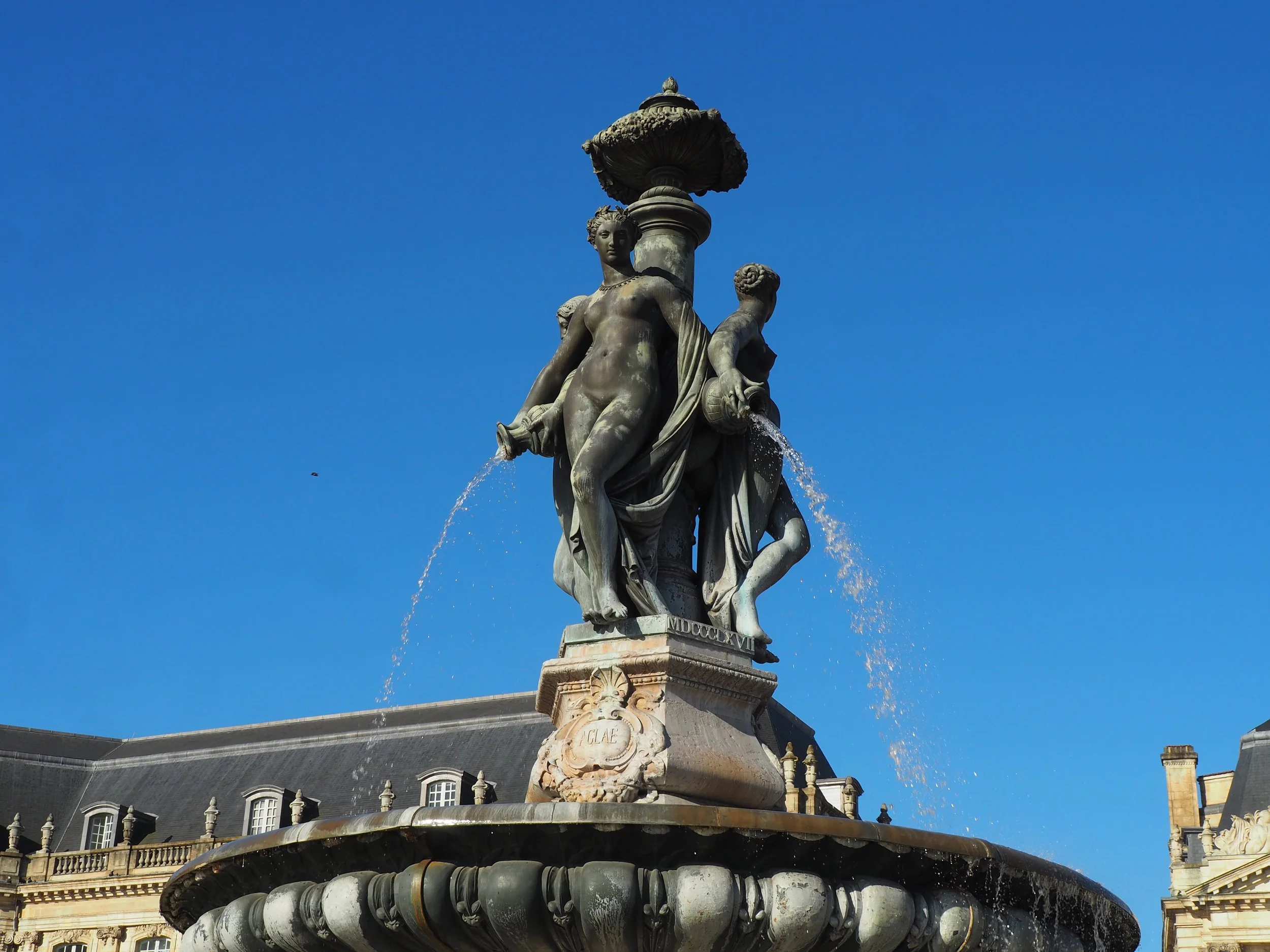
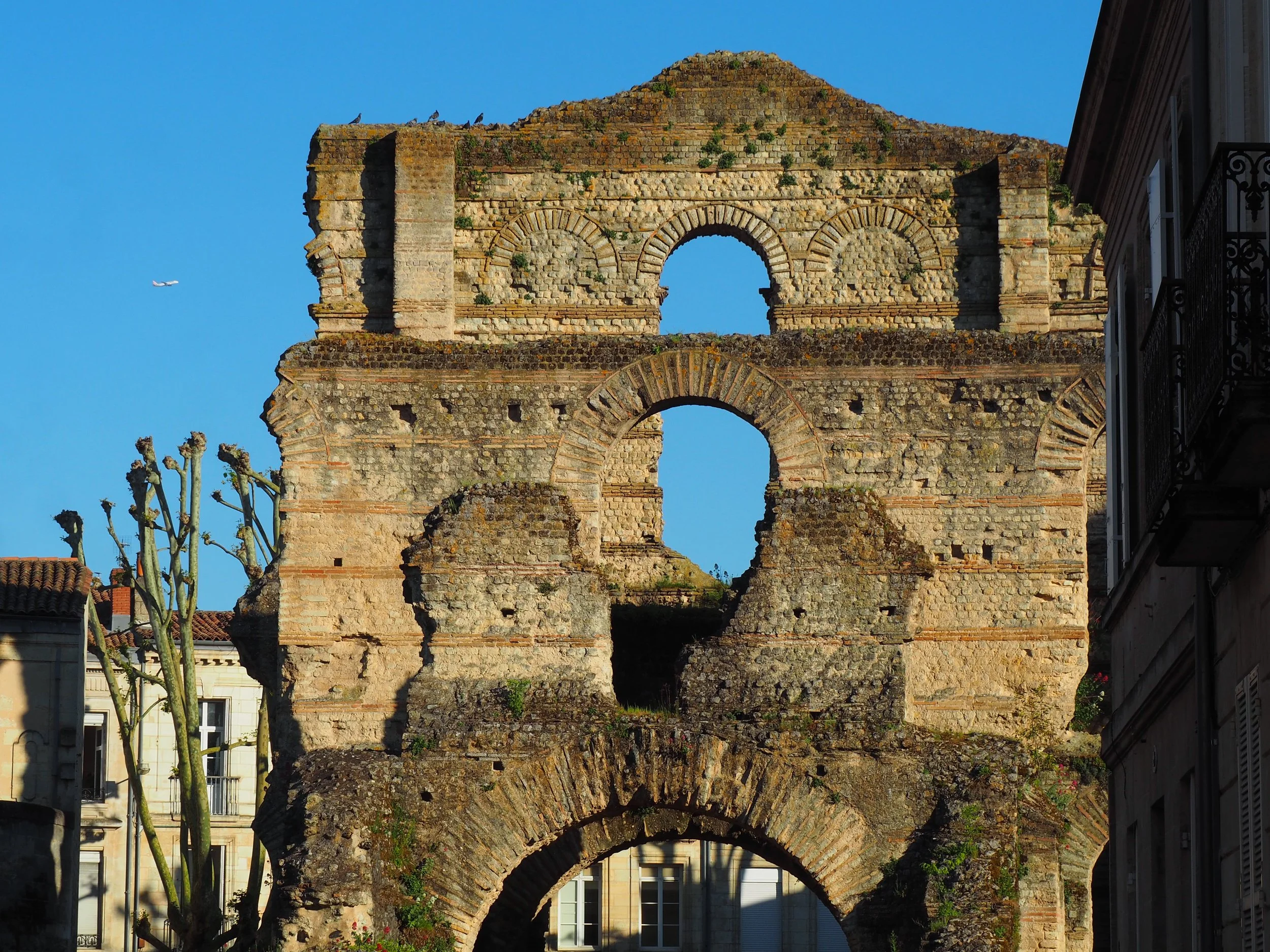
The morning after we arrived in Bordeaux, we had scheduled a walking tour with Anna Moraitis. It was her Bordeaux Medieval Tour and it was excellent. We went into the main part of the city early so we could find the only Roman remains at the Palais Gallien (not a palace at all but probably the remains of the amphitheater.) It’s kind of a cool spot since it’s just there behind a fence, standing two stories, surrounded by more modern buildings.
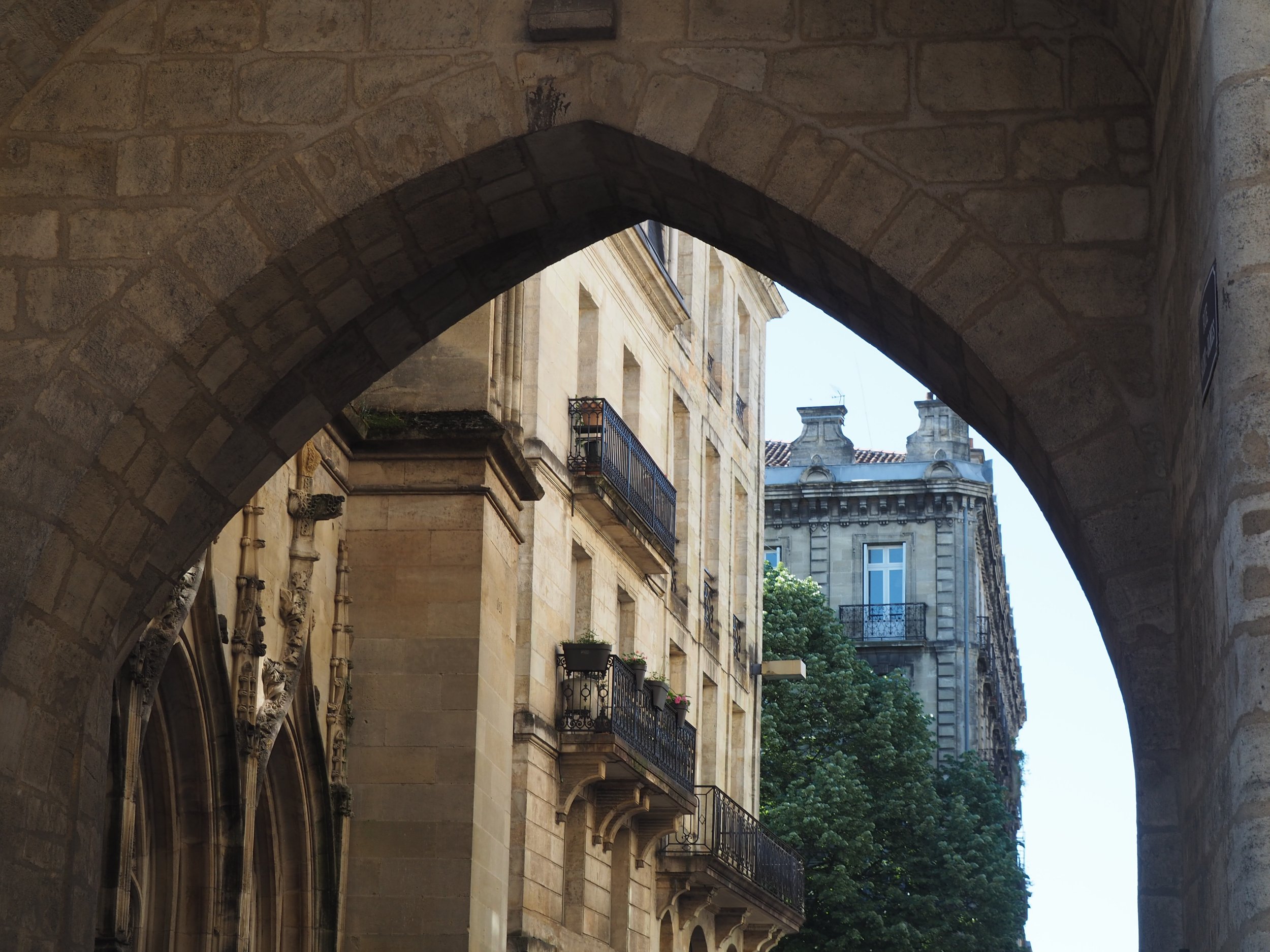
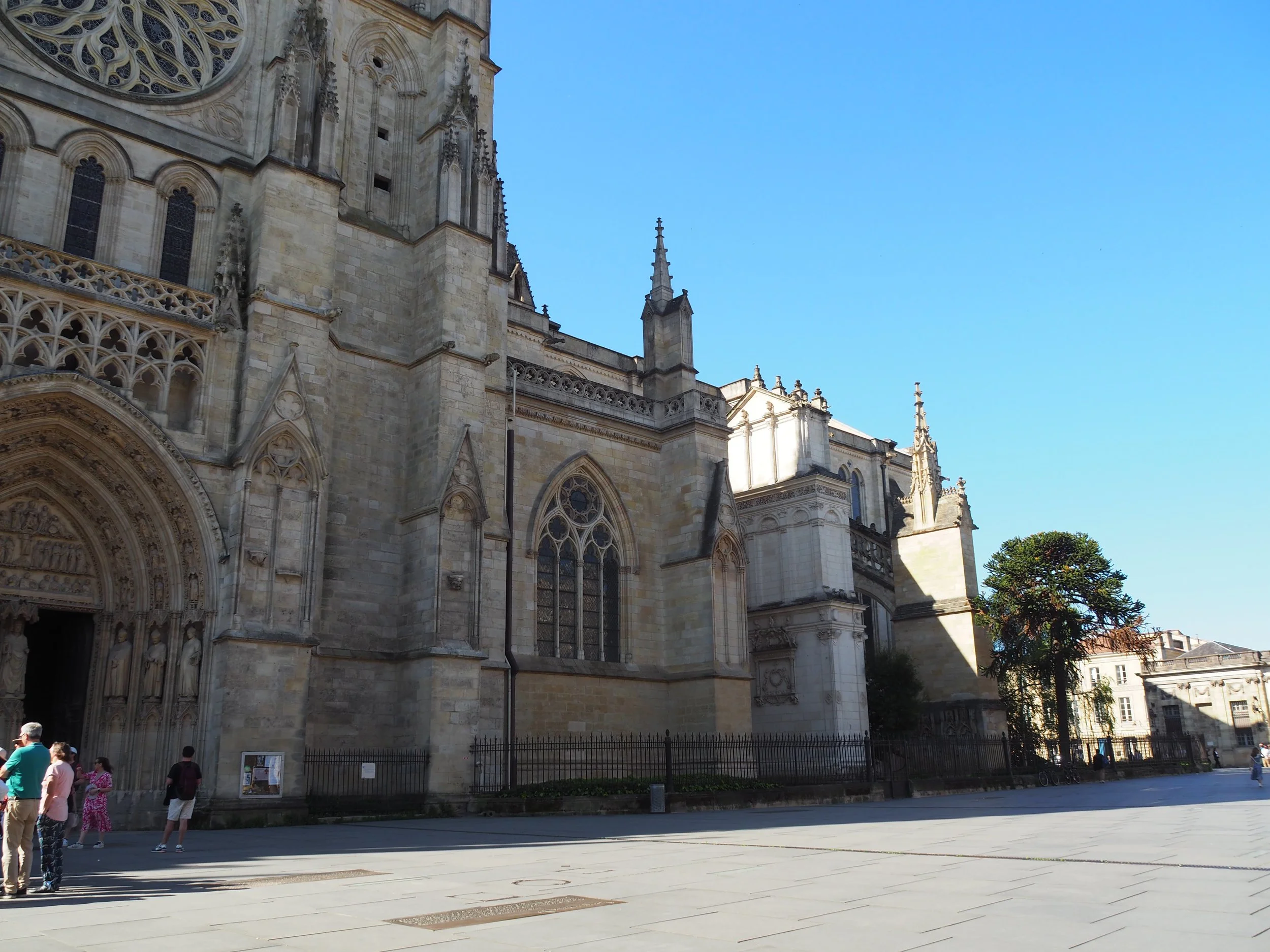
The tour was absolutely fantastic. Anna was wonderful at giving us the history and helping us envision the world of Bordeaux during the Medieval period. She took us through the main entrance into medieval Bordeaux and explained how people would live in the city during this interesting period of time. There are so many parts of the modern city that are built on the medieval city plan with large parks where the former sites of the city market would have been. She also took us into the Cathedral, which was really fascinating. We learned about the changes in art styles between medieval and gothic sculptures that coincided with the changing portrayal of Jesus and God. It was a really wonderful tour. Also, extra points for her taking us into the hardware store that had archaeology under it.
The only really disappointing thing about Bordeaux was that the Musée d'Aquitaine was closed as it is being renovated. I guess I’ll have to go back. We did visit the Cité du Vin which hadn’t been on our original itinerary but I’m glad we went. Their history of wine and interactive exhibits about how it has spread across the world was really interesting and well presented. And of course, enjoying a free glass of wine at their rooftop bar was well worth it. From Bordeaux we traveled south and on to Toulouse, and then stopped in Andorra because, well, why not?
Toulouse and Andorra
Toulouse and Andorra were both gems on this trip. Very different but both very charming. It wasn’t really on the way to visit Andorra on our way from Toulouse to Avignon, but when were we going to be nearby again. And frankly, it was worth it.
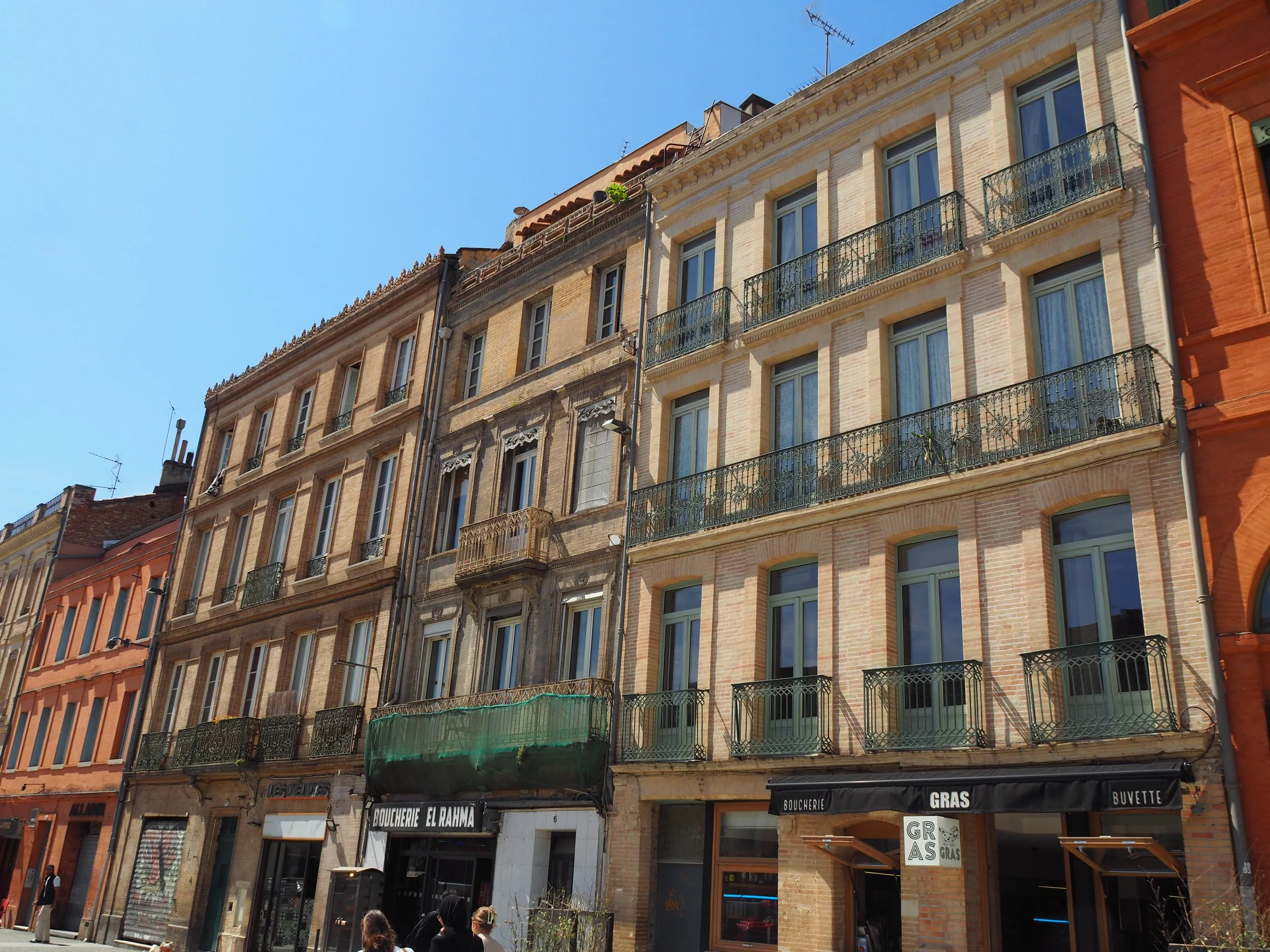
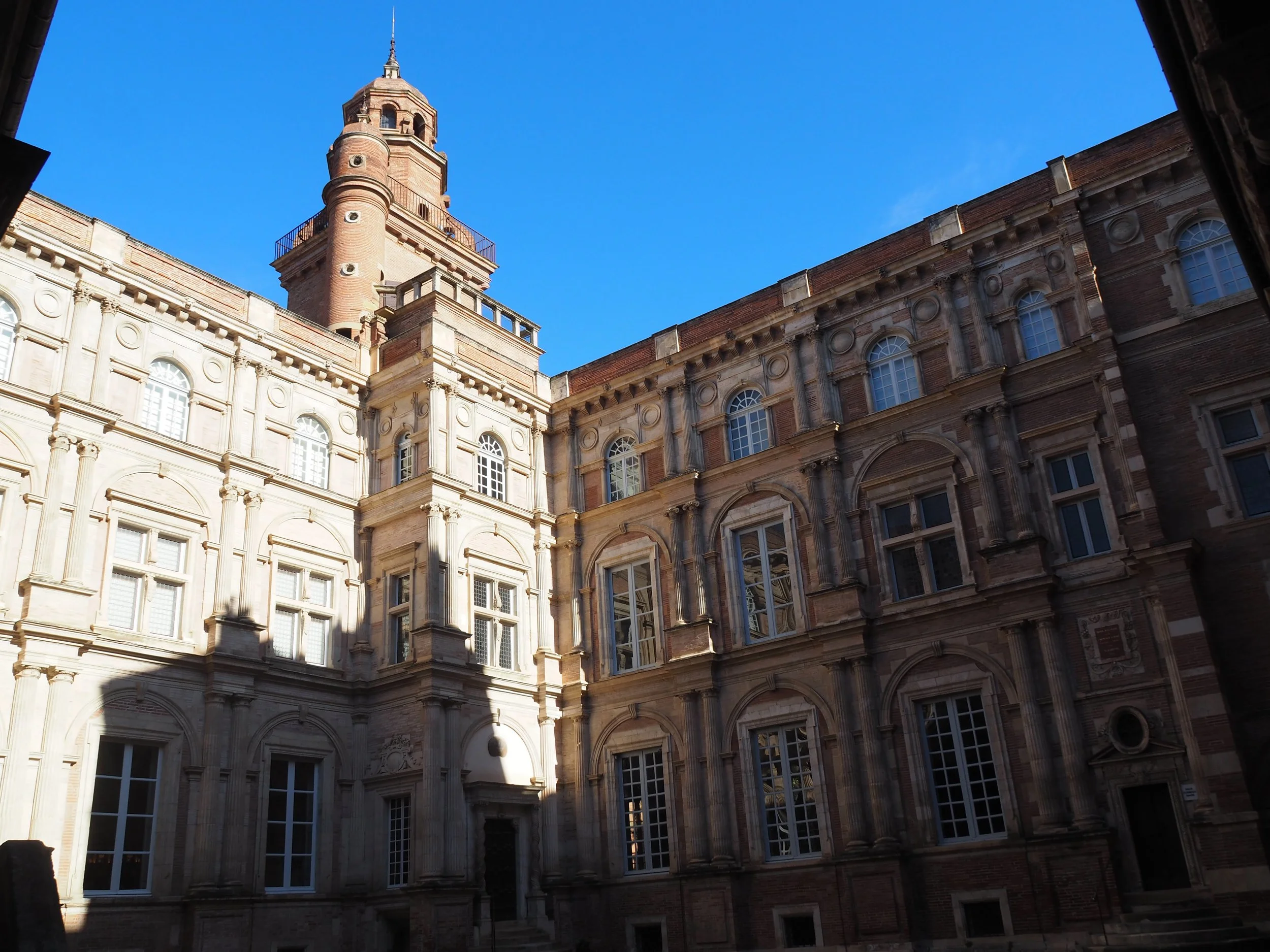
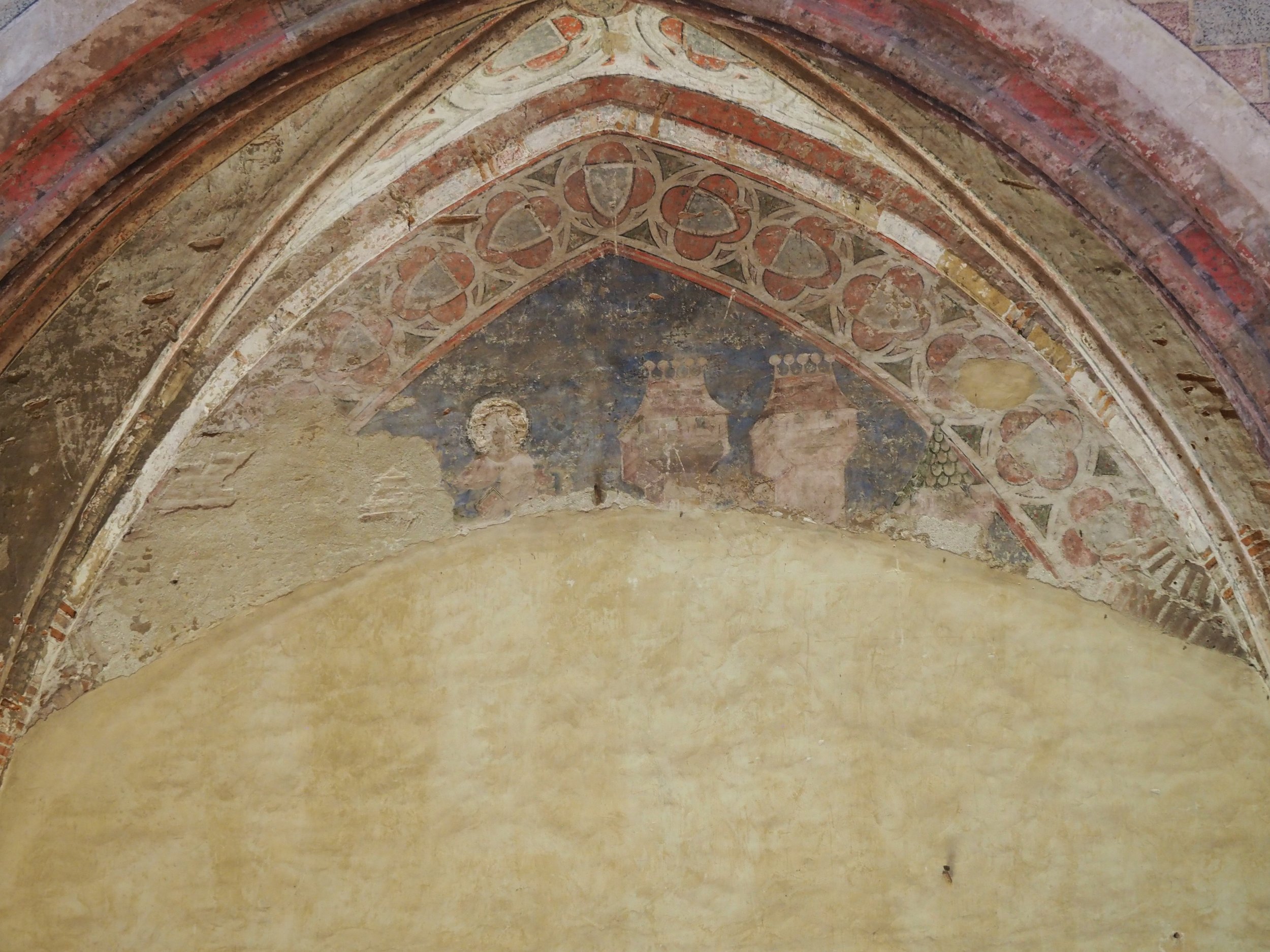
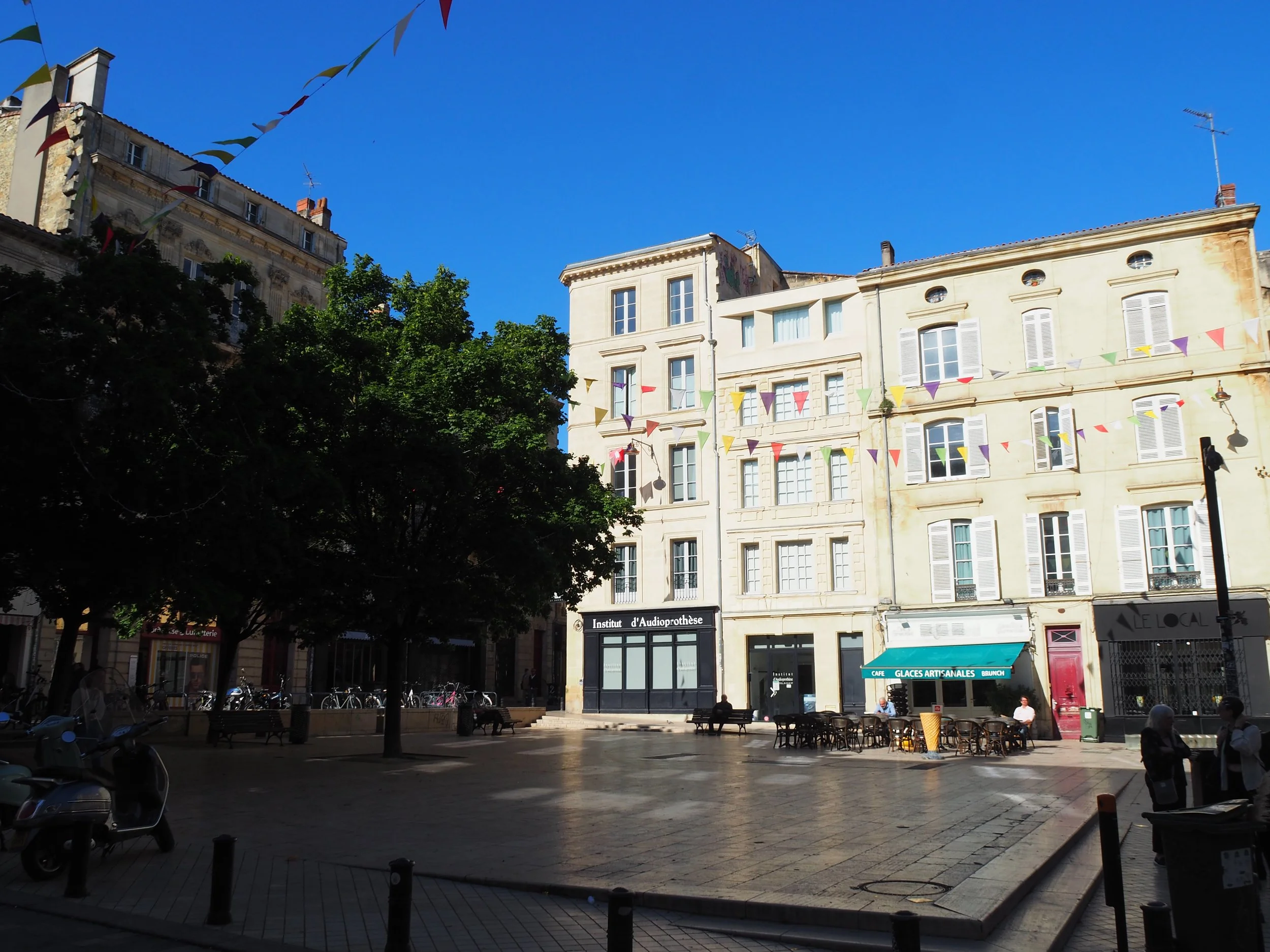
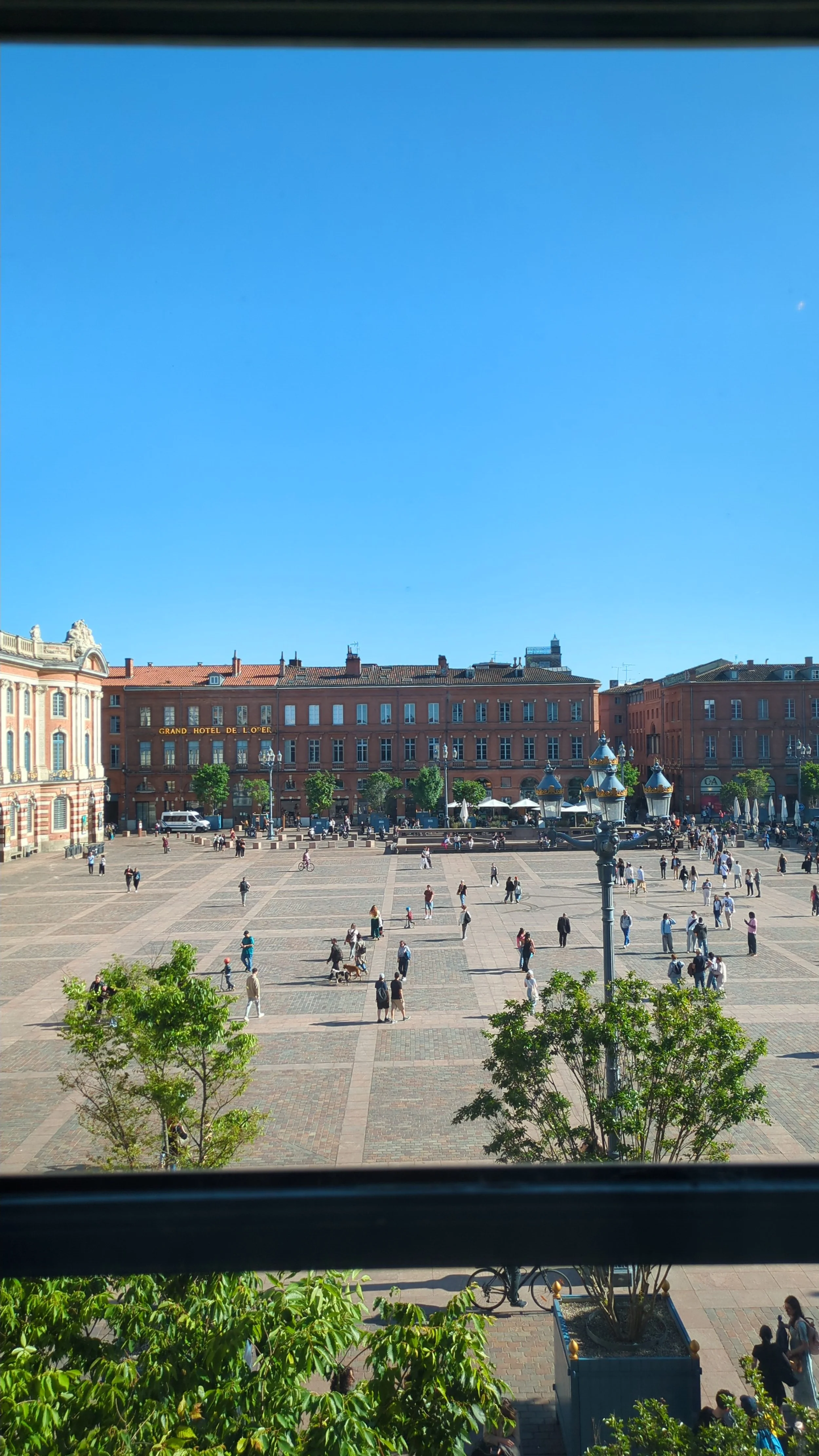
We started out in Toulouse by finding our hotel. We were staying at the Ibis Styles Toulouse Centre Capitole and that was an excellent location. Be sure to reach out to them ahead of time for parking advice. There is a lot that is beneath the plaza and the only downside was the need to drag out luggage up the stairs. The plaza was lovely with lots of restaurants and it was bustling pretty much the entire time we were there. The hotel was run by a wonderfully friendly staff. I'd absolutely recommend this hotel to anyone staying in Toulouse.
The next day, we were off to see the city and to do a boat ride on the canal. We worked our way south by a number of parks. We went to Saint Stephen’s Cathedral which was really lovely. I’m writing this post many months after the visit (for various reasons that I may create a separate post on) so unfortunately my memory isn’t as clear as it has been. What I do remember is that when we were there, Toulouse was under construction. I’m used to that in Europe, but this was a lot. And all the gardens were closed, which was unfortunate.
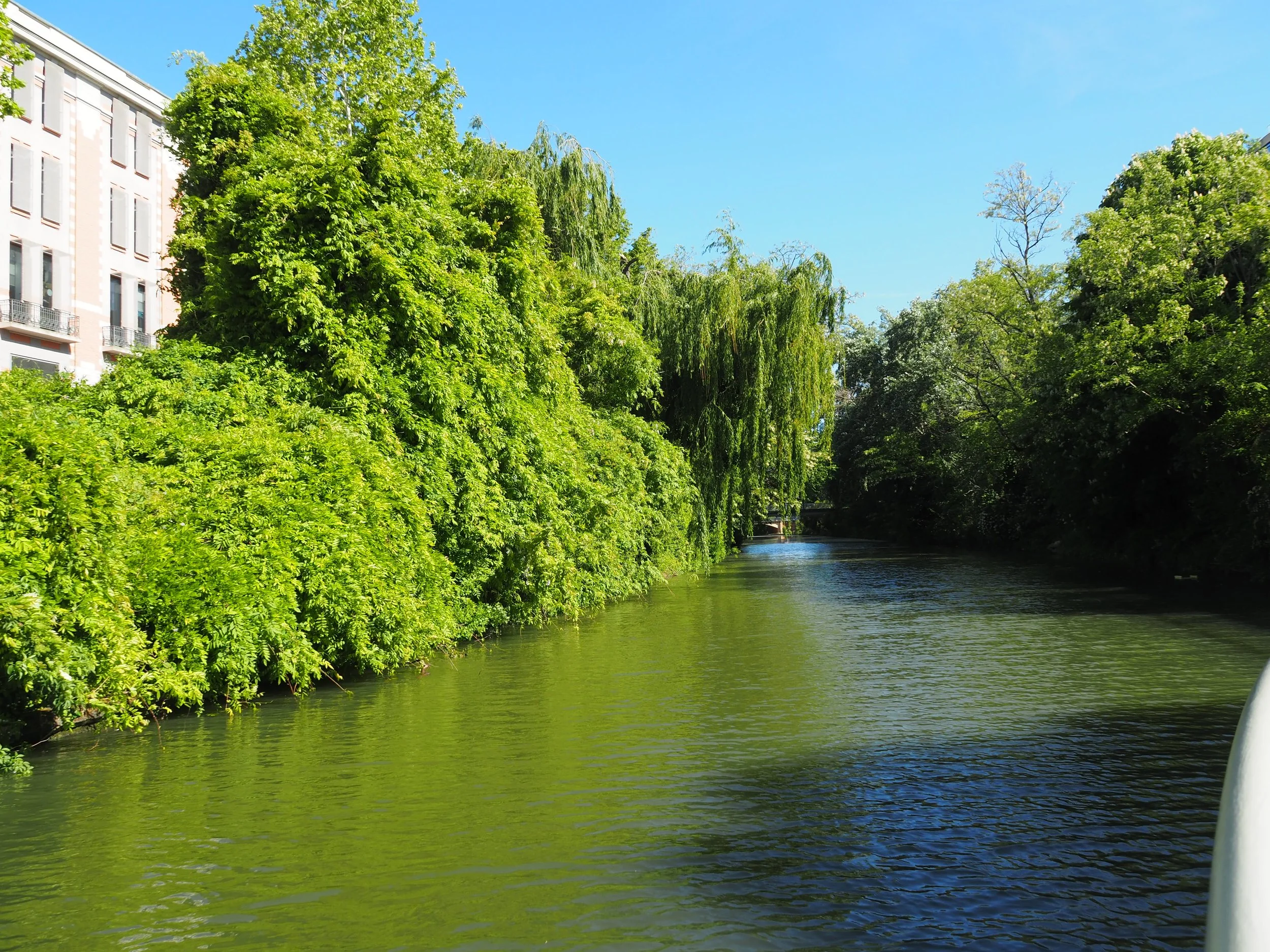
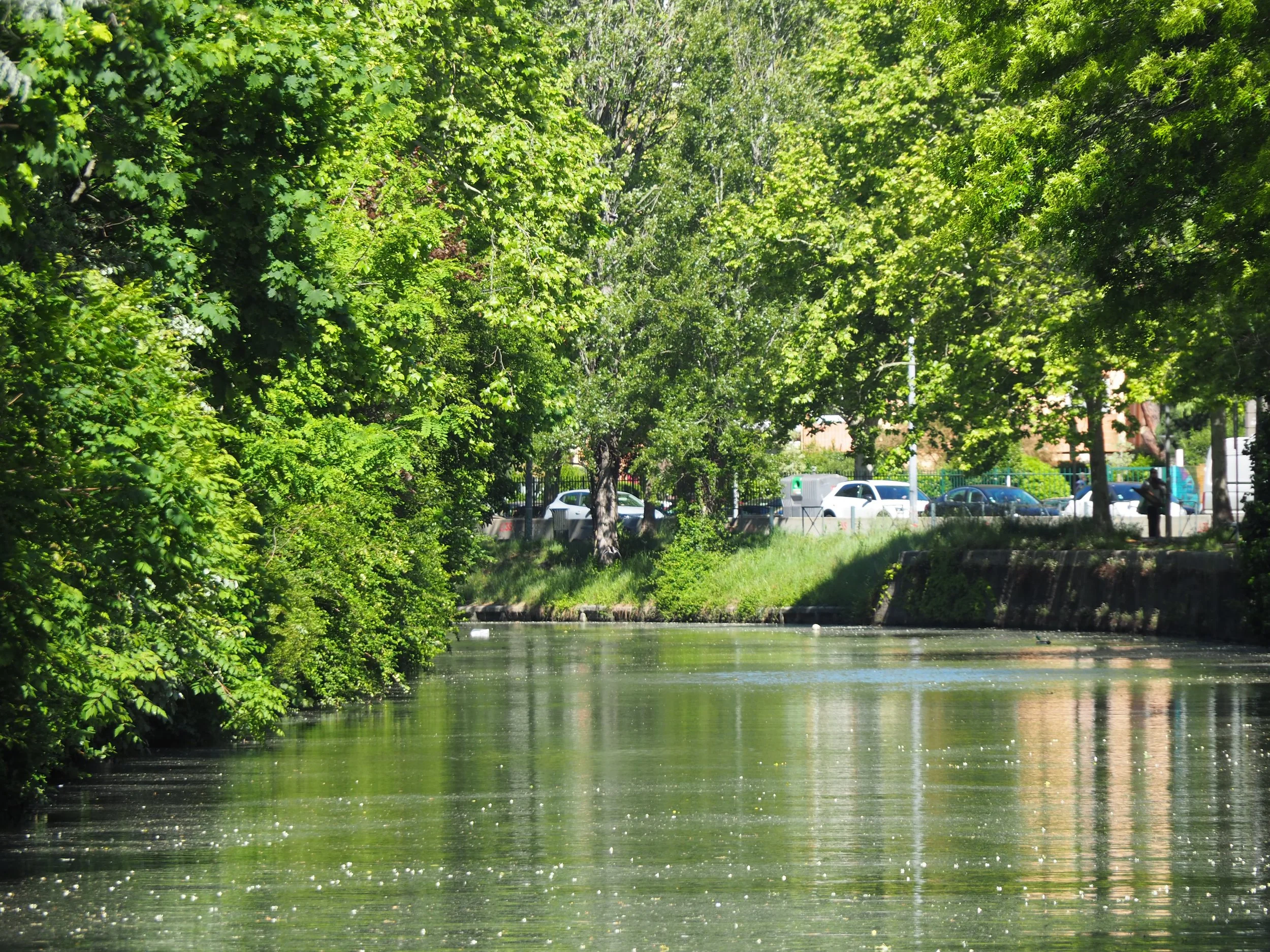
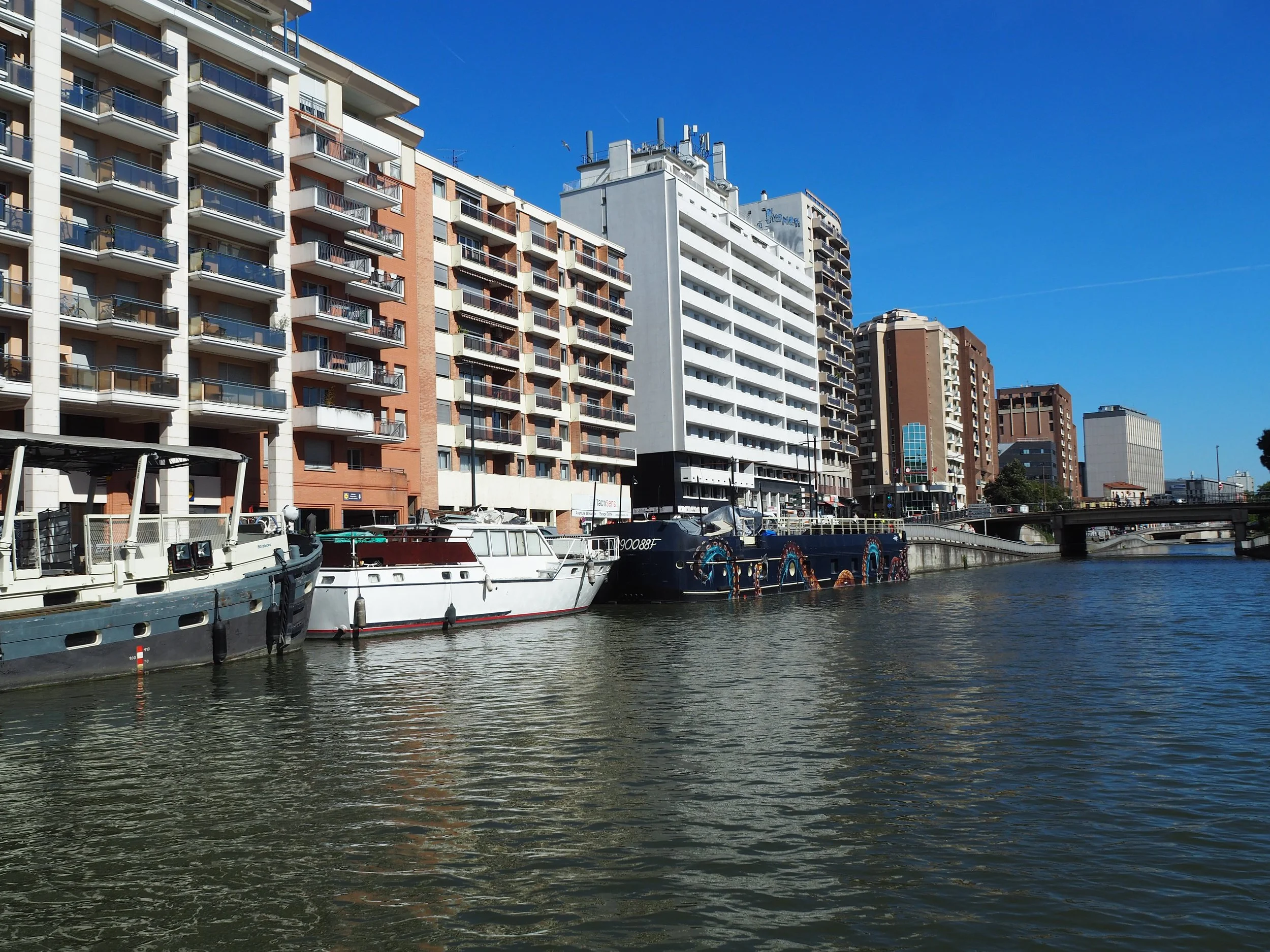
We did find our way to Port Saint-Sauveur which is from where the canal boat left. During the height of the season, there are more boats, but we did manage to take one at 10am. It was very fun. The canals are so amazingly peaceful. Toulouse is not a small city. However, the space around the canals was often filled with trees and plants that made it feel like you were in the middle of nature, not in the middle of a city. The locks were of course really fun to go through. The narration was also very good and helped give a nice history of the city. The tour was relaxing and a great way to visit.
From the boat, we disembarked at Port de l’Embouchure. The fact that the gardens were closed did make our walk back down into the city a bit more complicated. I had intended to cut through the Japanese garden, but we had to go around. It was fine, though, as Toulouse is a very easy city to navigate. We made our way to the Basilique Saint-Sernin de Toulouse, another grand religious space dating back to 1096, located on a space where an abbey church had been in the 4th century. It is famous for its relics, many of which were donated by Charlemagne. It is a World Heritage Site and has some lovely Romanesque architecture. After that we stopped by the Musée Saint-Raymond to see the Roman artifacts of Toulouse. There was a Roman presence in Toulouse but there is nothing to see above ground at this point. The museum was kind of small but had well-presented artifacts and some interesting history of the city.
Our final stop before heading out of the city was the Couvent des Jacobins. It is a large series of buildings (since it was a convent.) It had some interesting architecture, and the remains of Thomas Aquinas. The courtyards were quite lovely and offered a nice bit of quiet.
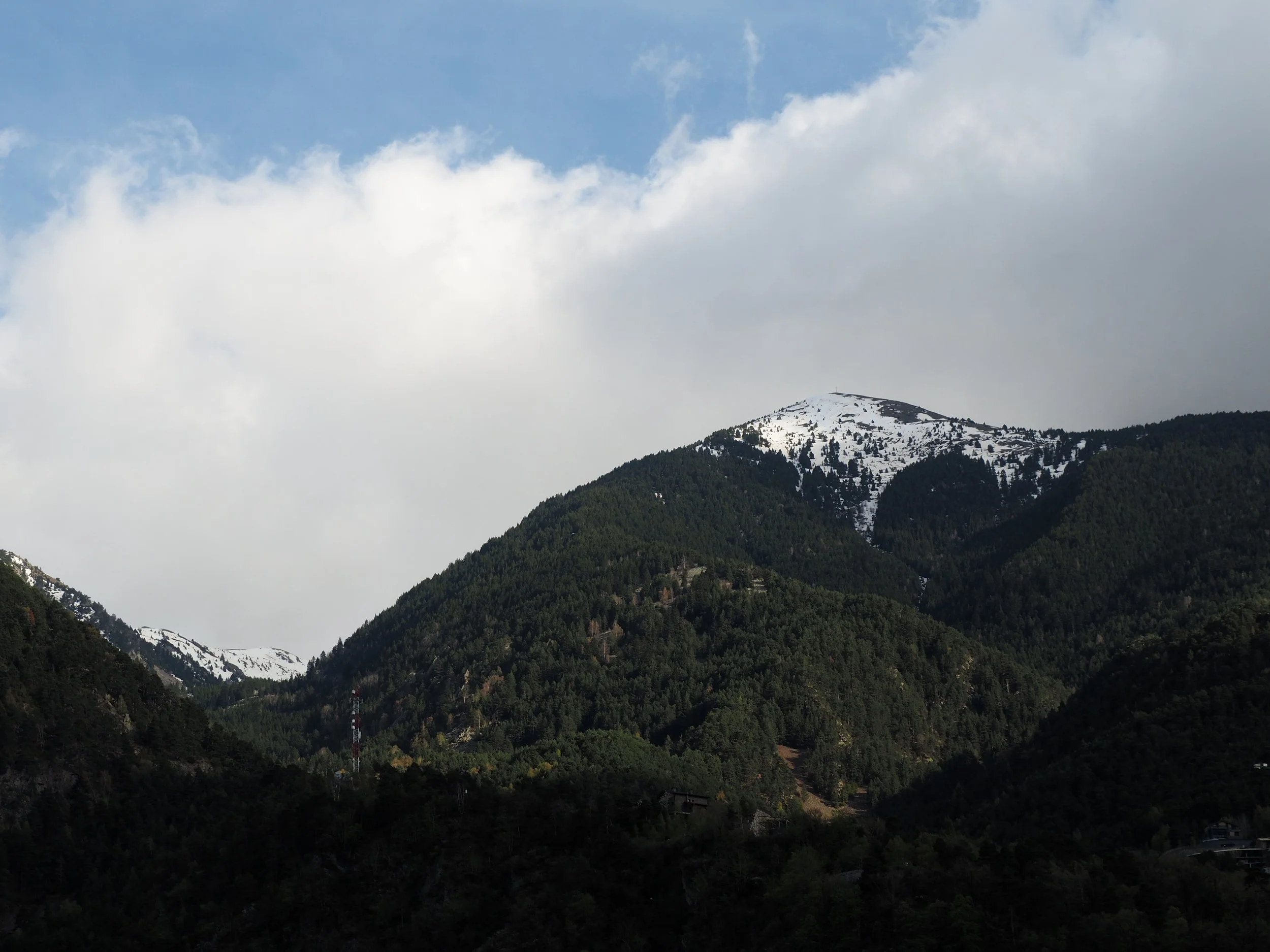
After our visit to the convent, we headed back to the hotel and then the car to make the drive up to Andorra. And it was quite a drive. It’s not an incredibly long drive (about 2 hours and 40 minutes,) but it’s quite a drive. I wouldn’t want to try to drive it in the winter since there was still snow on the ground as we passed through the mountains. The scenery was striking, though, and the roads were very well-maintained. While there were areas that appeared to be for border control, there was no one there, so it didn’t feel like traveling to another country.
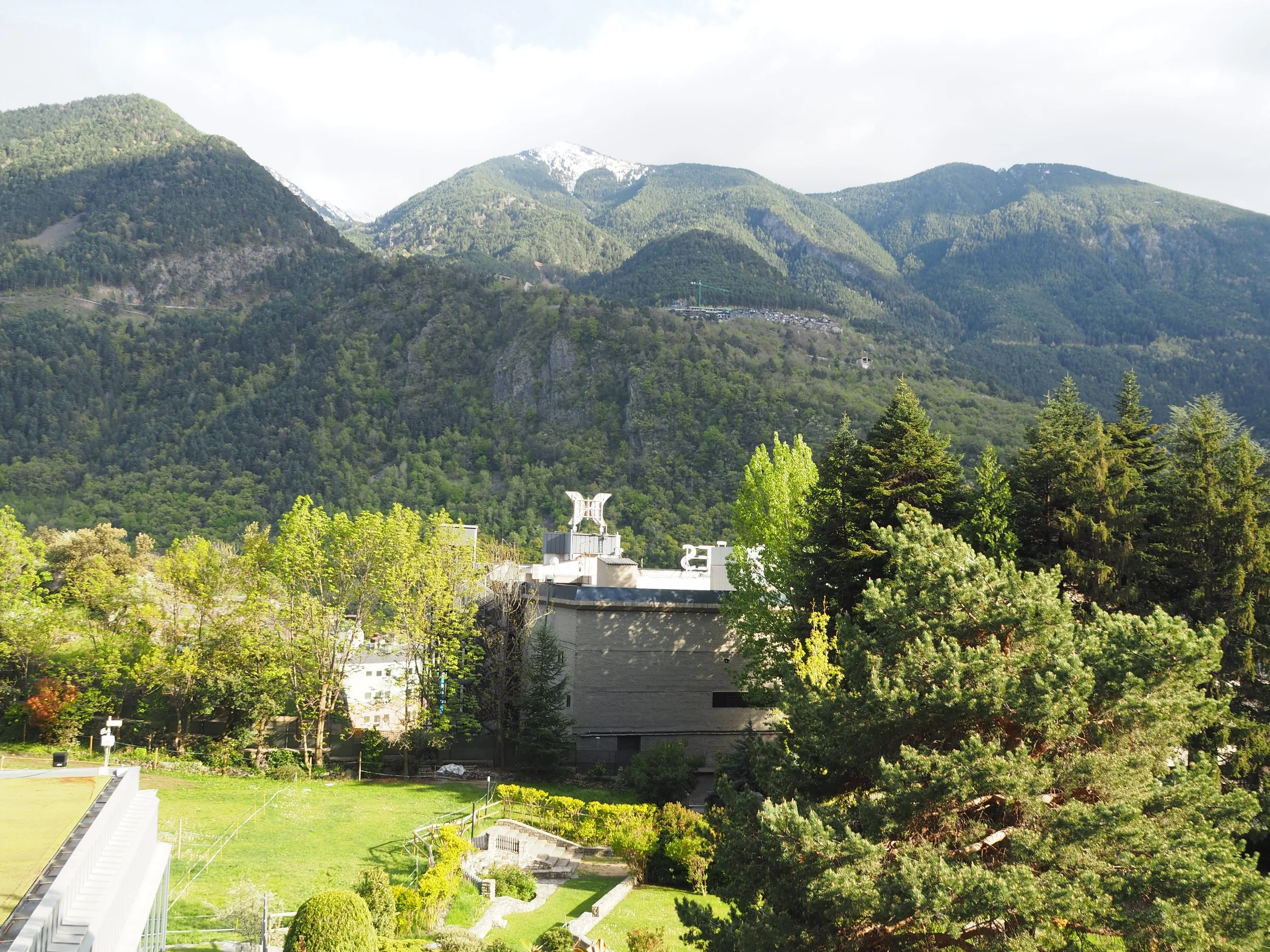
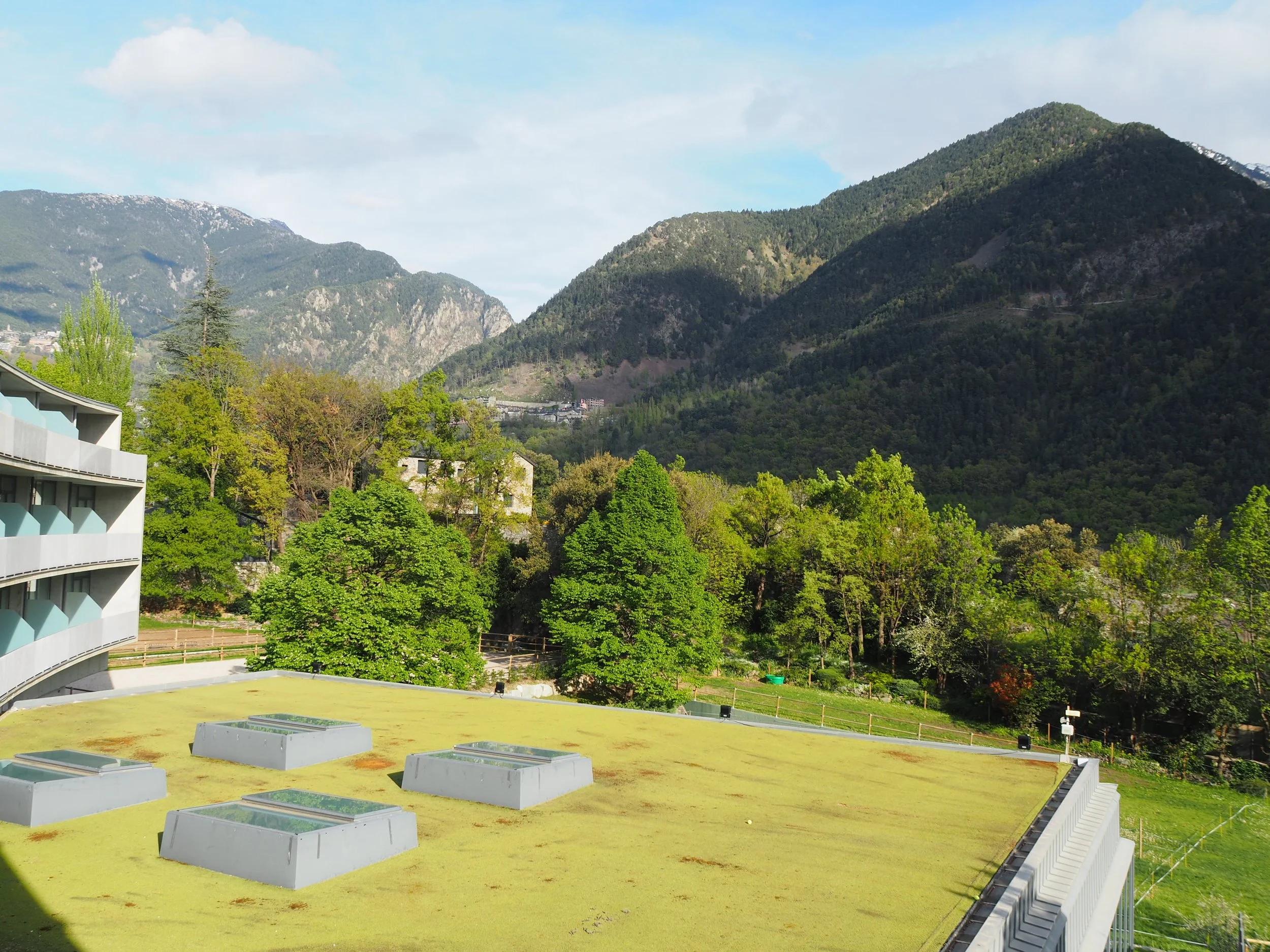
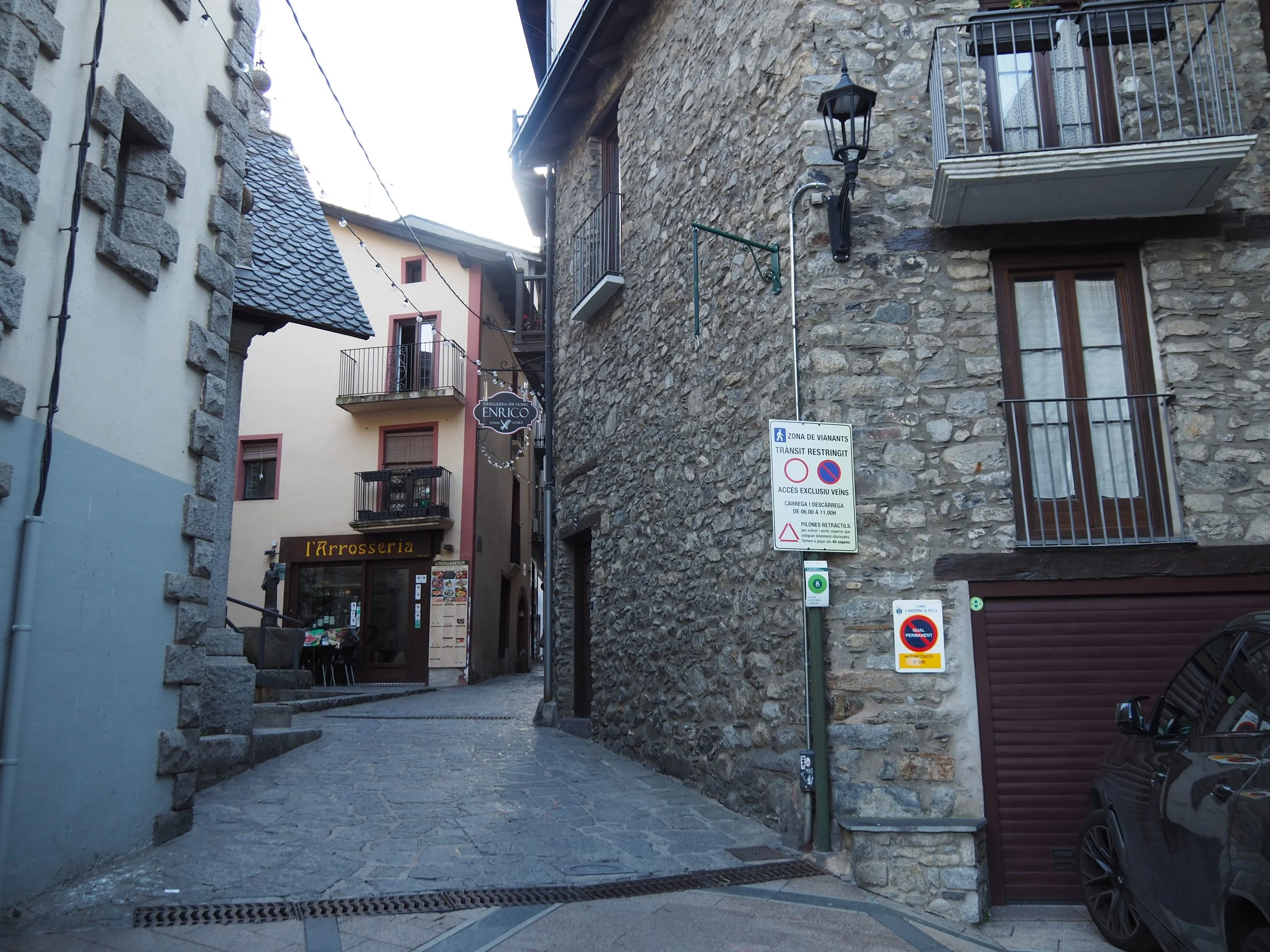
We hadn’t intended to stay very long in Andorra. It is a very small country and much that it is famous for are things like hiking and skiing, which isn’t really what my mother and I do on these trips. But Andorra la Vella was so charming! It is very small, the town rising up the hills on either side of the river. We stayed at the Andorra Park Hotel, and I really want to visit in the summer. It was an amazing hotel. The staff were incredible (and kind of surprised we found our way there or had heard of Andorra at all.) It was located above the old section of town. We wandered over and into the tiny older section. There was more construction going on, but we got to see a flavor of the medieval town. We had a drink at one of the cute bars, and seemed to be the only visitors that day. We had dinner at the hotel in their beautiful semi-outdoor restaurant. We were expecting cold weather, but we had perfect warmish weather. Apparently the cold and rain were waiting for our last couple of days.
After we enjoyed our brief visit to one of the smallest countries in the world, we were heading toward Avignon.
Avignon and Environs
Avignon is a fantastic place to stay for multiple reasons. It’s a beautiful city with fascinating history, plus it’s a central location to visit a number of other cities with some amazing archaeology. Our trip to Avignon from Andorra included a trip to Cité de Carcassonne, and from Avignon we also visited Orange, along with Nîmes, Arles, and two abbeys that were a bit off the beaten path.
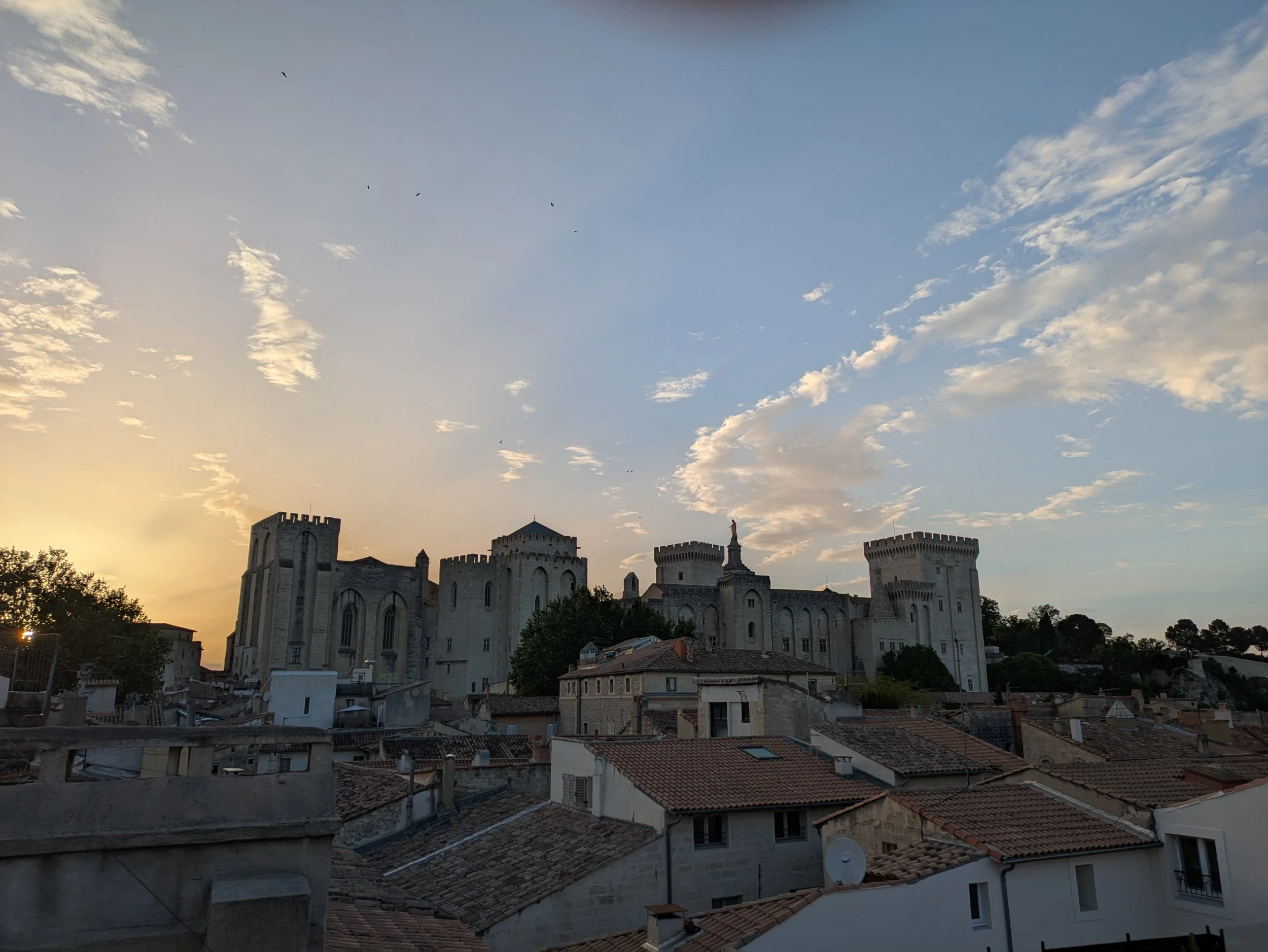
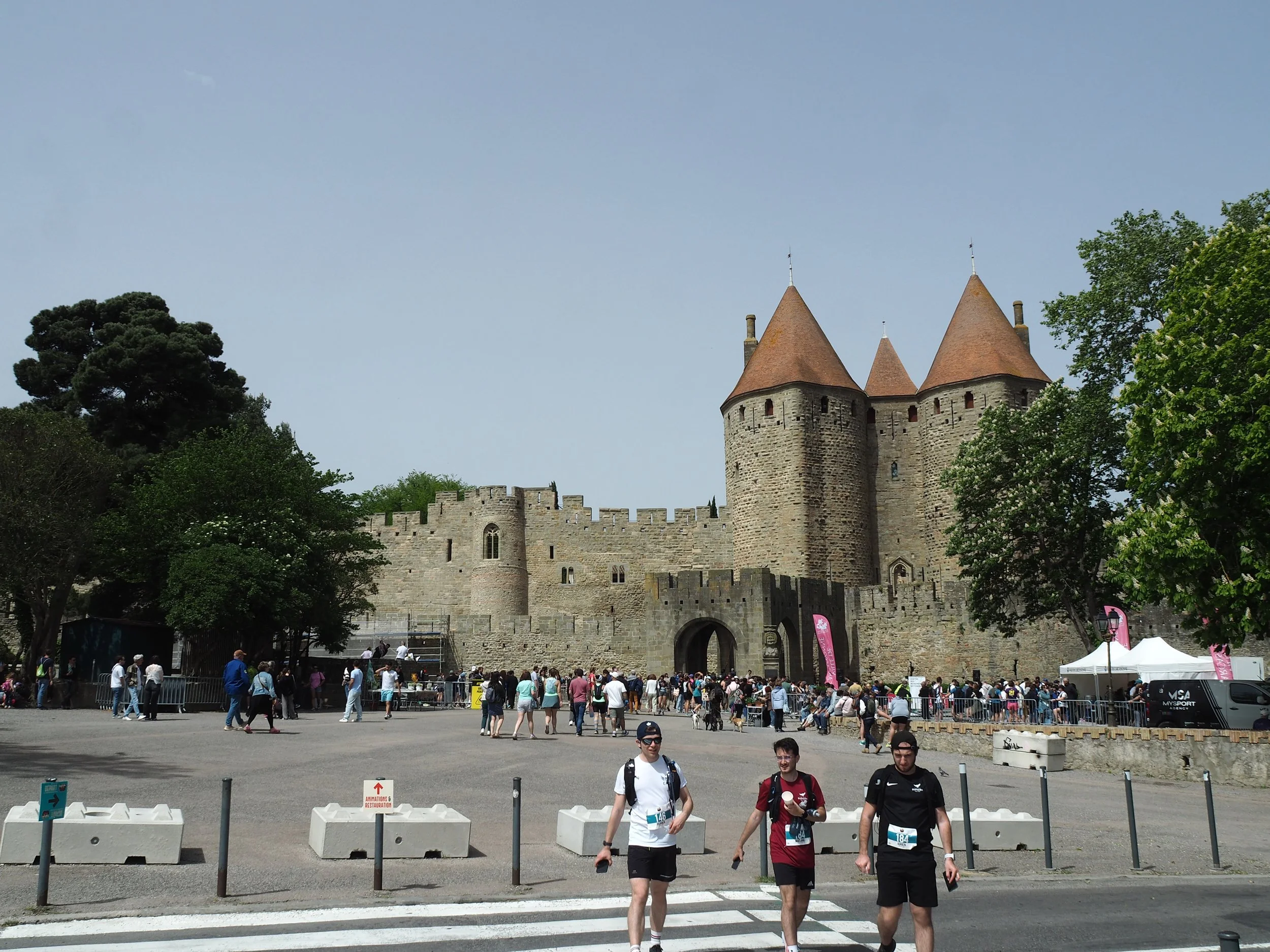
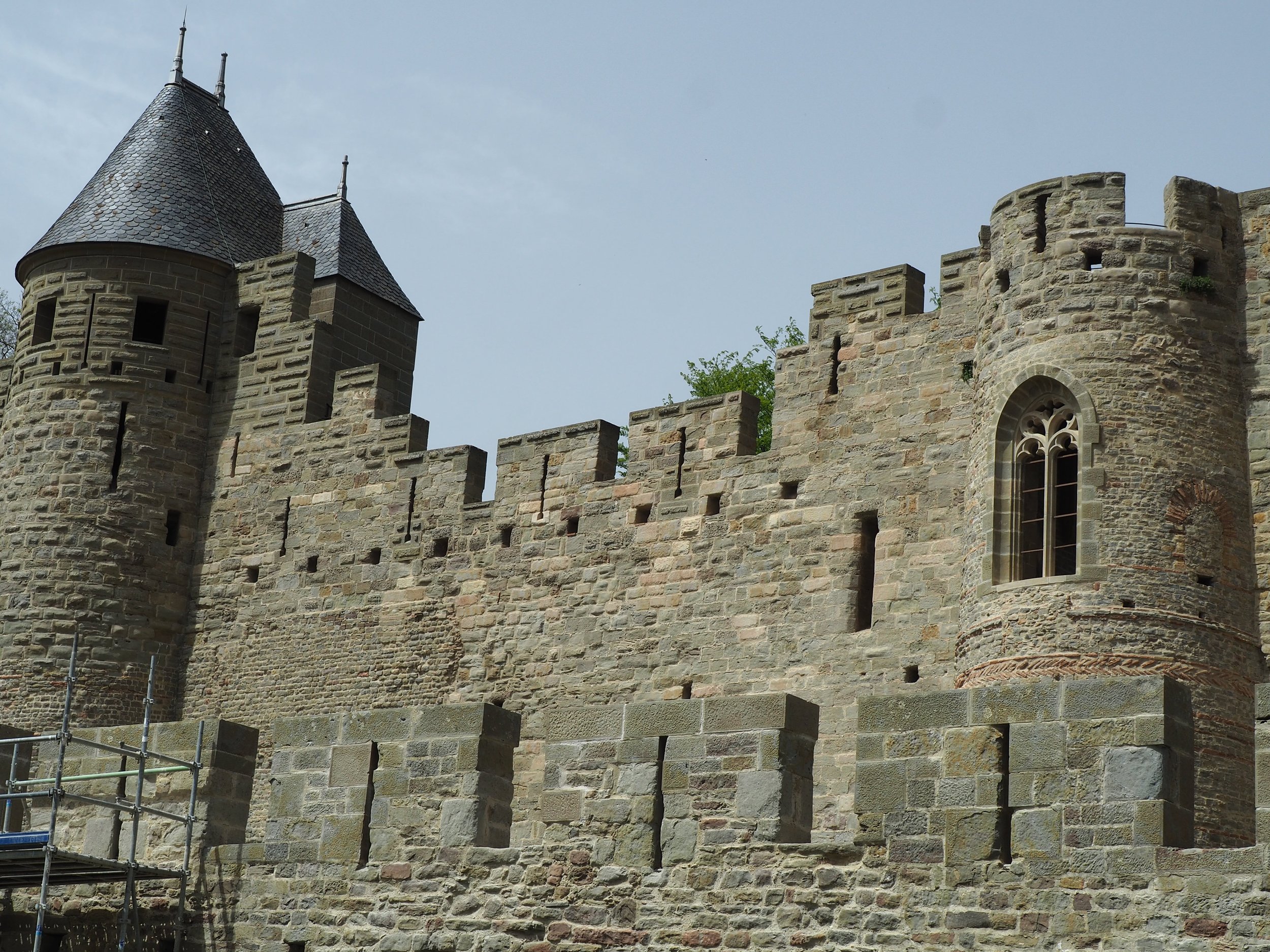
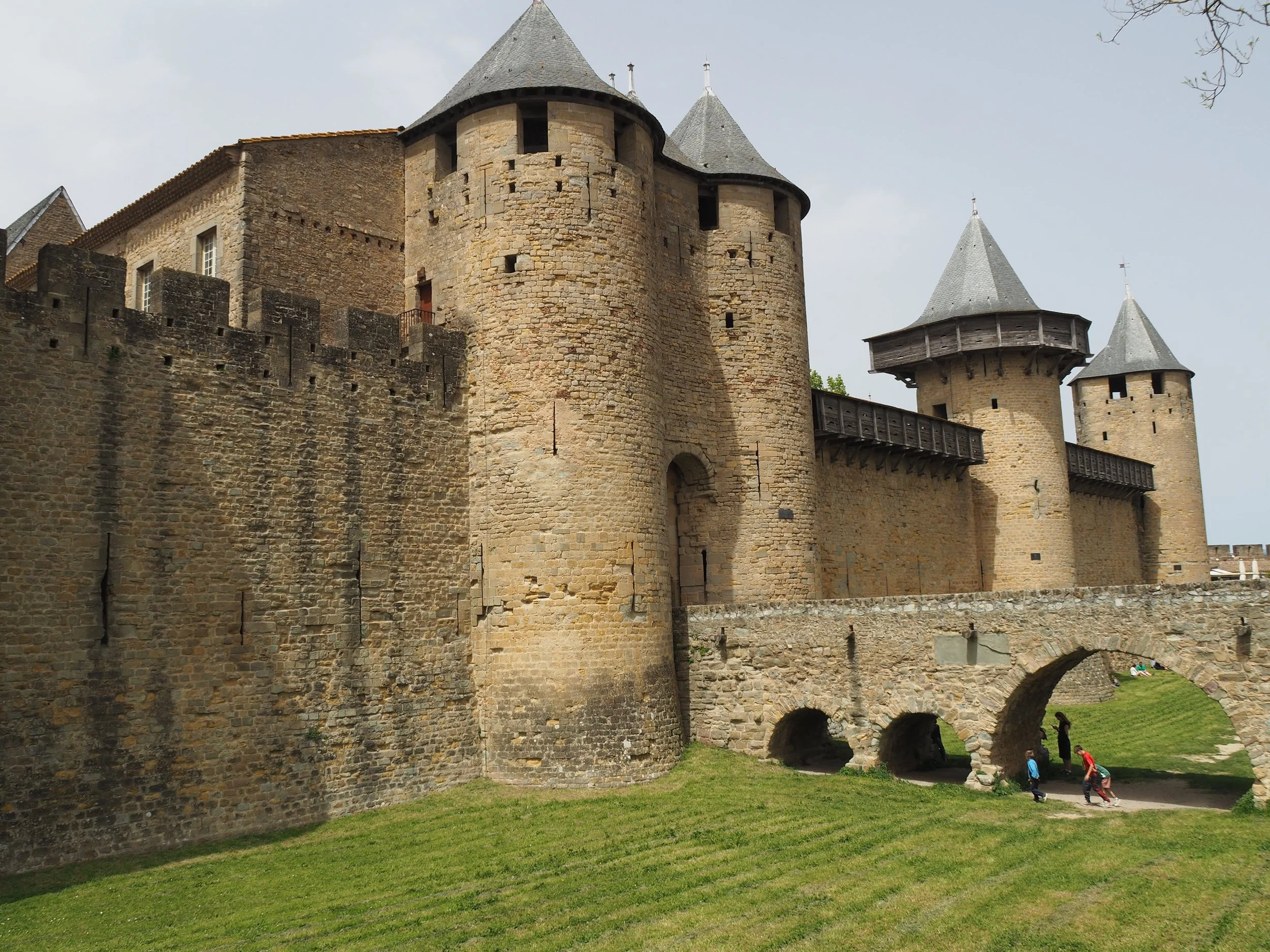
Carcassonne, Avignon, Orange, and Nimes
I definitely wouldn’t want to make the drive out of Andorra in the rain or the snow. Luckily, we had some lovely weather as we made our way out of the mountains at to Avignon. 2-3 hours of driving is about what have decided are okay before a break, so we needed somewhere to rest on our way. Luckily, right about that point, we would end up at Carcassonne. Carcassonne is one of the few remaining walled cities in France. It is incredibly popular, and the day we visited was no different. It didn’t help that it was May 1, a common holiday in Europe. Many museums were closed and many people were off work. And, of course, there was a foot race. I just can’t get away from them.
We were able to find a decent parking spot at one of the many lots near the city. It was very crowded, but people were coming and going, so it wasn’t too difficult. The city itself almost feels fake. Like it was built for a movie many years ago and then it was sold as a tourist destination. But that is because it had been saved from demolition by the local people along with Jean-Pierre Cros-Mayrevieille and Prosper Mérimée (the author of the novel that the opera Carmen was based on.) The medieval history of the city is a little wild (including Crusades to kill the Count of Toulouse because he was a heretic and then more fighting between the king of France and later Counts of Toulouse.) The city itself is kind of touristy but charming if you find your way into some of the smaller back alleys away from the crowds.)
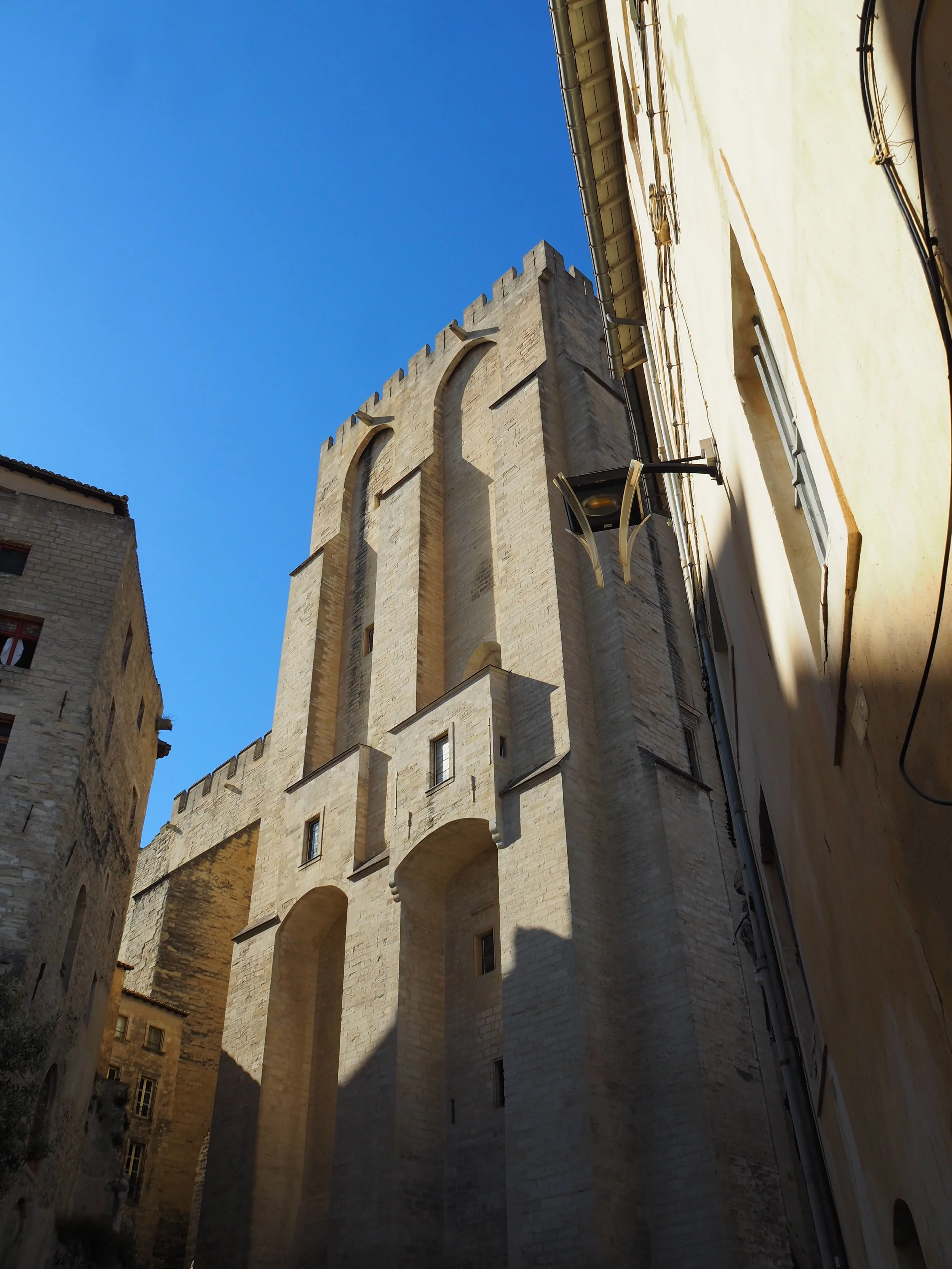
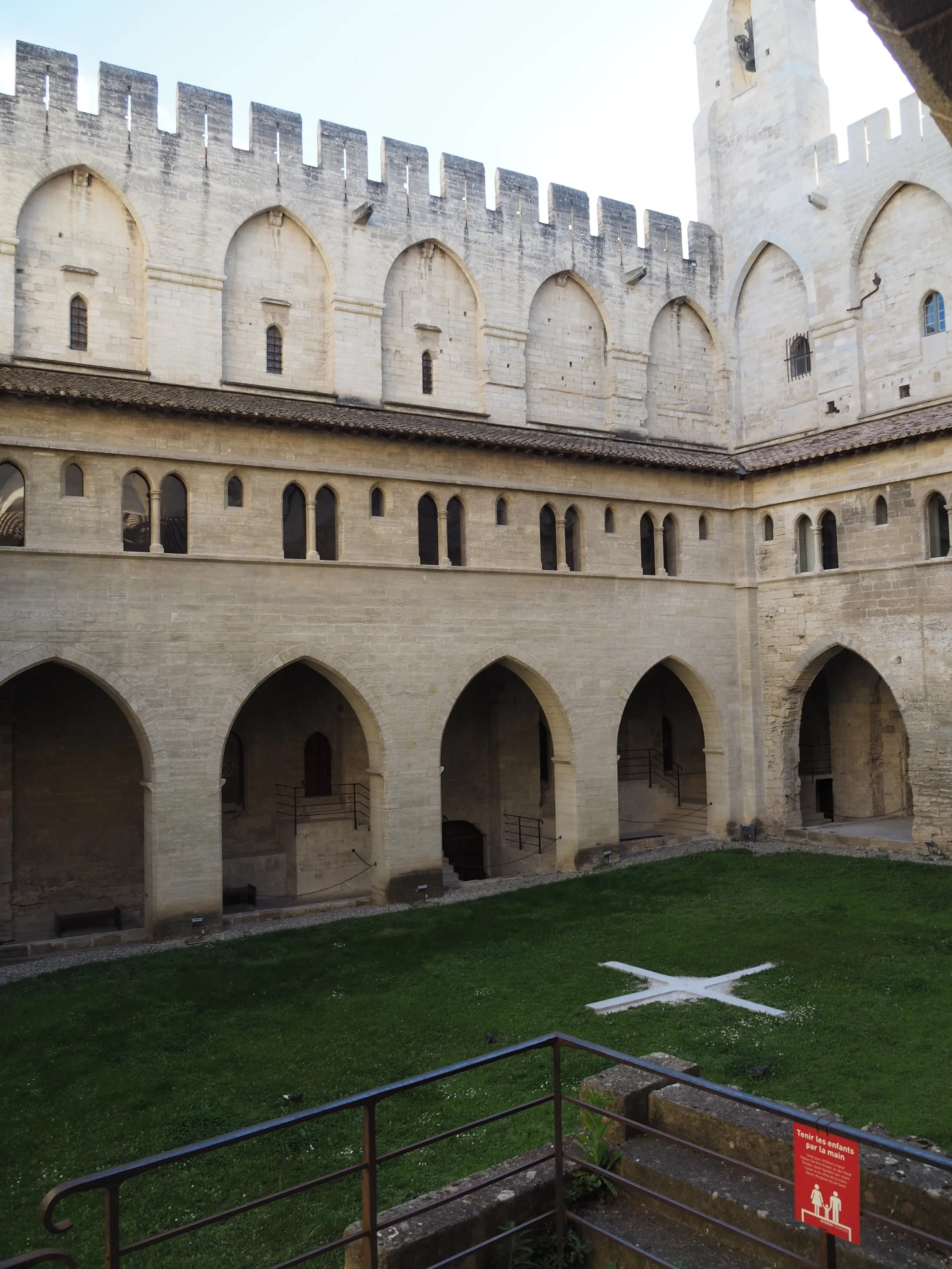
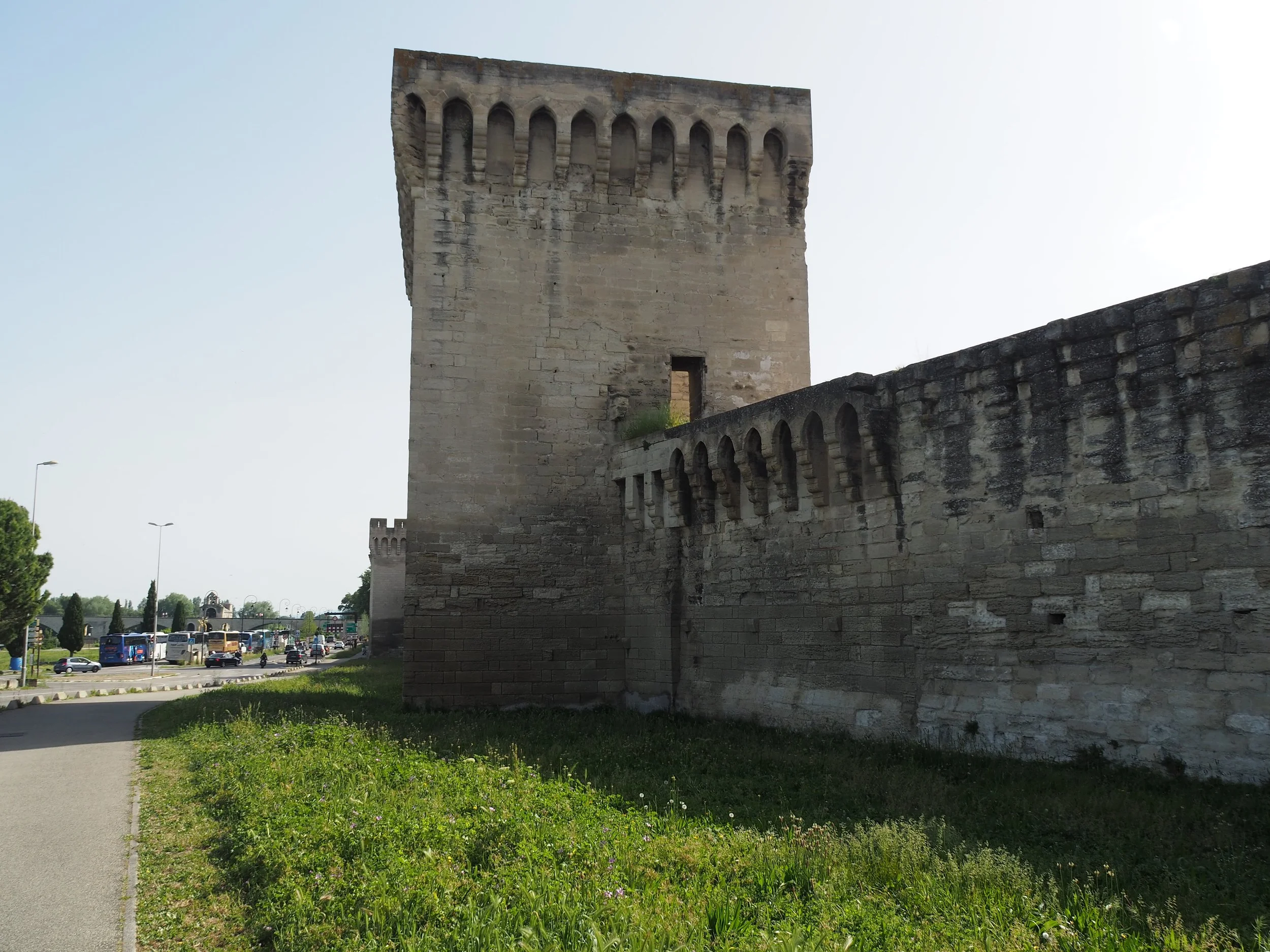
Something else that was luckily open on May 1 is the Palace of the Popes in Avignon. We traveled to Avignon from Carcassonne and checked into our apartment rental (through Booking.com.) It was a lovely two bedroom and we could see the Palace of the Popes from the rooftop terrace. It was very centrally located and we had no trouble finding a parking garage to leave the car. It was a little challenging to find the door, since it’s just a door in an apartment building, but we were very happy once we settled in.
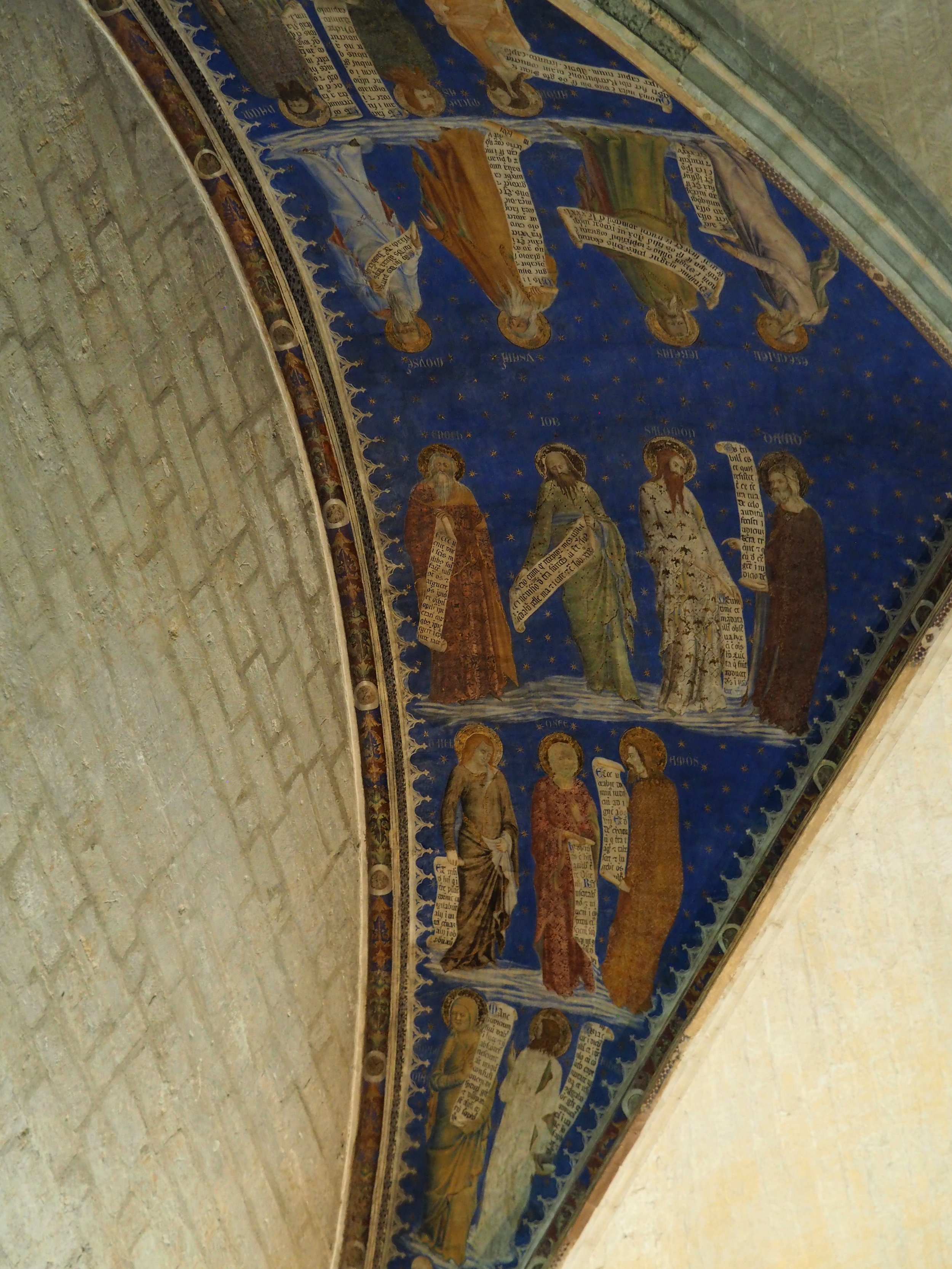
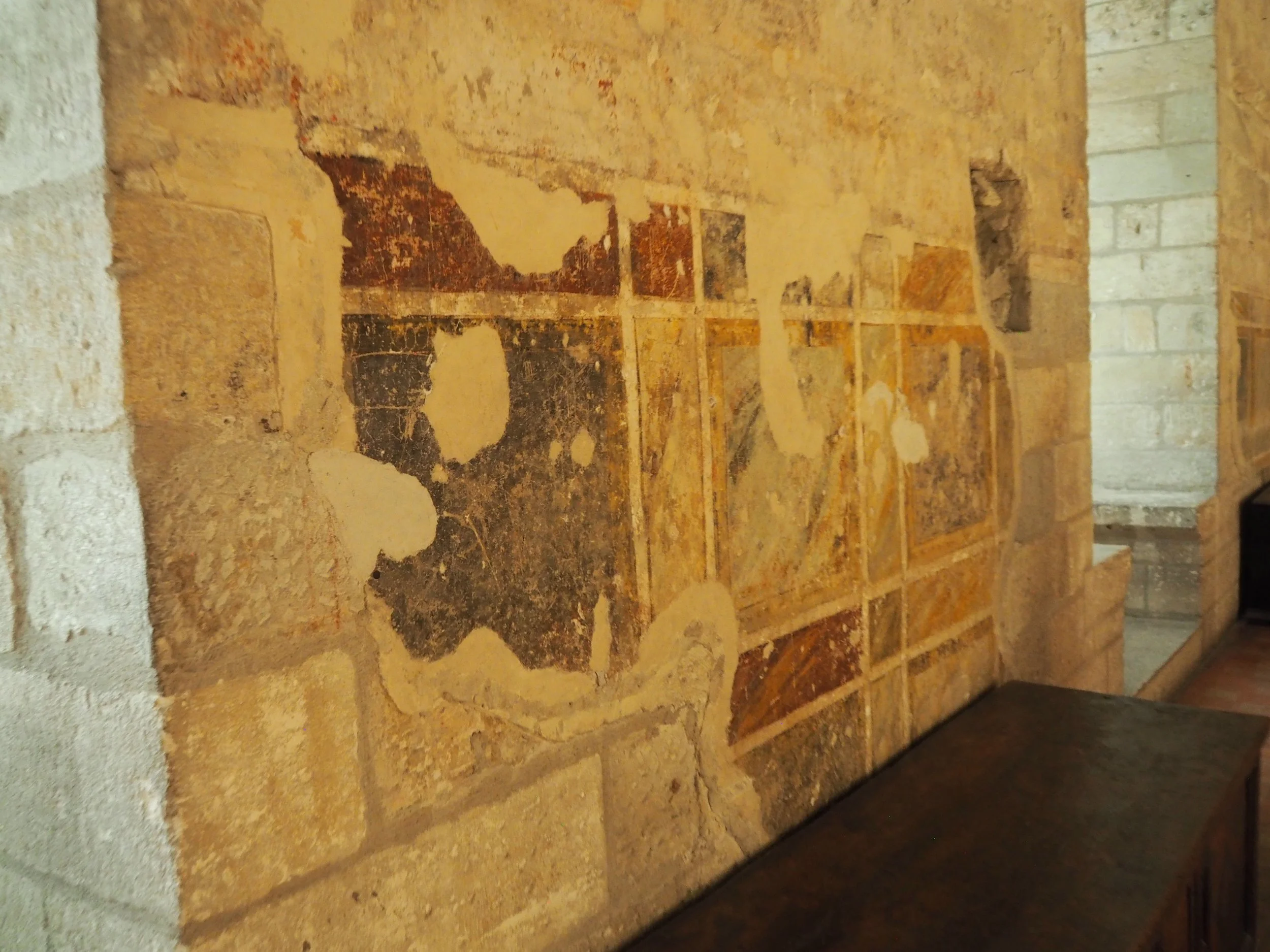
The thing to know about the Palace of the Popes in Avignon is that it is popular. Super popular. Especially amongst all the crowds that stream in every morning on buses and boats. Do not try to visit the Palace of the Popes in the morning. The lines are insanely long and I can’t imagine how crowded it is. We managed to visit around 4pm, which was perfect. There were about two dozen other visitors, so it was very quiet. Something I wasn’t sure about was the way that they have moved to augmented reality. When you visit you are given a tablet which has all of the information and that you can use to show you what the palace would have looked like when it was in use. This is interesting in theory, but doesn’t really work for me. I’m not completely sure why. But with or without the tablets, the palace is well worth a visit.
The next day we started with a very nice walking tour with Marc Camboutive (Tours by Locals.) His tour was an excellent overview of the city. He pointed out some interesting spots that we wouldn’t have noticed without him including the location of a former Knights Templar edifice. While Avignon is famous for the period when it was the home of the Popes, there are the remains of the Roman city as well as later important buildings. The way that the city has been expanded during different periods to serve the uses of those in control was really interesting.
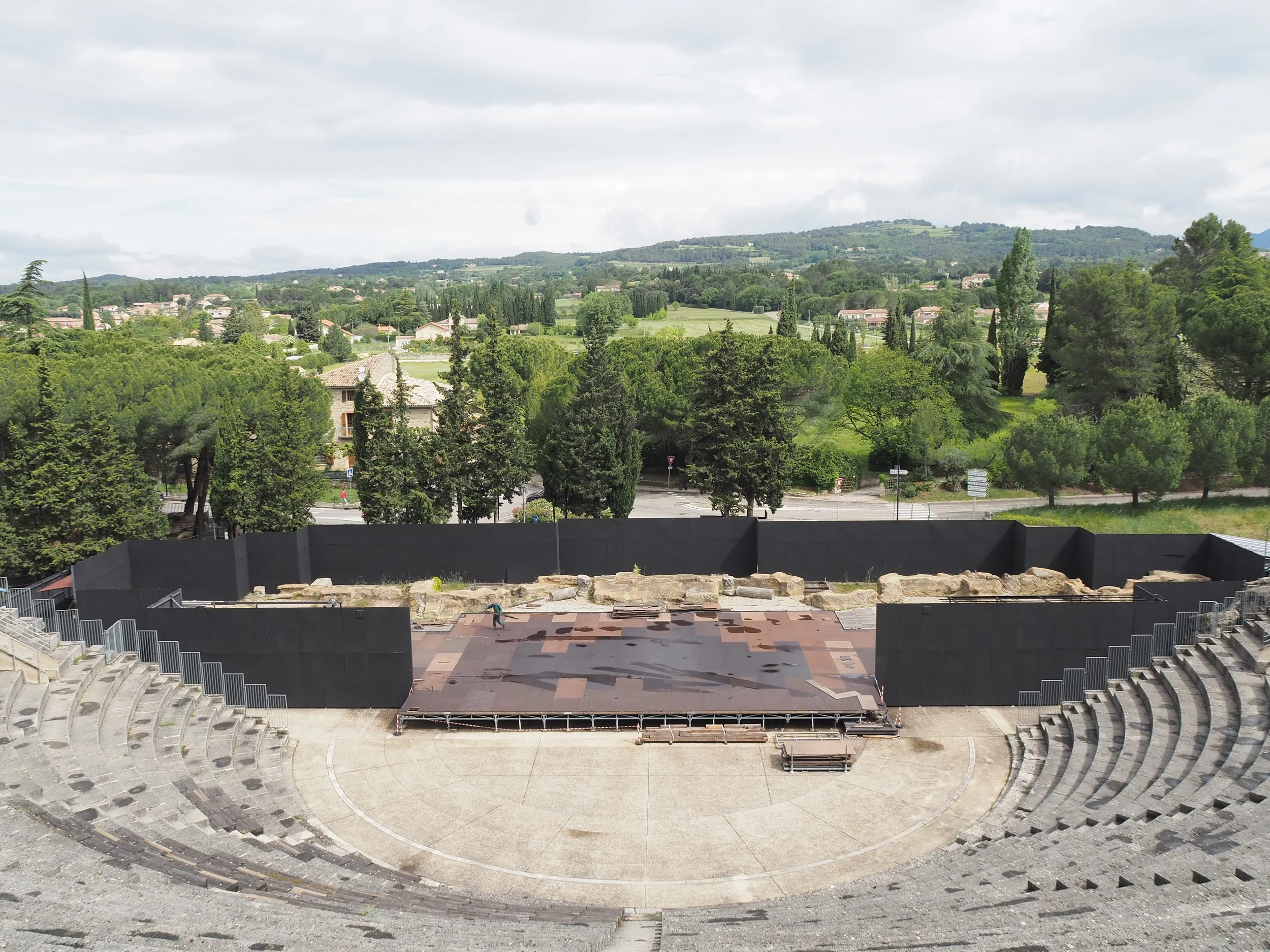
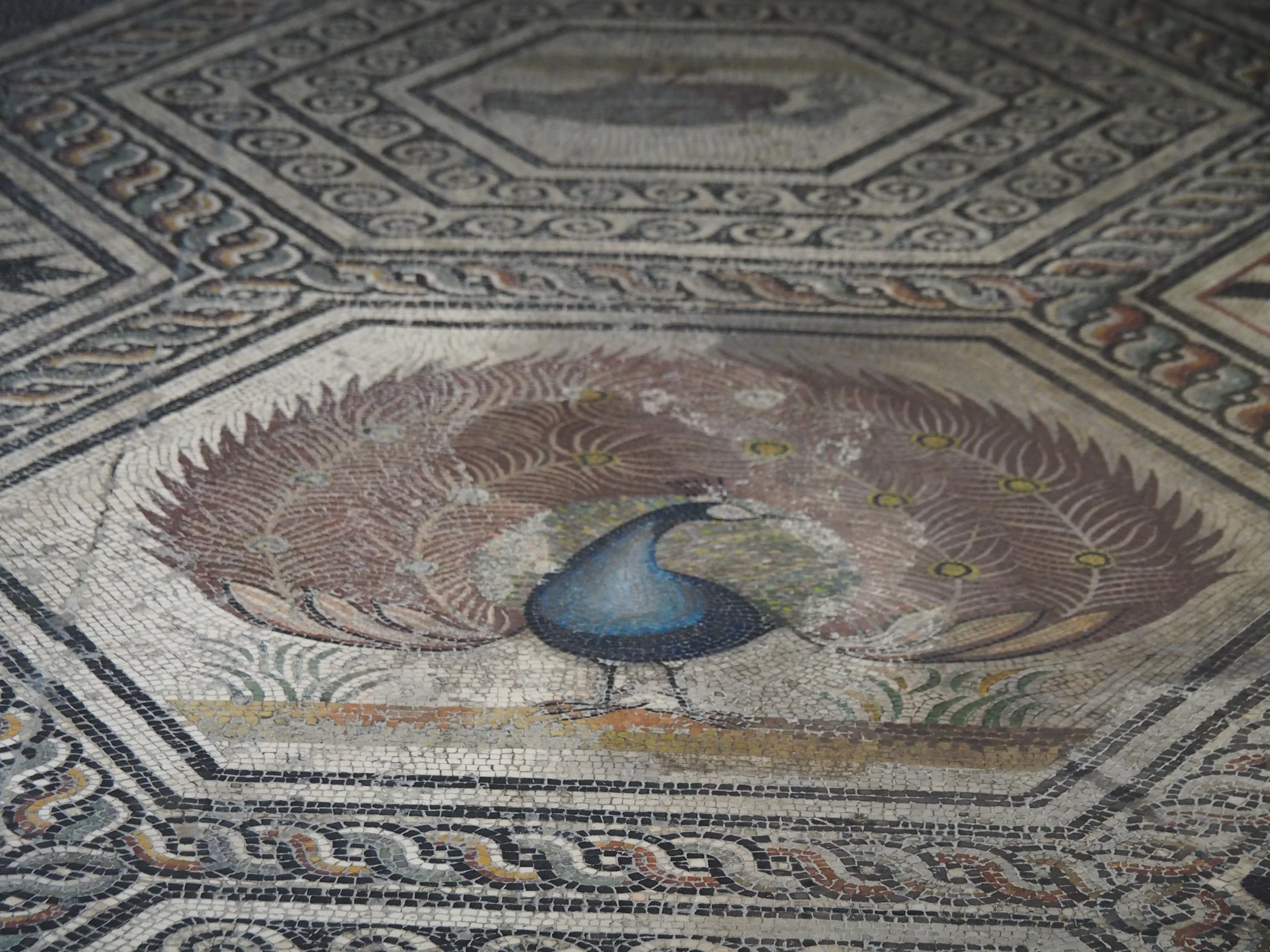
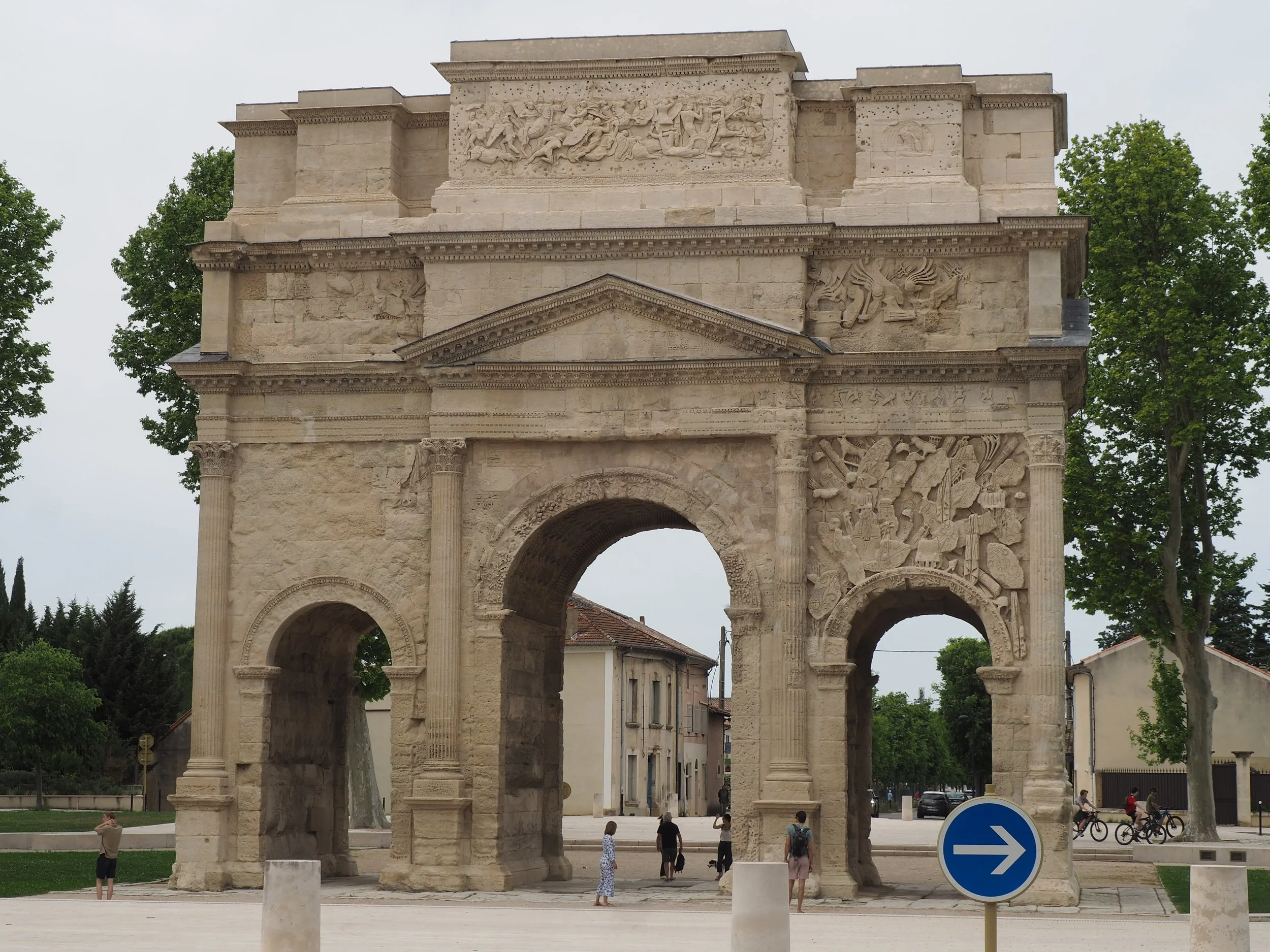
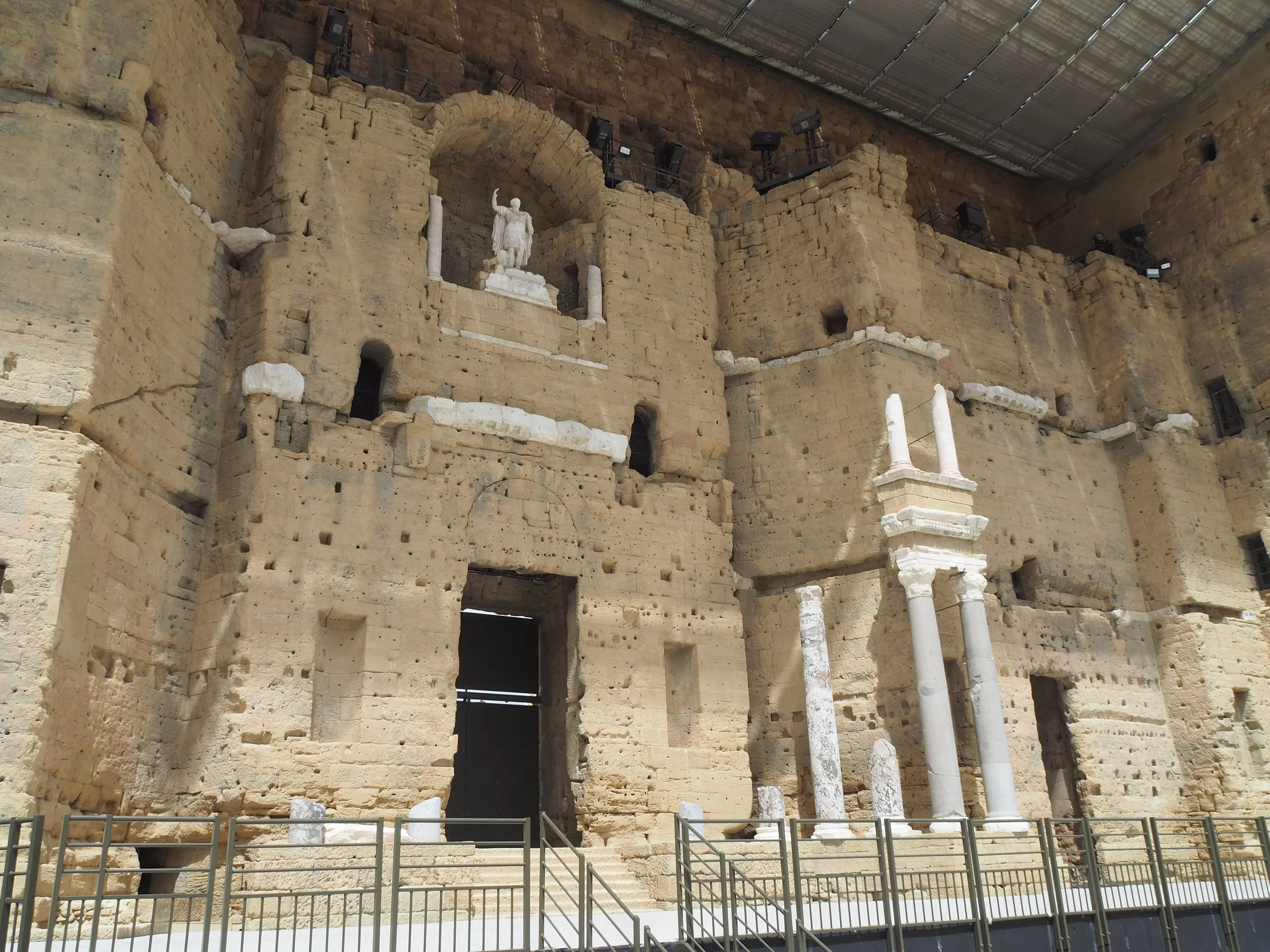
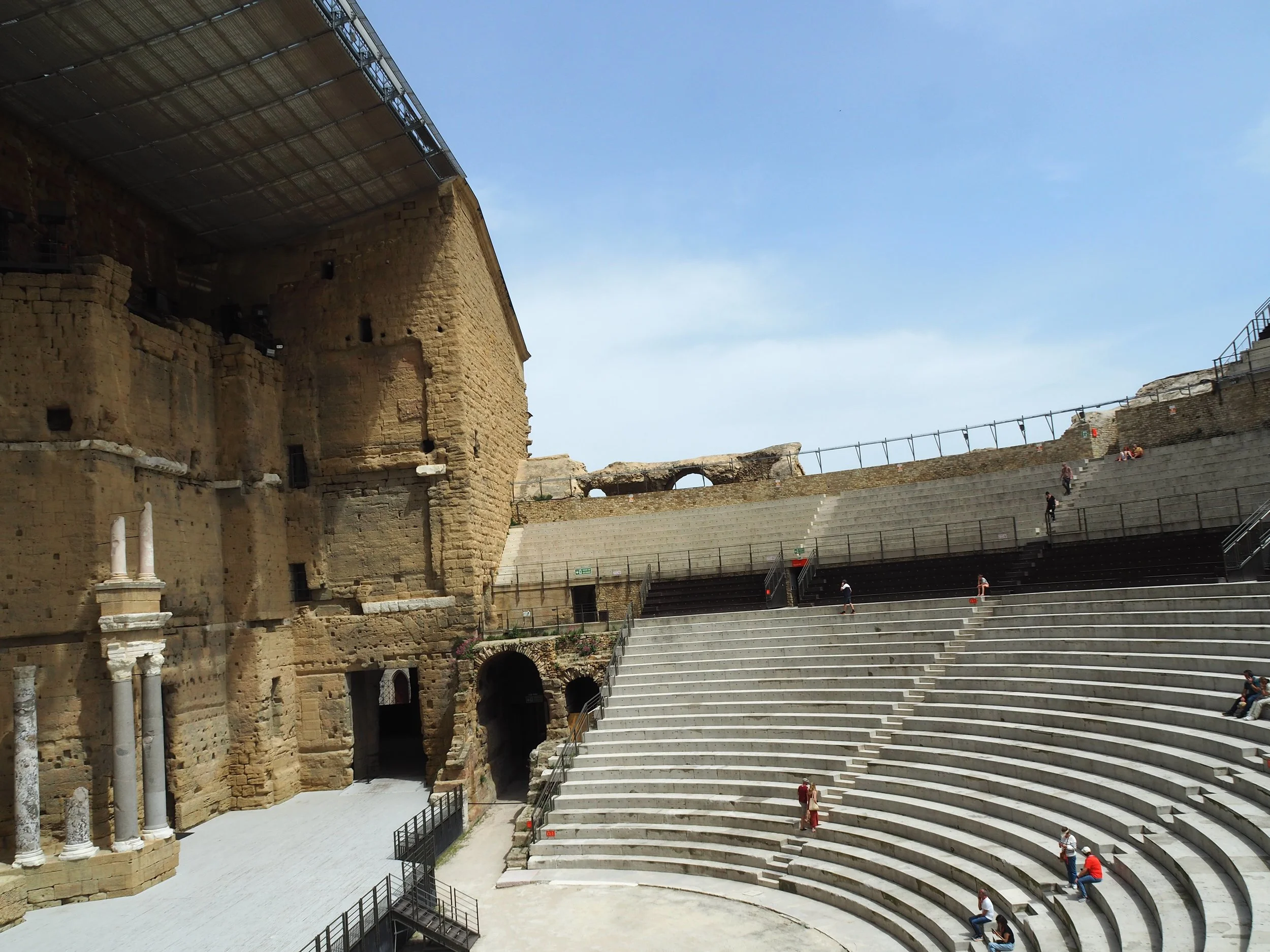
After the tour, we were smart and took the train to Orange. While you can drive to it, taking the train from Avignon works very well. It’s an easy walk from the train station to the heart of Roman Orange. The Roman theater is one of the best preserved in the world and absolutely stunning. On the way there, we stopped by the remains of the triumphal arch, which is a lovely entrance dedicated to Emperor Tiberius. The other main site to visit in Orange is the Museum of Art and History. It’s right near the Theater, making it an easy visit. It’s not huge, but the palace it’s in is lovely and there are some very nice Roman mosaics to see. We caught a train back to Avignon and had a relatively early dinner. That was something we found surprising. A lot of restaurants stopped serving dinner by around 9pm, which seems so early to me.
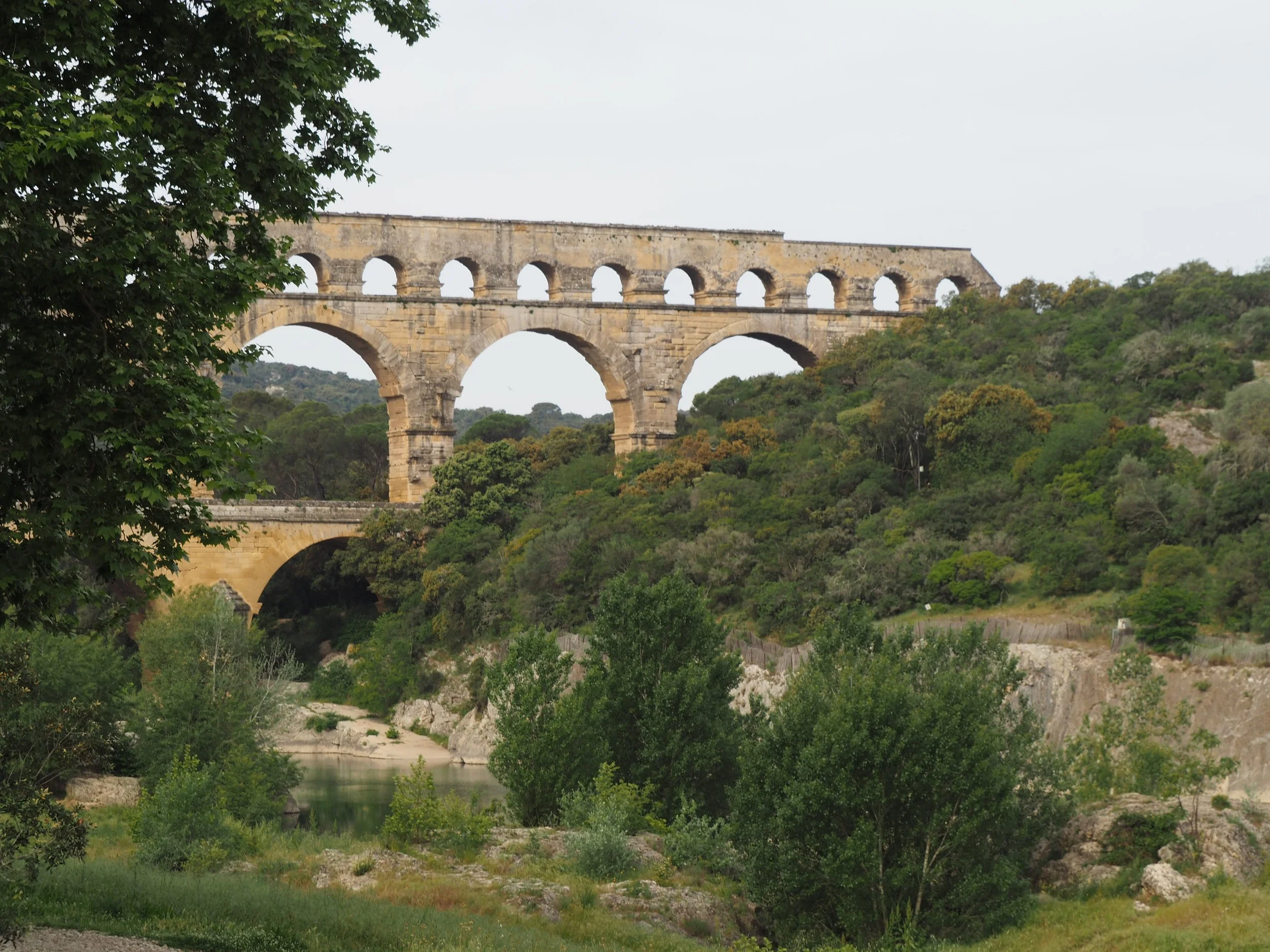
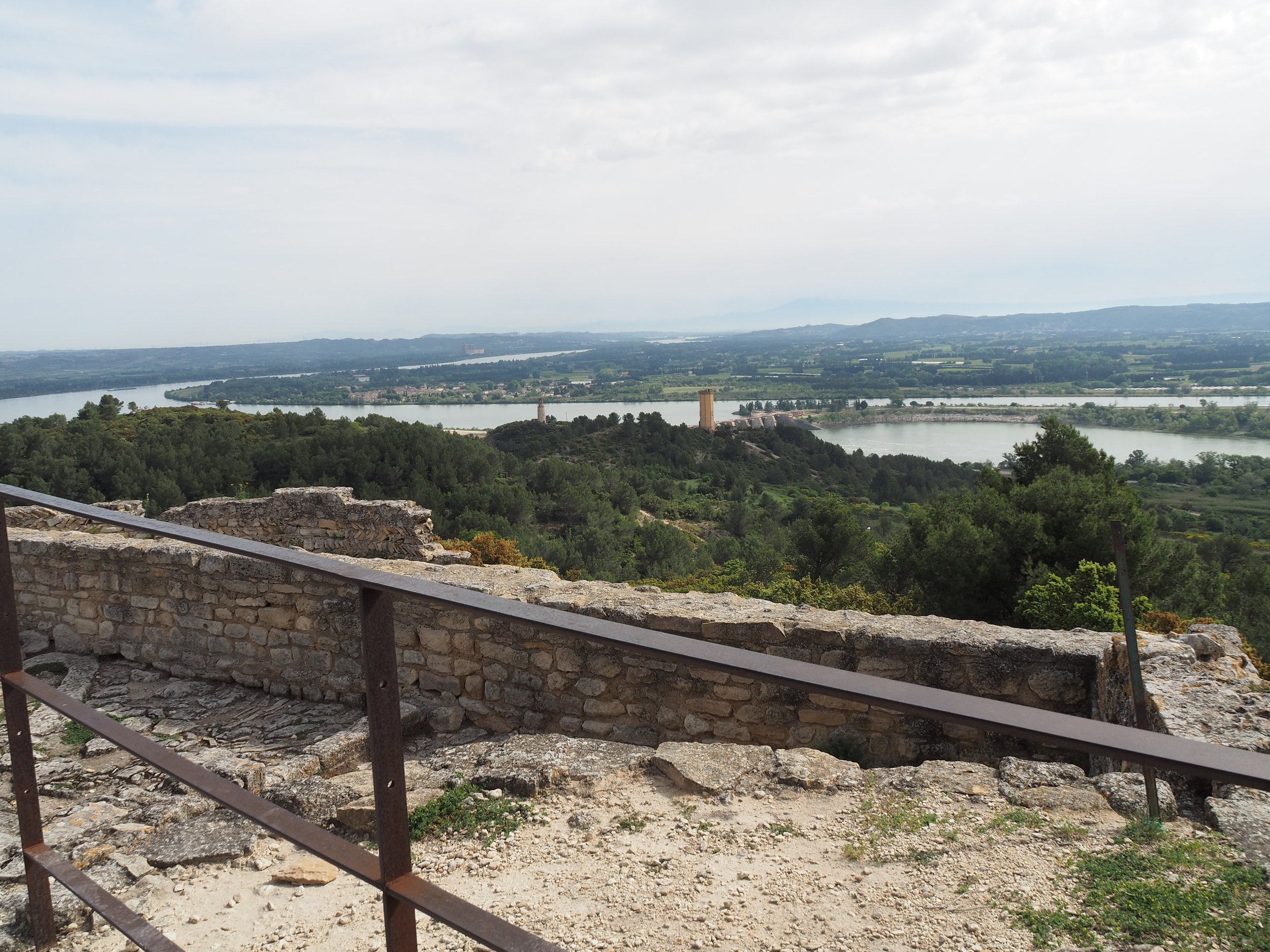
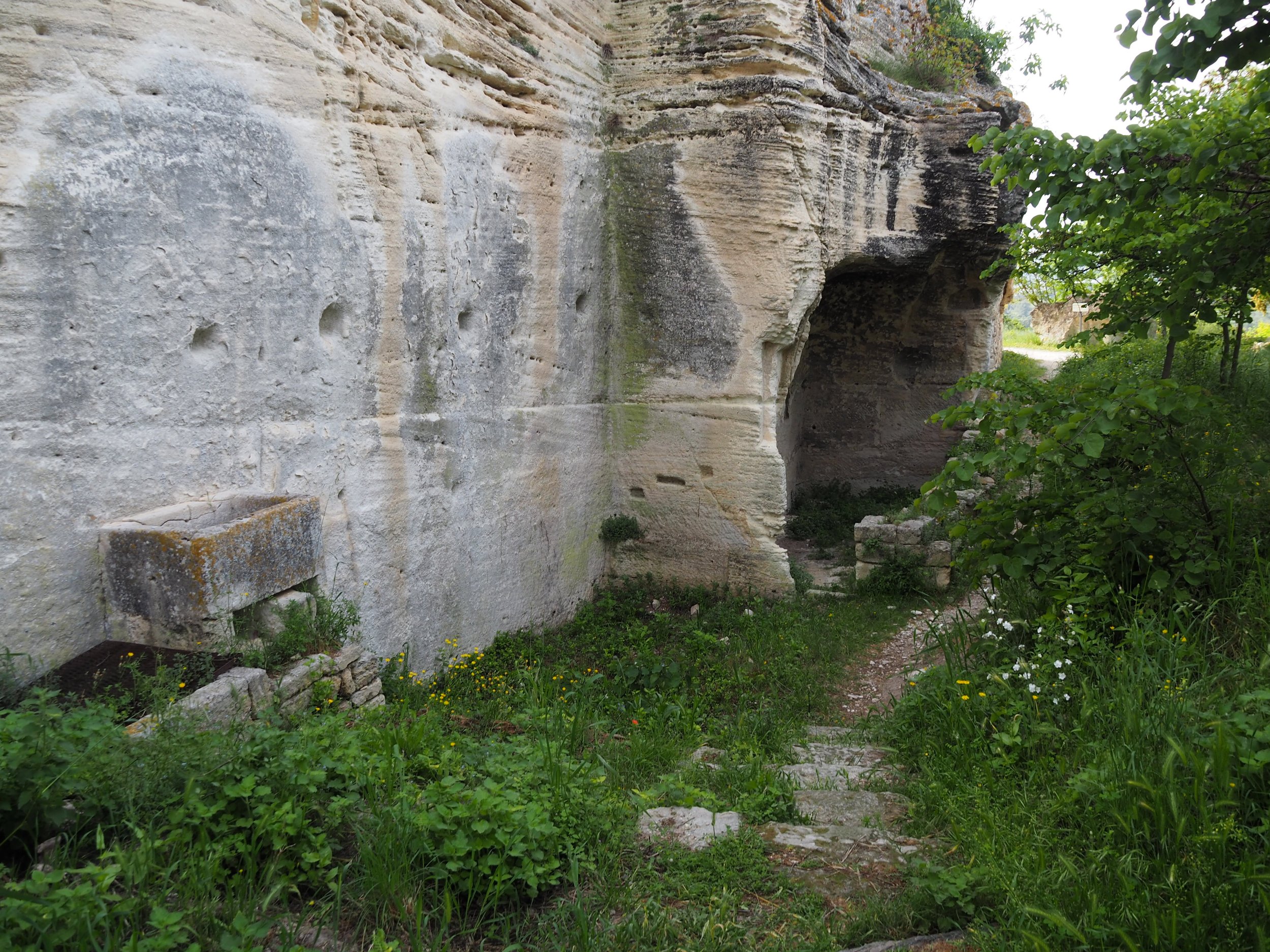
The next day we were making our way to Marseilles via Arles. I’ll discuss them in the next section, but on our way there we had a few stops. The first stop was the Pont du Gard. That’s one of the best preserved Roman aqueducts in the world. It’s very famous and quite fun to see. It’s part of a large parkland and it’s really just a nice walk. We didn’t spend much time, but did enjoy the view. We were then on to the Abbaye de Saint Roman. It was kind of hard to find, with a bit of narrow roads and questionable paths. Once we found the parking lot, it was a good 20 minute walk uphill to the remains of this Abbaye. It was well worth it, though. The views from the Abbaye over the valley were incredible, and the abbey itself is super interesting. It was built partly into the stone, with rooms carved out of the mountain itself. I am glad we visited, but I’d tell anyone thinking about it that it is a hike up there and it is not easy to get around.
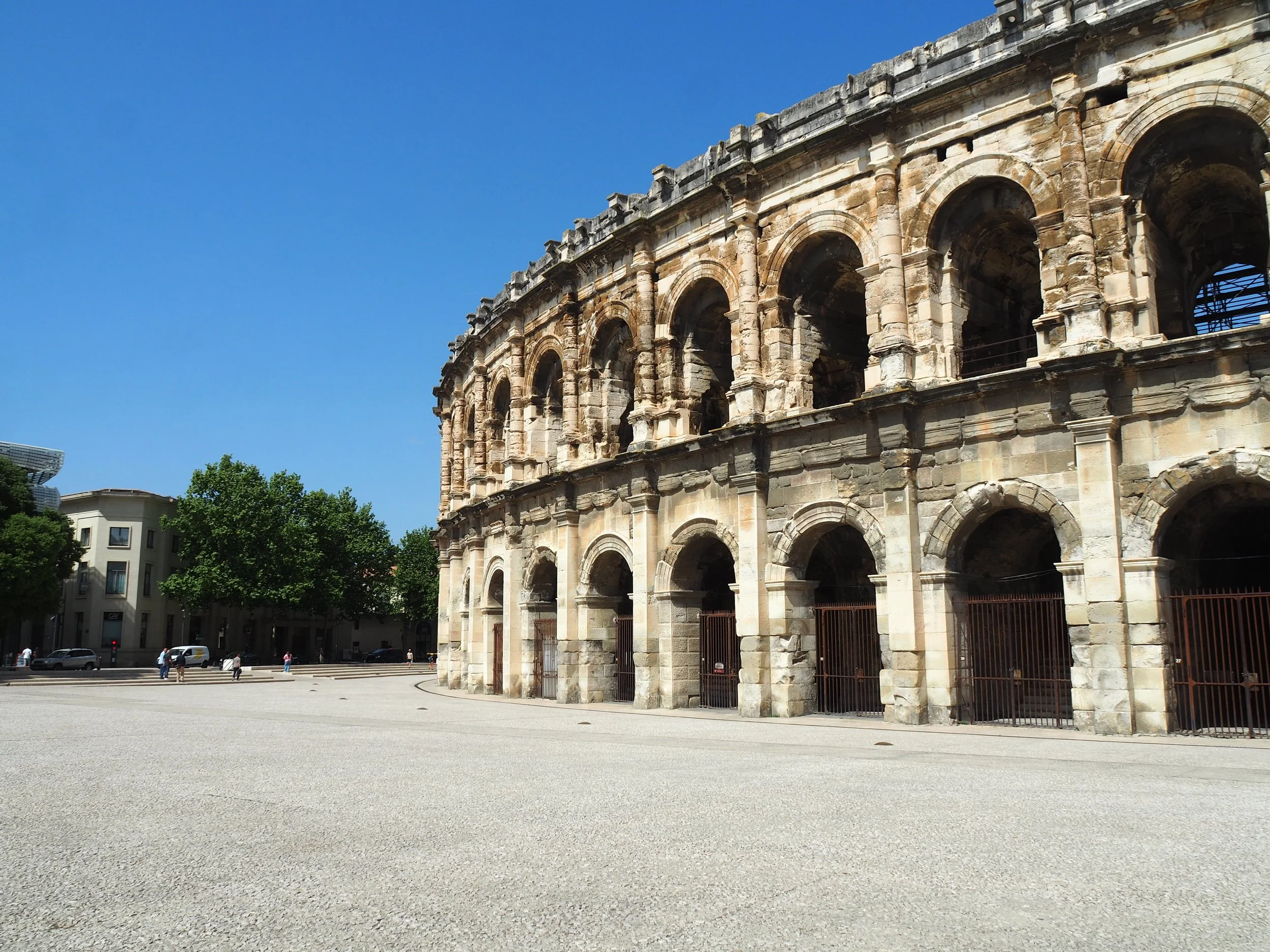
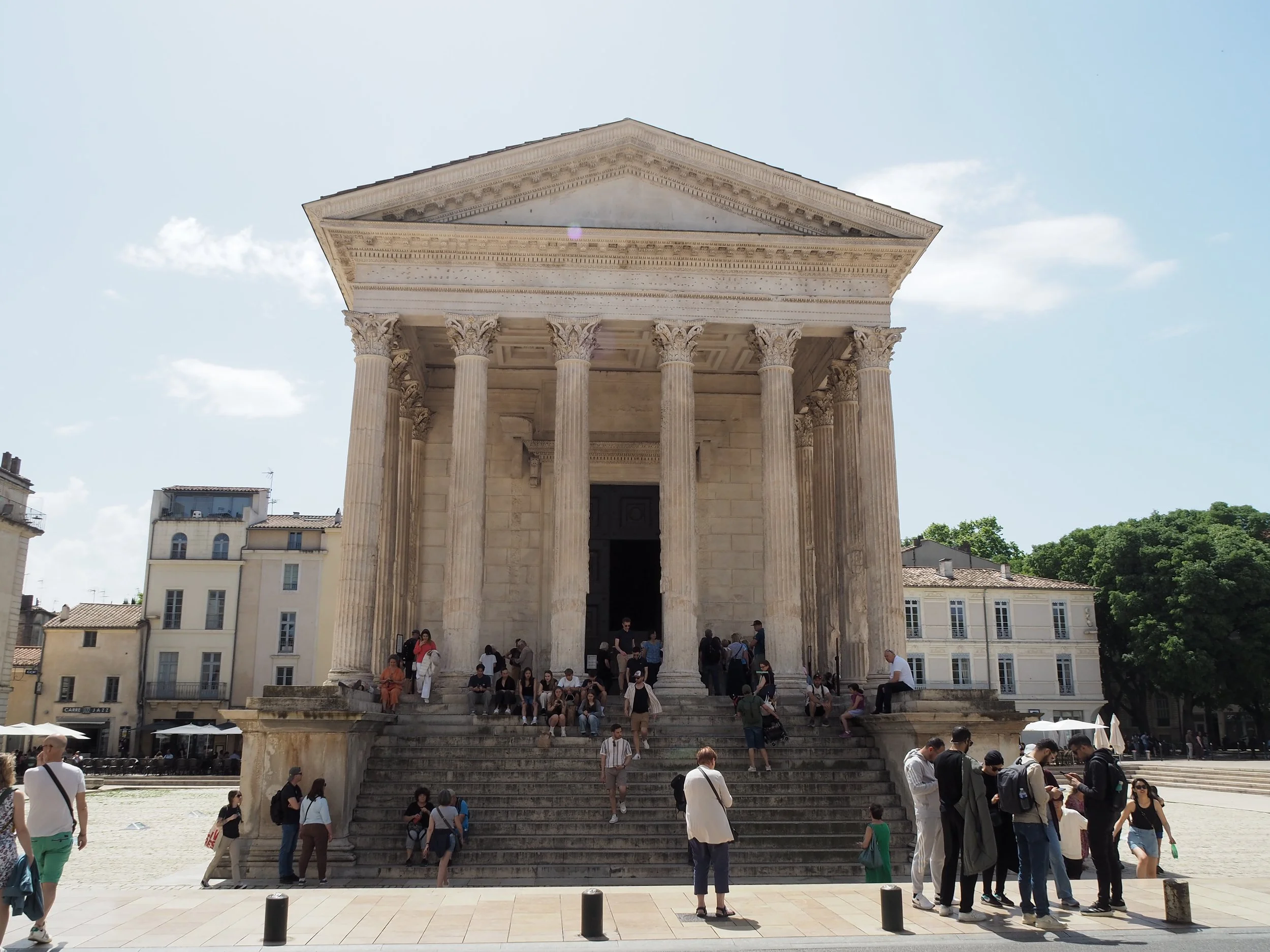
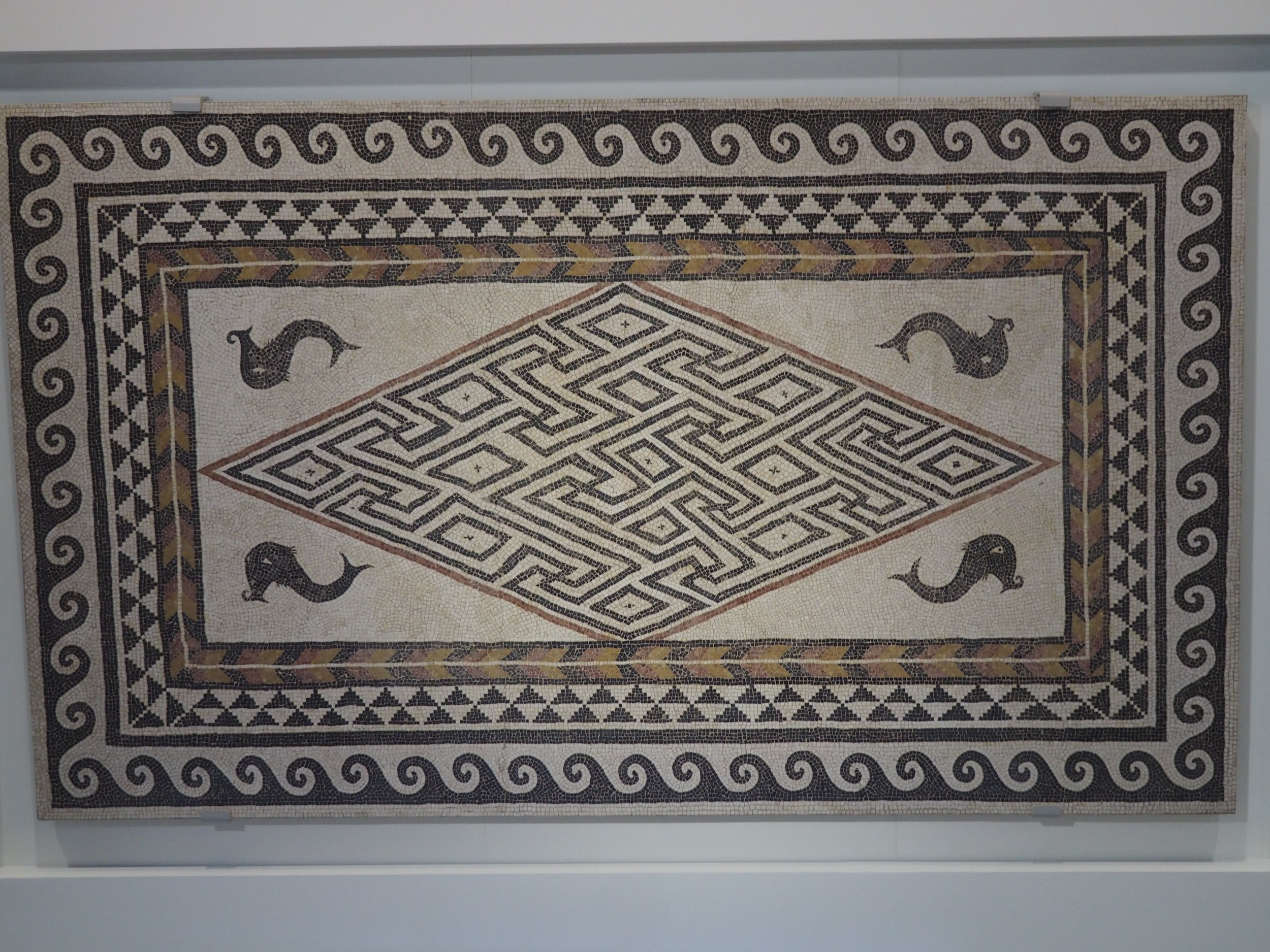
From there we went off to Nîmes. Nîmes is another of those cities with very well-preserved Roman ruins, including a very well-preserved and restored Amphitheater. It is huge and very impressively maintained. I think my favorite part of the city was their Museum Romanité. That is an absolutely incredible museum. Very well organized and with some beautiful artifacts and mosaics. It was definitely worth visiting. Finally we went to the Maison Carrée which is a former Roman temple that was saved from destruction because it was converted to a church. It now has a small number of artifacts, but the preserved columns and friezes are beautiful. You can visit all three on a single ticket so I recommend starting with the museum since the line tends to be shorter there. It allows you to bypass the long lines and the amphitheater.
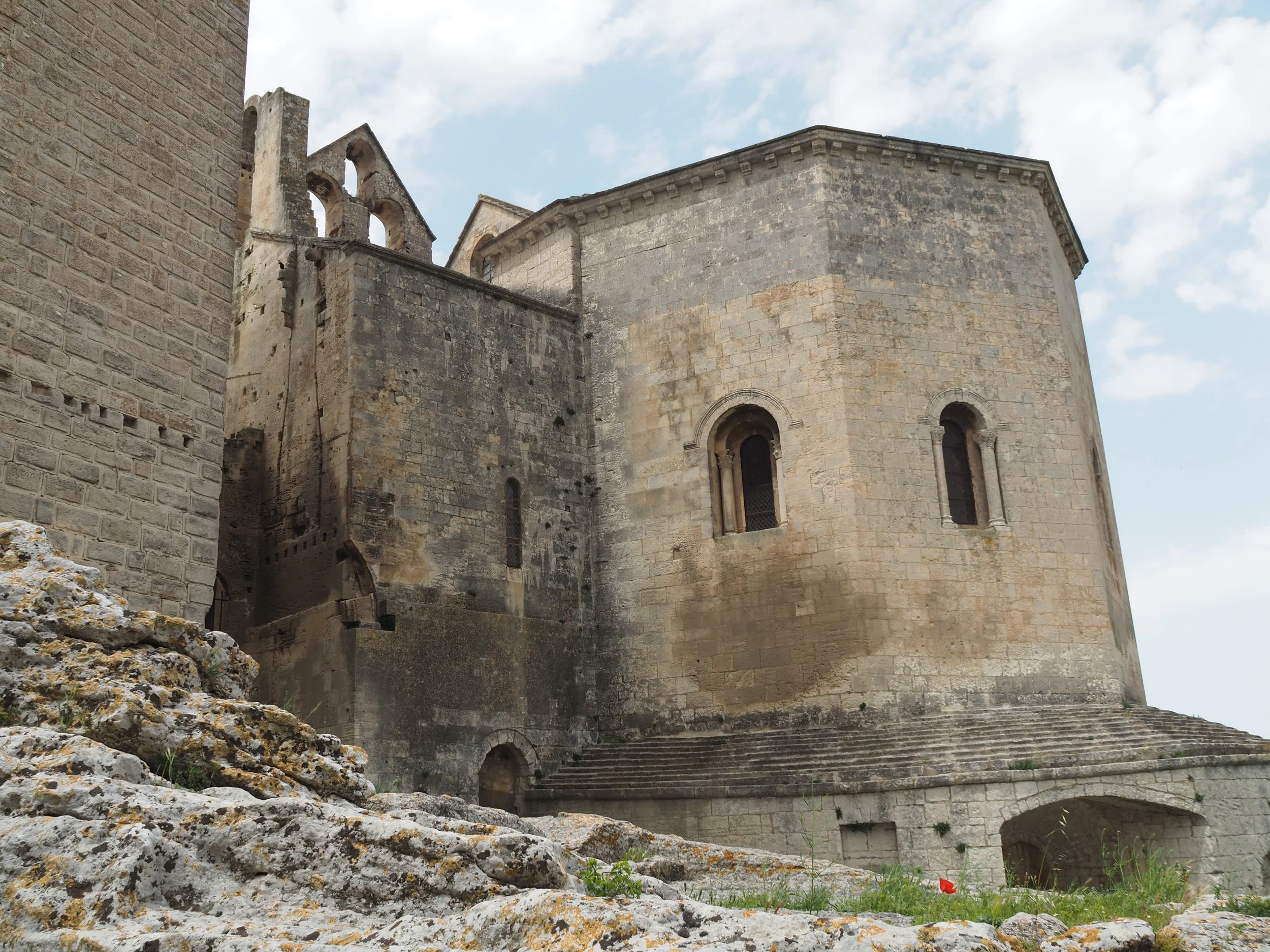
Our final stop before we headed to Arles was the Abbaye de Montmajour. My mom was completely about to veto the stop if it had been a hike like the Abbaye of Saint-Roman, but this was much easier. Parking is just across the street and it’s an easy walk. It’s a very different abbey. It does still have part of the buildings built into the rock below, but most of the building is constructed. There are a number of interconnected buildings including some that have lovely frescoes. It’s not a long visit, but I am glad we stopped in. And after this, we were off to Arles.
Arles and Marseille
Arles was once a major Roman port and still have some very interesting Roman artifacts. I loved it and would visit again. And of course, Marseille is an impressive city that has a fascinating history. These were our last major stops before heading back up to Lyon. On our way up, we stopped by Vaison-la-Romaine, which was such a charming surprise.
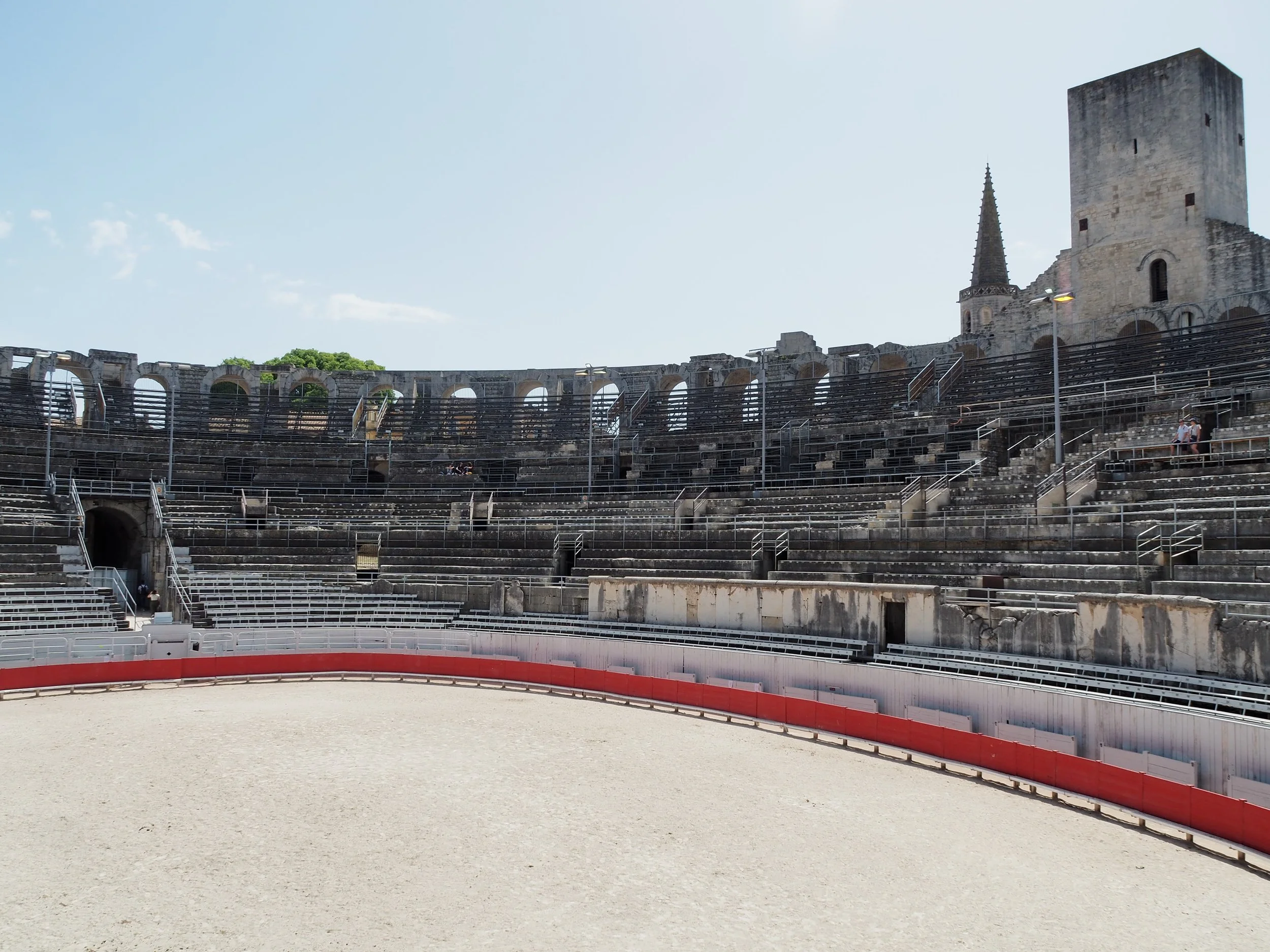
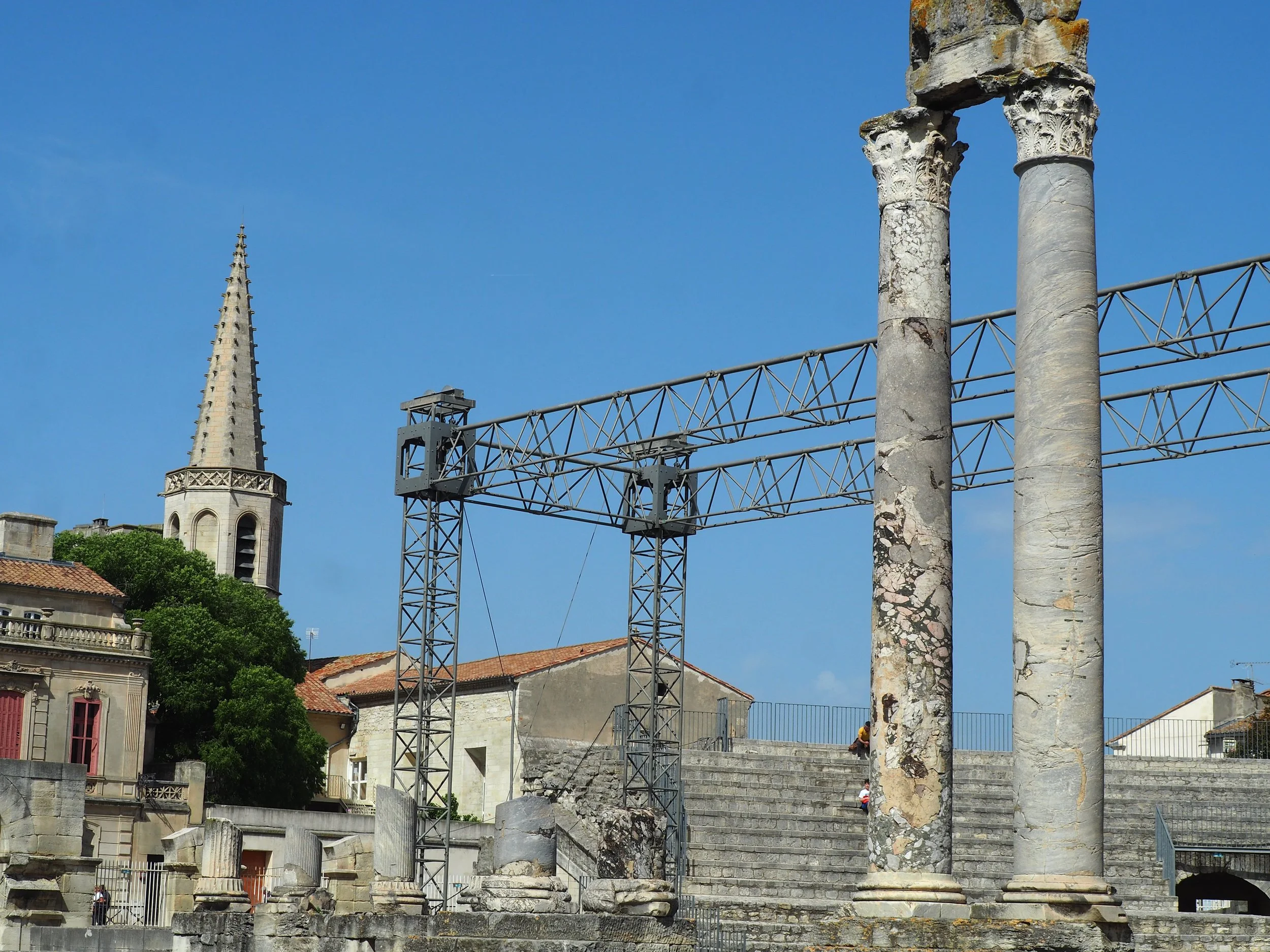
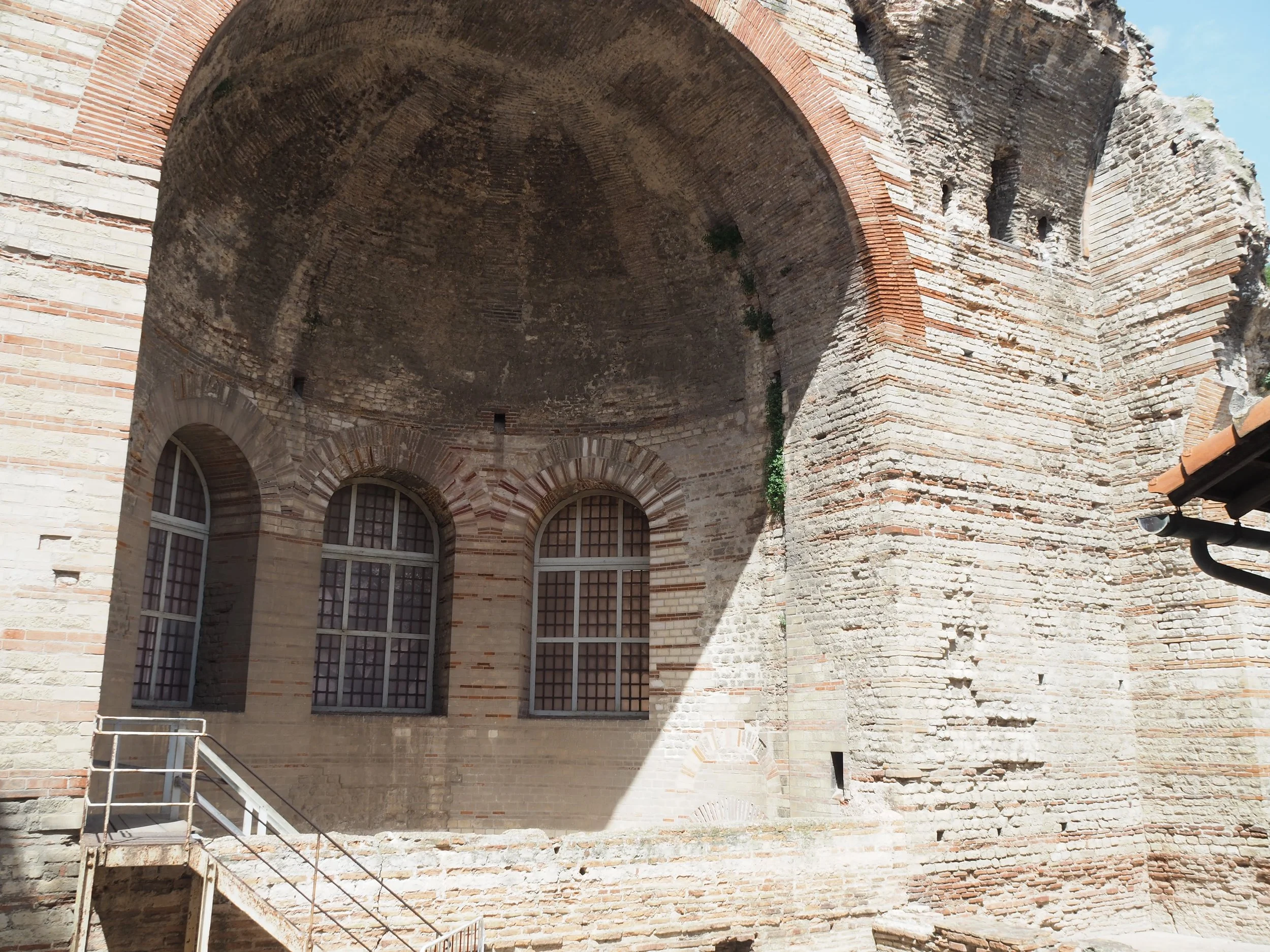
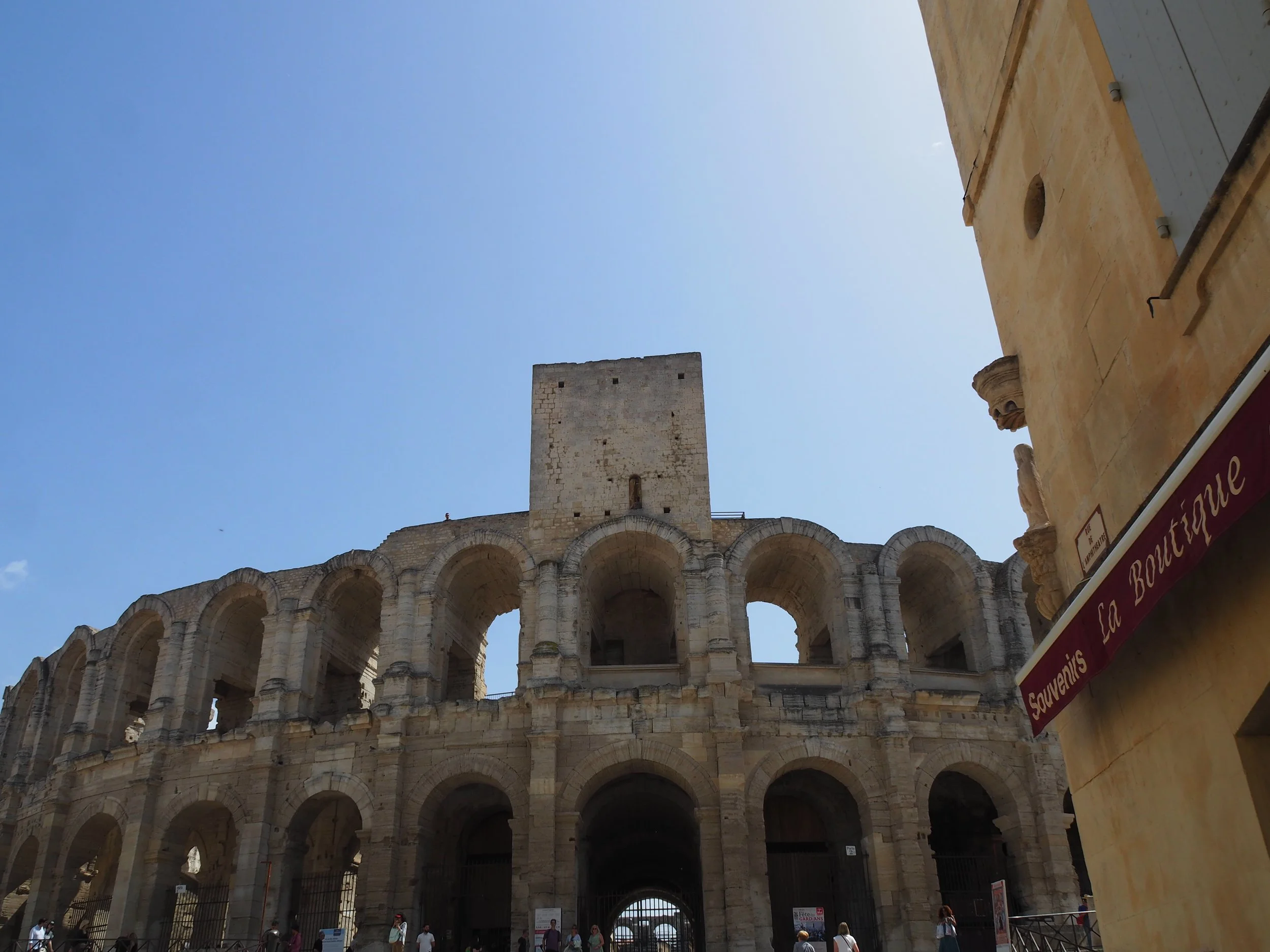
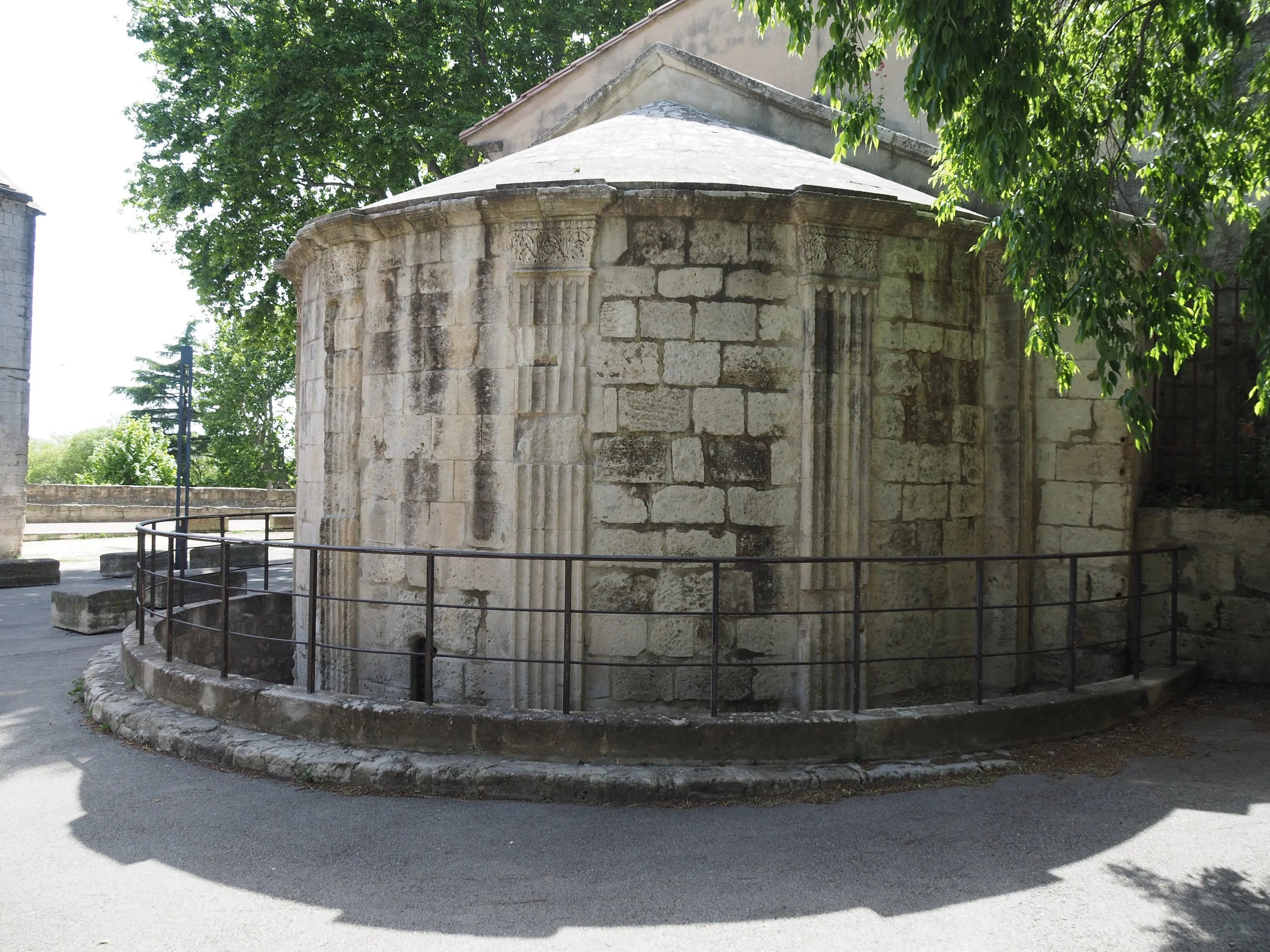
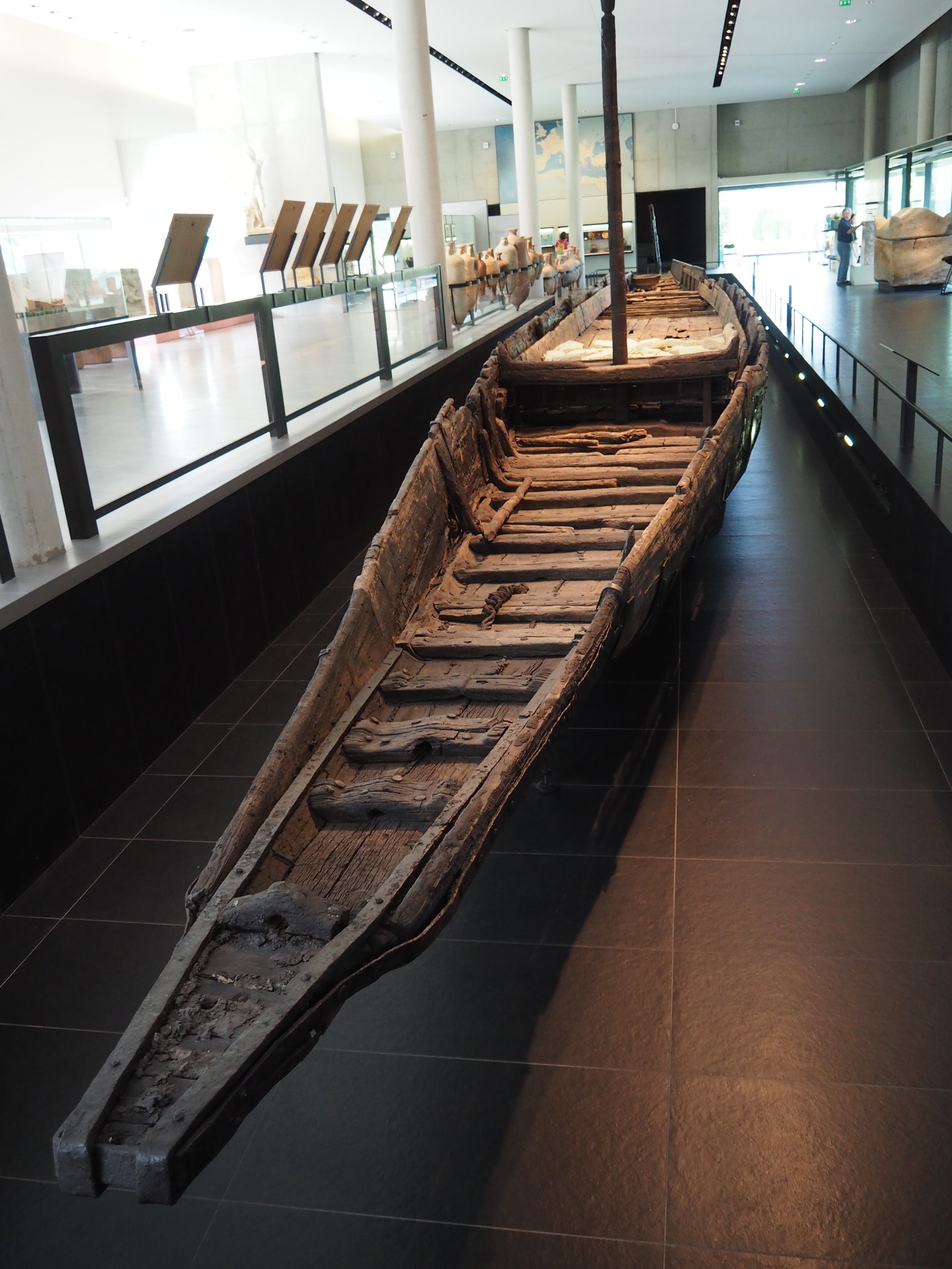
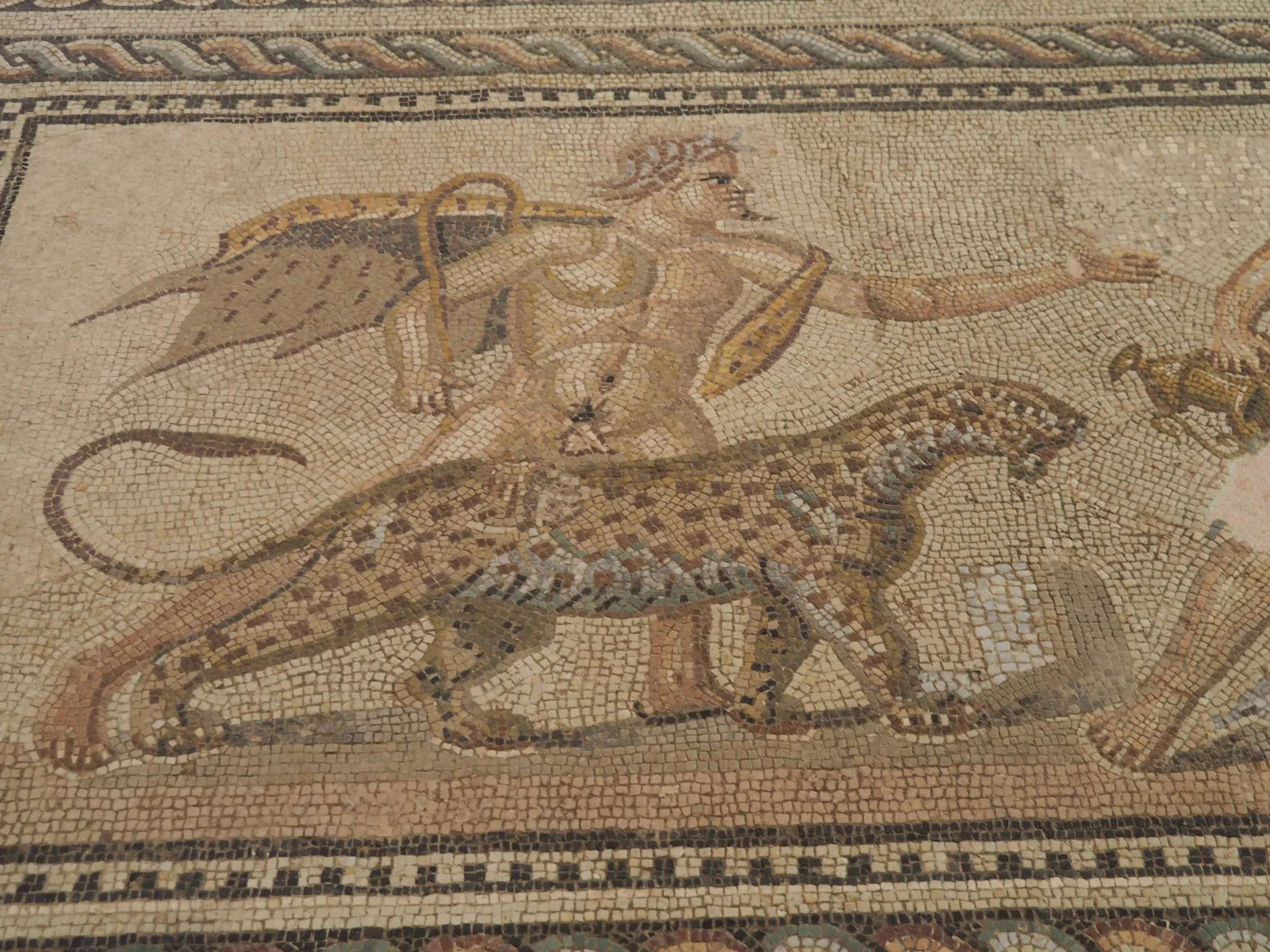
I don’t know that many visitors go to Arles, but I think they should. We parked over near the museum and then headed into town. We started at the Thermae of Constantine. They are pretty well-preserved for roman baths, though a bit small. The walk to them along the river was lovely and the baths themselves were a nice stop. From there we stopped by the Roman Theater, another very well-preserved Roman Theater. We stopped for lunch nearby and then headed over to the amphitheater. Another very well-preserved and restored roman building. It’s kind of weird typing this at a certain point. I love visiting Roman sites, but at a certain point, well-preserved Roman theaters and amphitheaters become hard to describe in a way that make them sound unique. This is because they aren’t unique. They are but they were all designed to be similar because they were intended to be the same as the others. Some are larger and some smaller, and of course, some are better preserved and some not as much. I’ll go to every one I can but I’m losing ways to describe them. Worth visiting in Arles if you’re there, though!
The Saint-Trophime Church and Cloister are nice to visit as well. They have some very fun sculptures in that medieval style that can be very entertaining. The cloisters have a lovely interior gardens and some beautiful art.
Our final stop in Arles was their museum. When we first parked, we were worried they weren’t open because something about the blue hue of the exterior made the place look closed. But it wasn’t and I’m really glad that we visited! They have a preserved roman river boat, something that rarely is found and even more rarely is well-preserved. It’s a huge museum with some excellent mosaics. It’s well organized and worth a visit, especially if you are interested in unique roman artifacts like the boat.
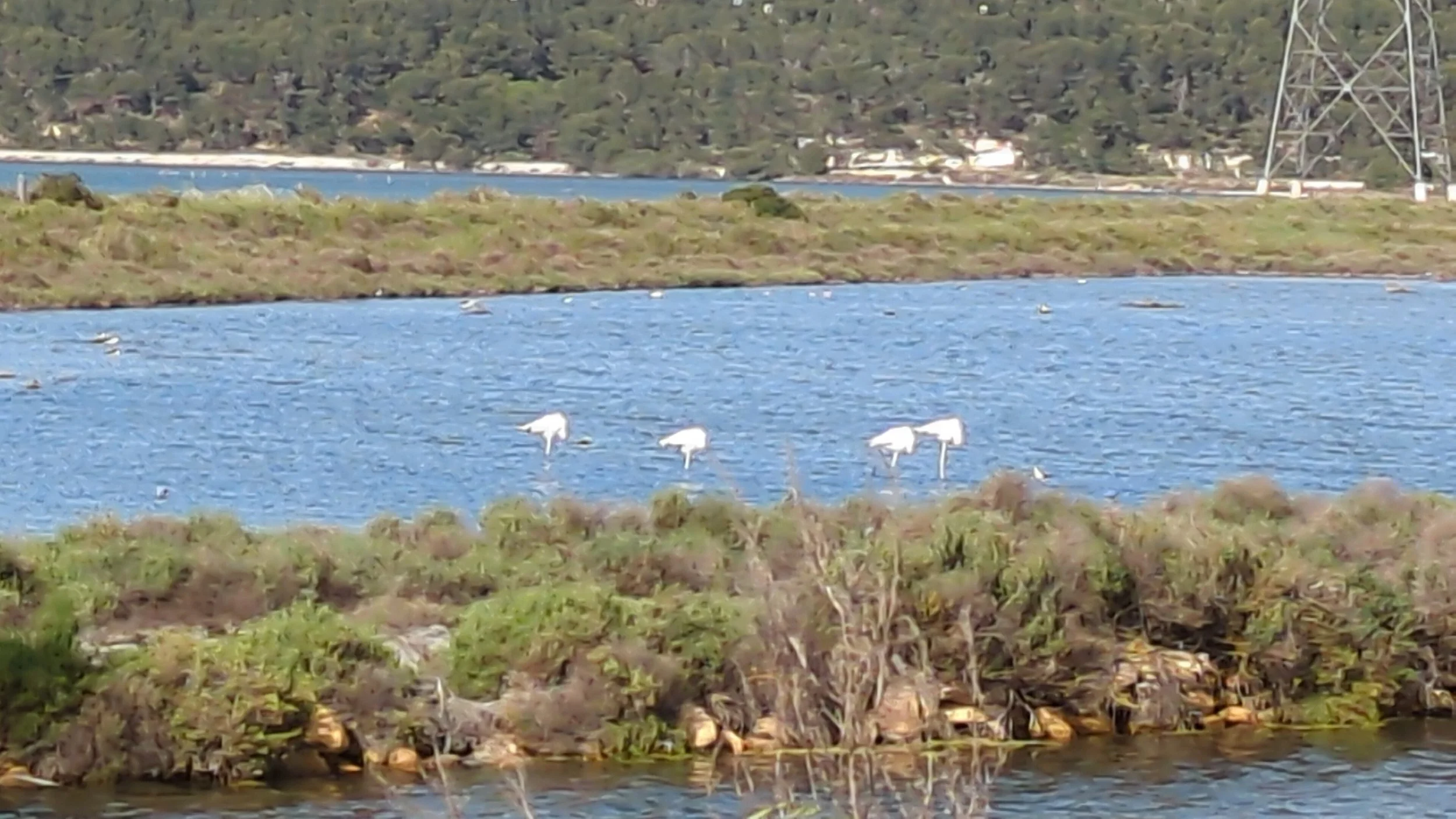
On our way down to Marseilles, we did stop by and visit the flamingos. You can park at the Family Park Fos sur Mer and walk to the lagoon. There in the waters we saw a number of flamingos. It was worth a stop to me, but I’m realizing that I’m starting to try to see flamingos in the same way that I’m trying to visit Roman ruins. If I can stop in and see them, I’ll totally do that.
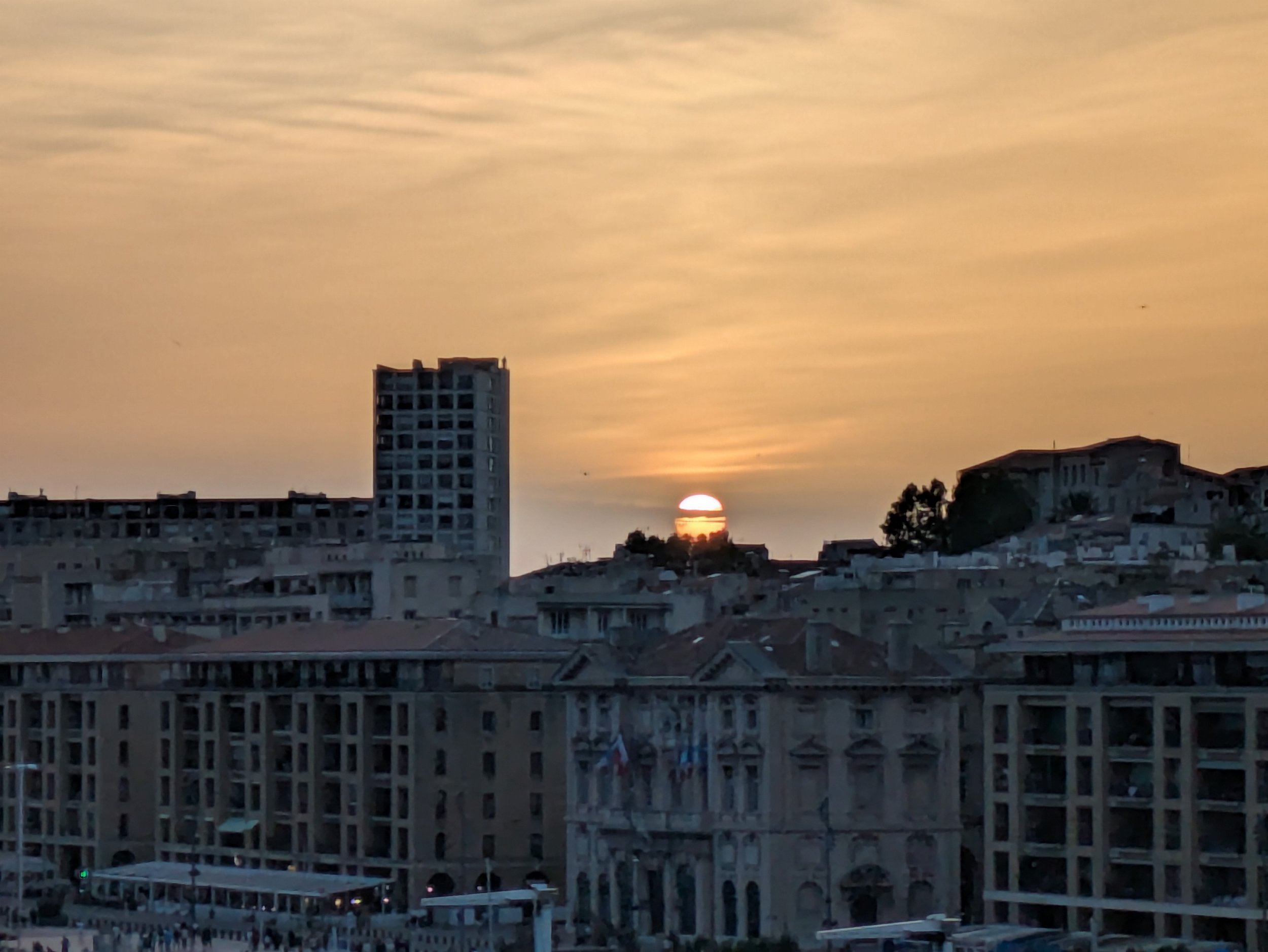
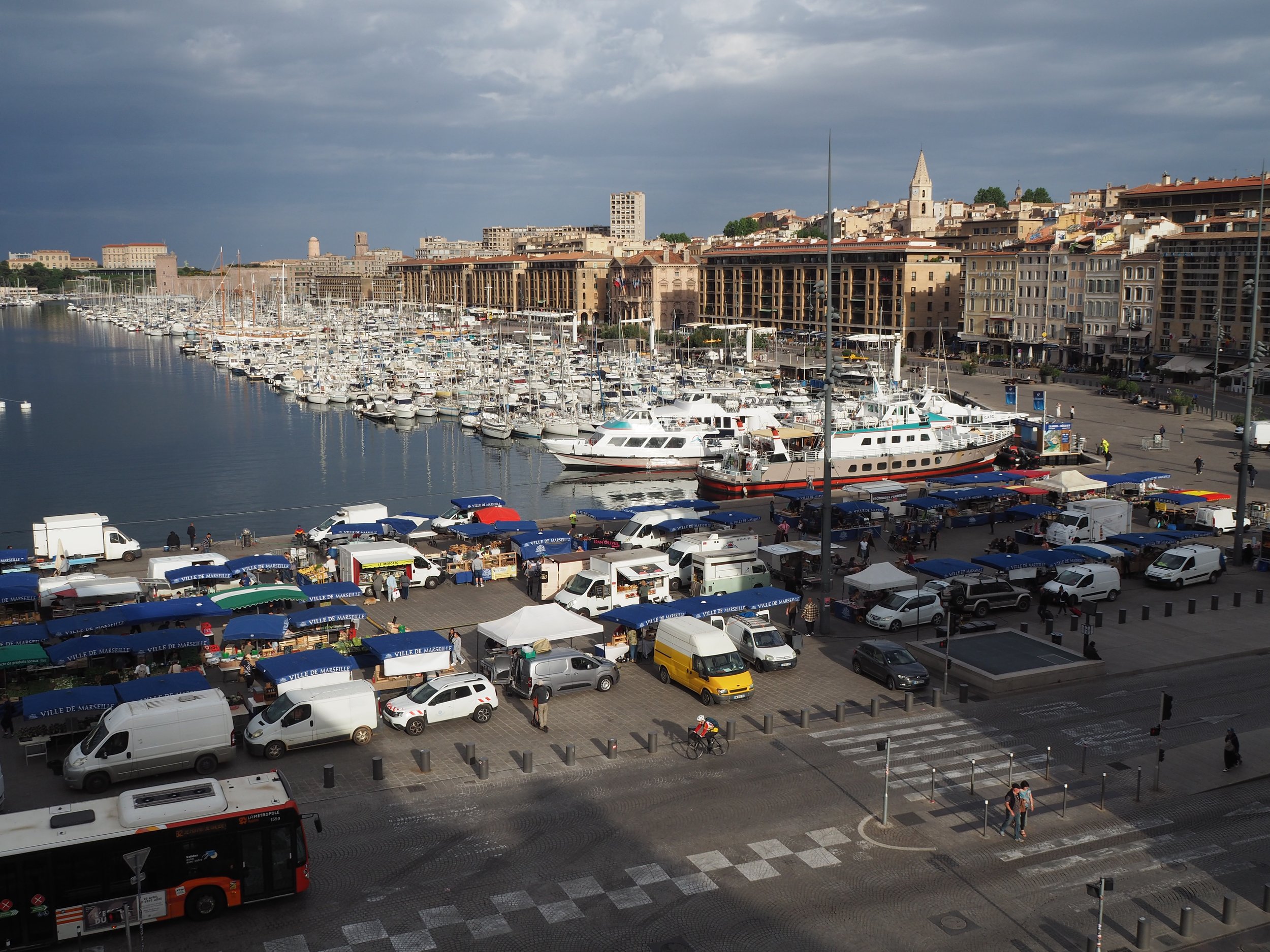
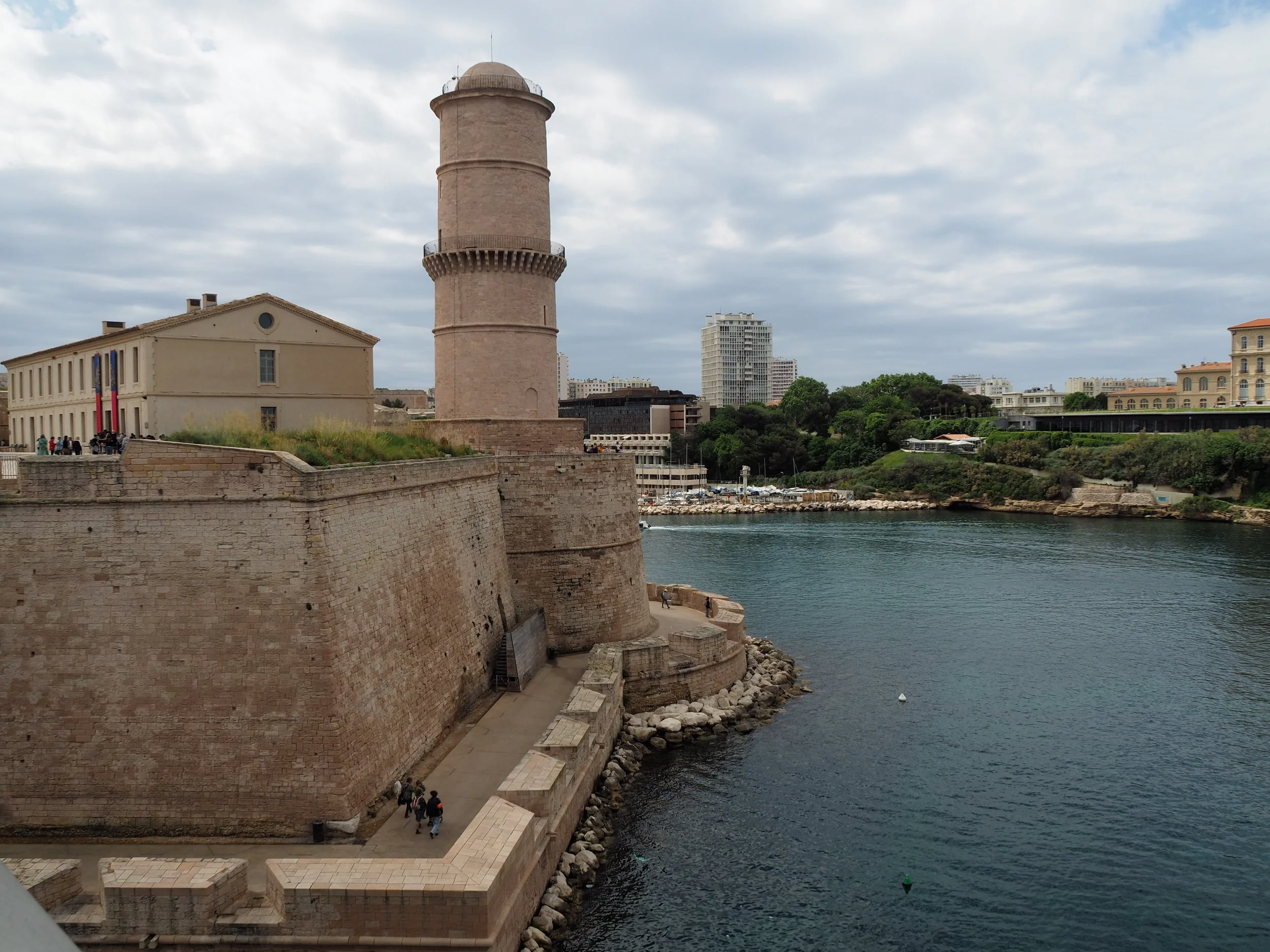
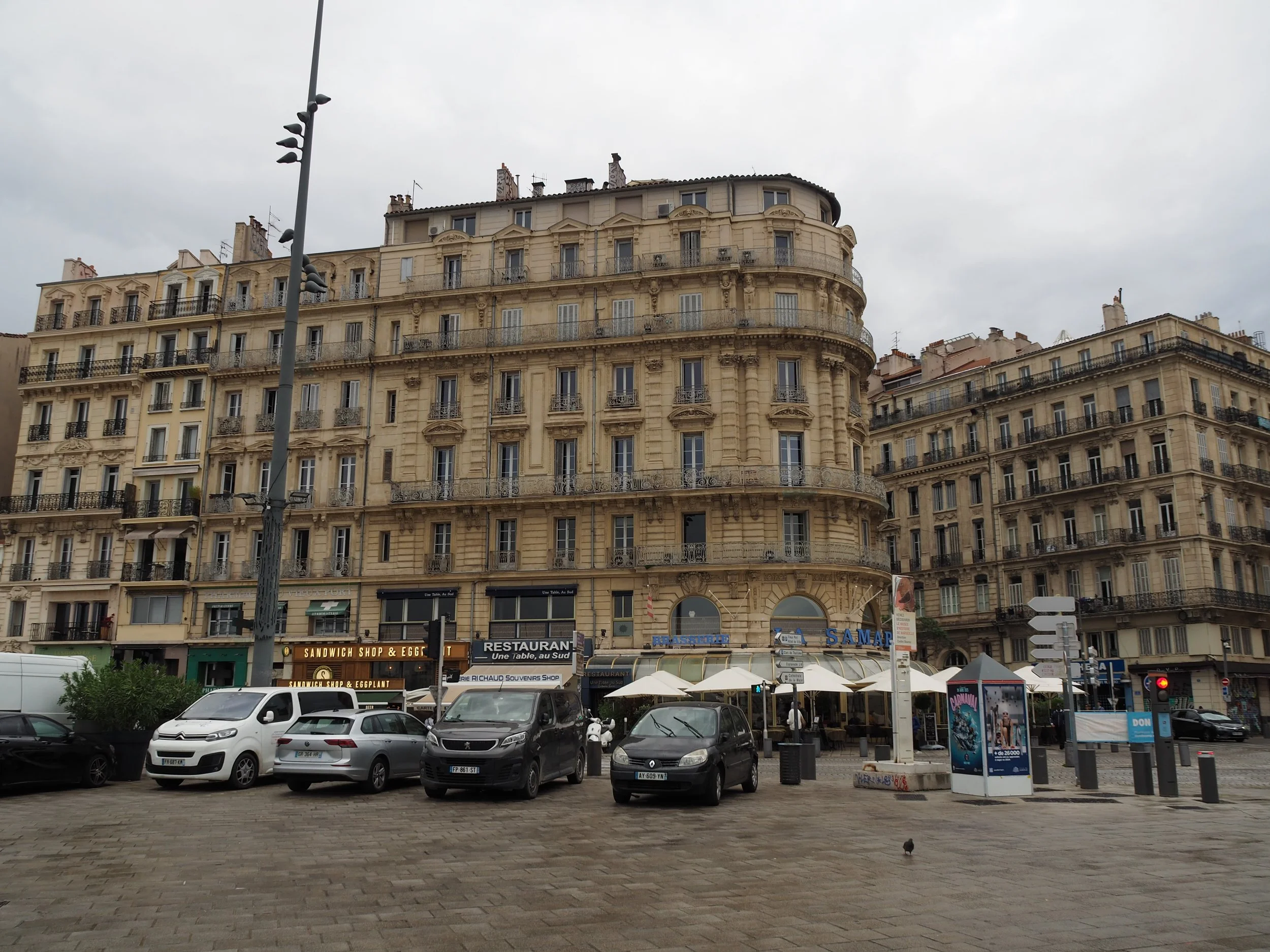
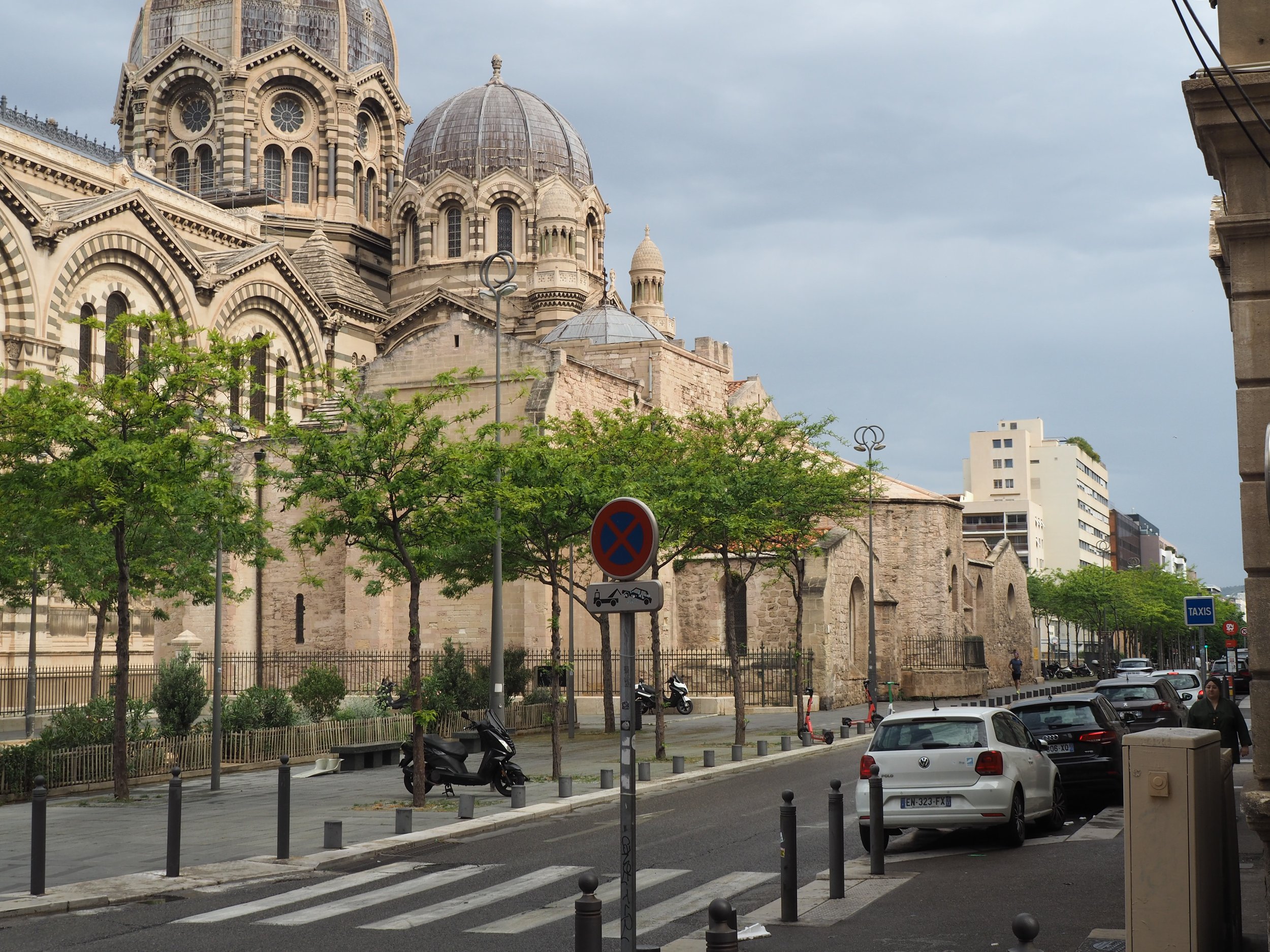
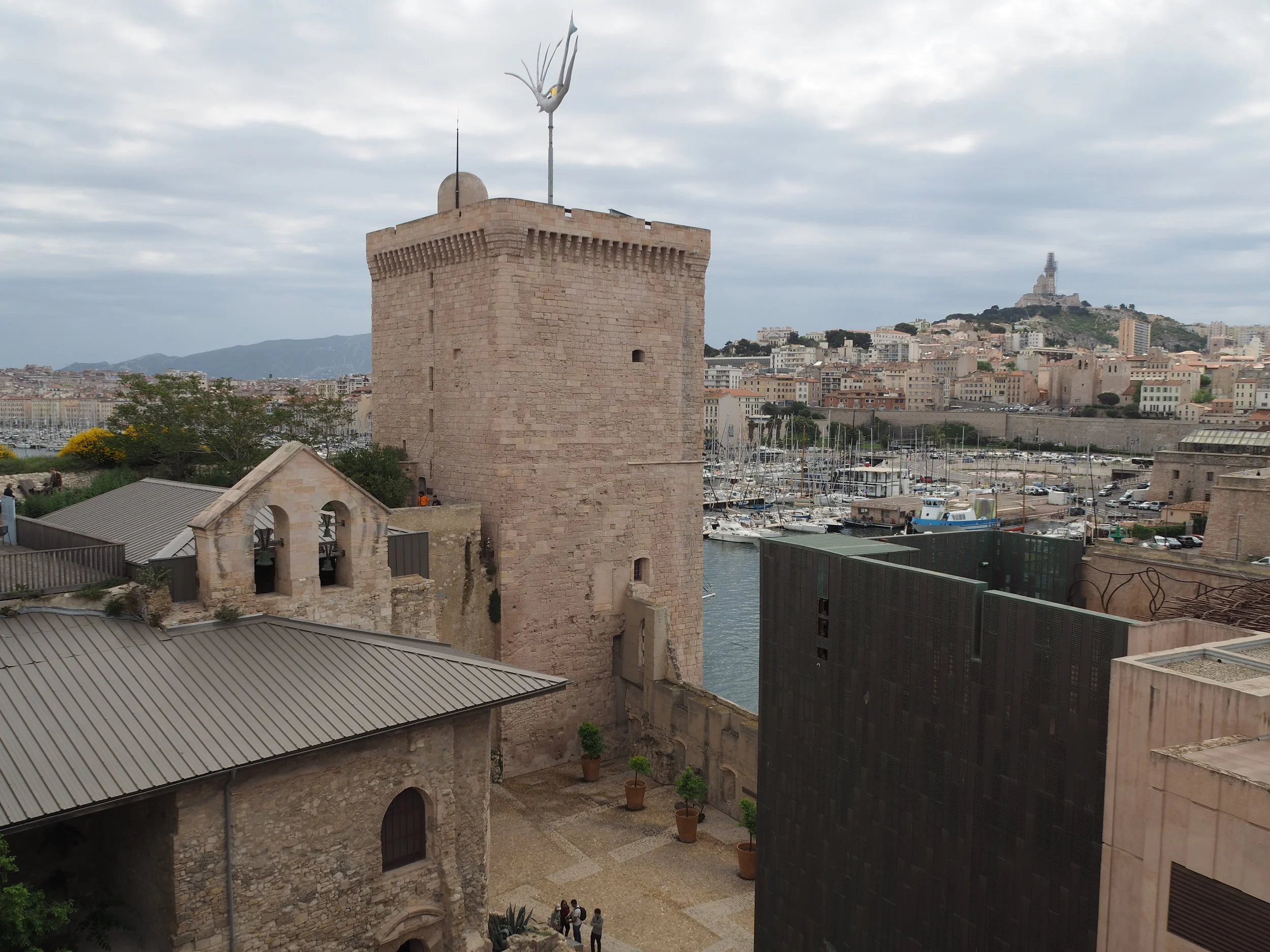
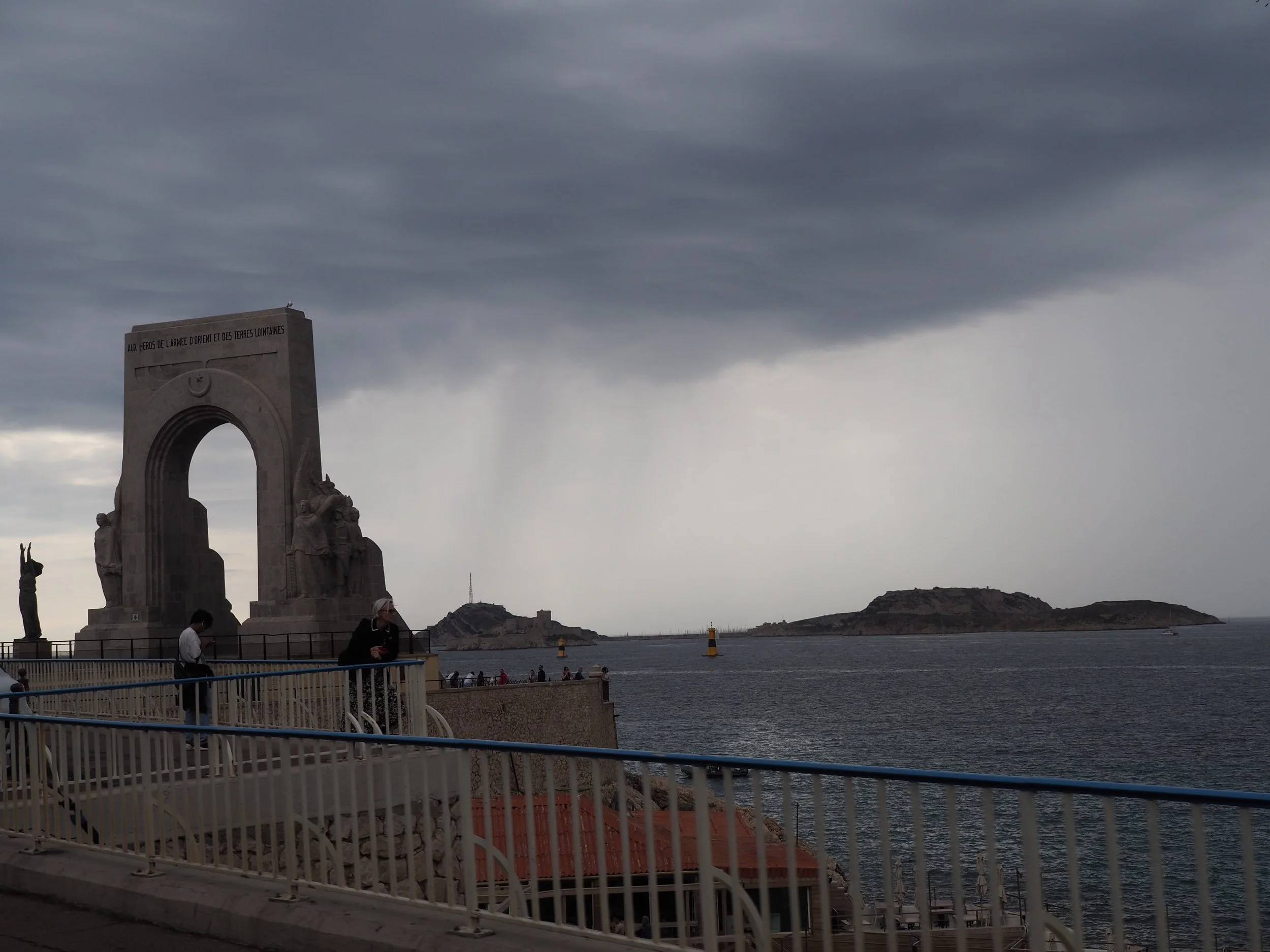
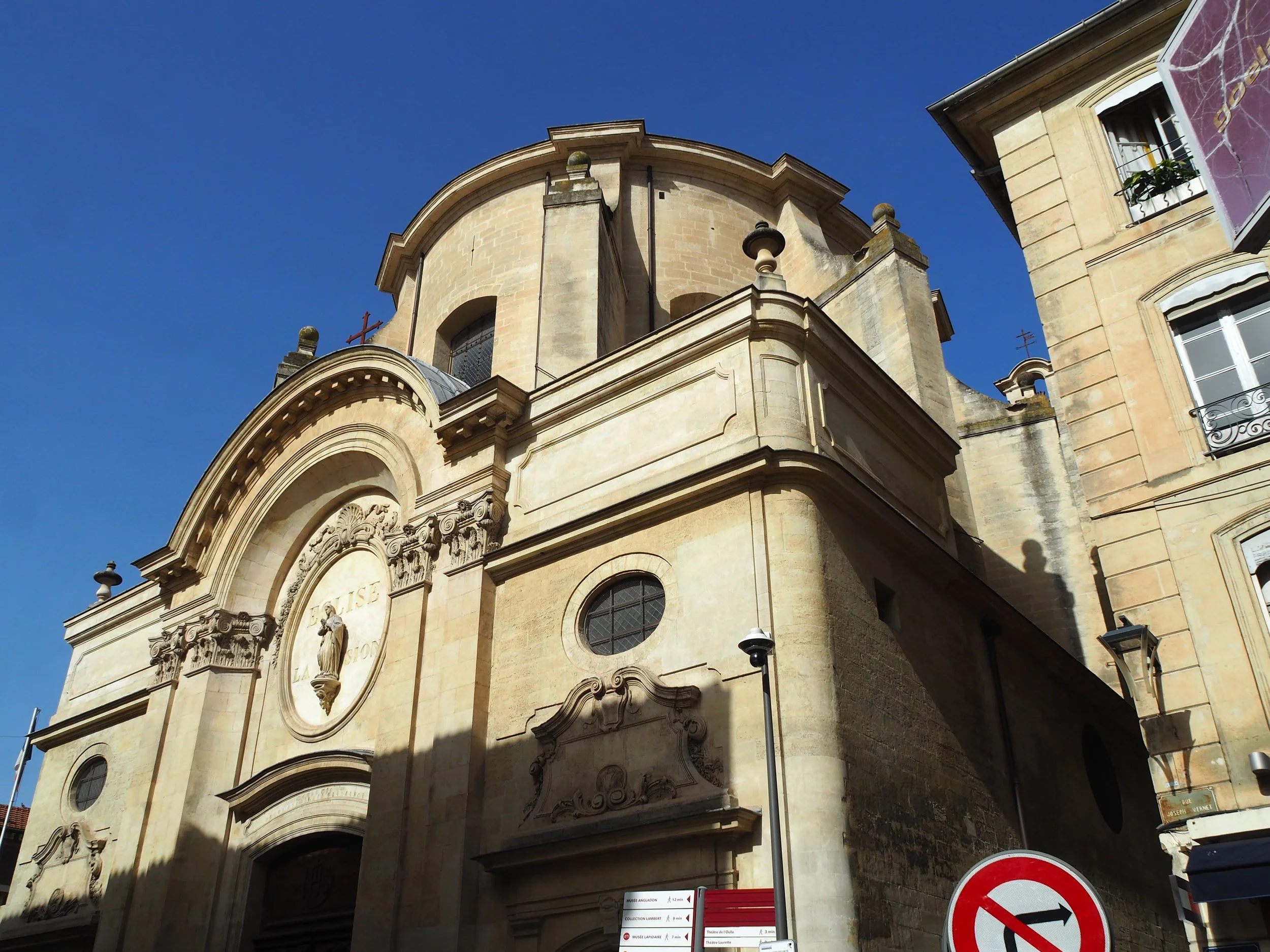
Marseille itself is a bit of a challenge and I have sort of mixed feelings about it. The traffic is so bad and trying to get to our hotel was very challenging. We did see the wild goats on the way into the city, so that was fun. Our hotel, the Grand Hotel Beauvau Marseille Vieux-Port was lovely with great views onto the water. I found that the food was a bit more expensive and not as great as in other places, but I do wonder if it was also that the weather had turned to colder and rainy, which made the whole thing a bit less fun. Our walking tour was very interesting. The city has been such a major port, and visiting the Fort Saint-Jean was really interesting. Another thing our guide recommended to us was taking the little tourist train to Basilica of Notre-Dame de la Garde, which is lovely inside and has wonderful views. Our Tours by Locals guide, Jean Gabriel Garcia, was very informative and really knew the ins and outs of the city. One thing he took us to which we wouldn’t have done otherwise was the olive oil chocolate shop, where I tried their hot chocolate. It was great considering the weather.
Another issue we had was that I had booked us on a boat tour, but they changed the location to meet the boat and we missed it. It was just very frustrating.
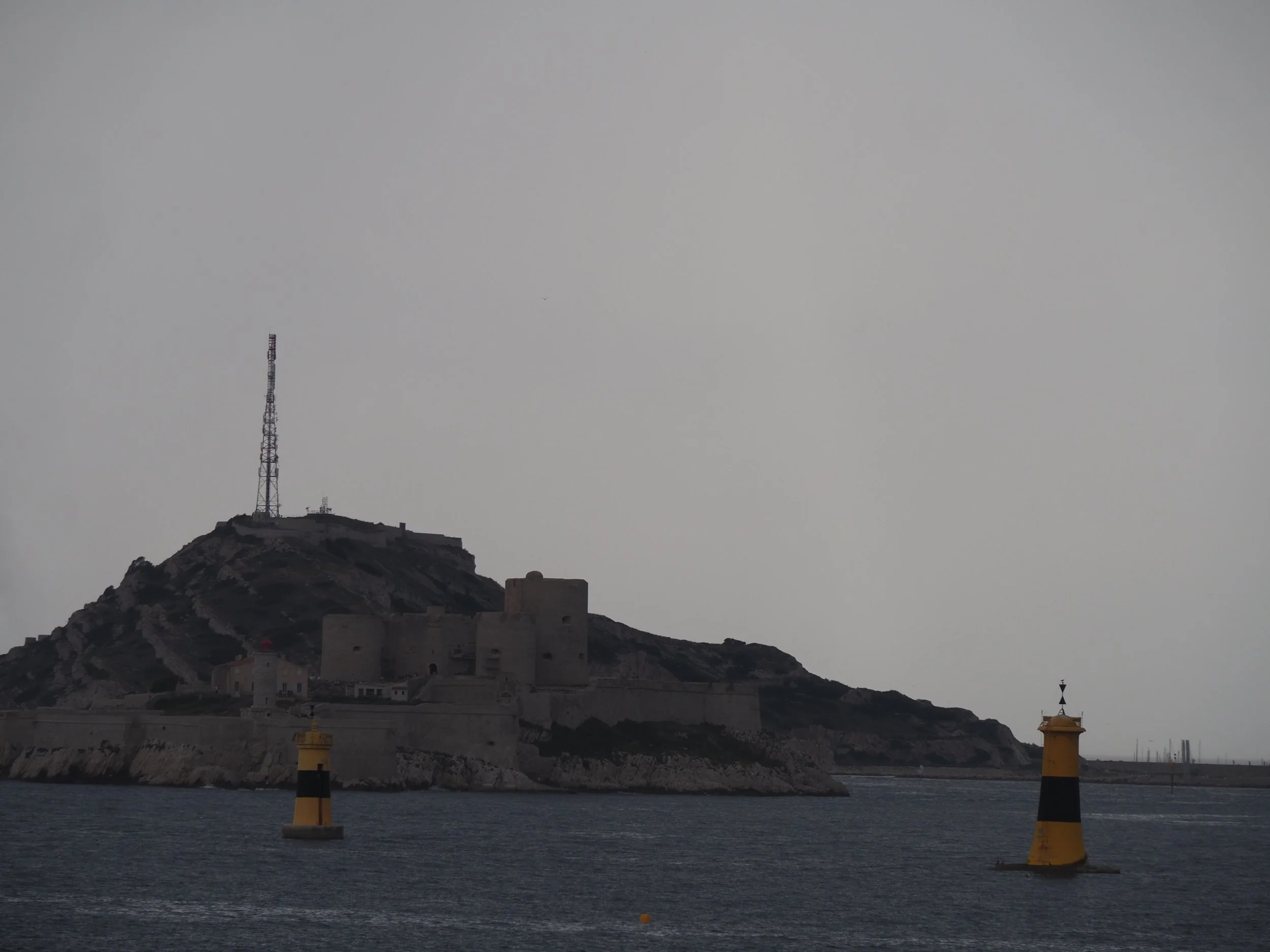
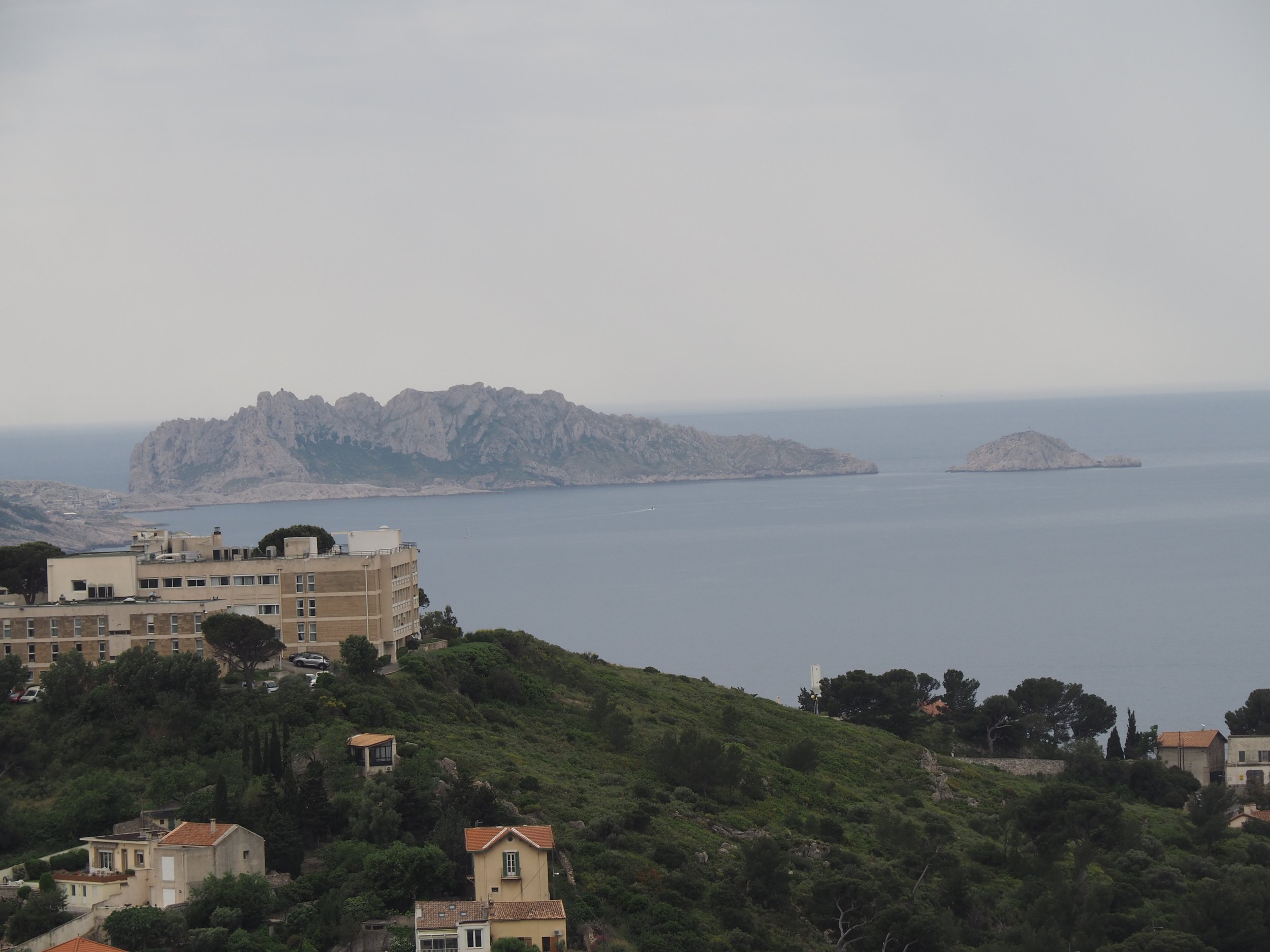
Something that I did find really interesting in visiting Marseille was seeing Chateau d’If. If you have read the Count of Monte Cristo, you’d be familiar. I always thought it was really far away from the city, in the middle of the Mediterranean, but it’s right there. You can see it very easily from the city itself.
So I am unfortunately being brief about Marseille. Don’t hold that against the city. The combination of the weather, some problems with plans, and general travel stress caused me to not be able to enjoy this portion of the trip as much as I usually would. I’m glad we visited. I don’t know if I’d go back, but it was worth a visit at least once.
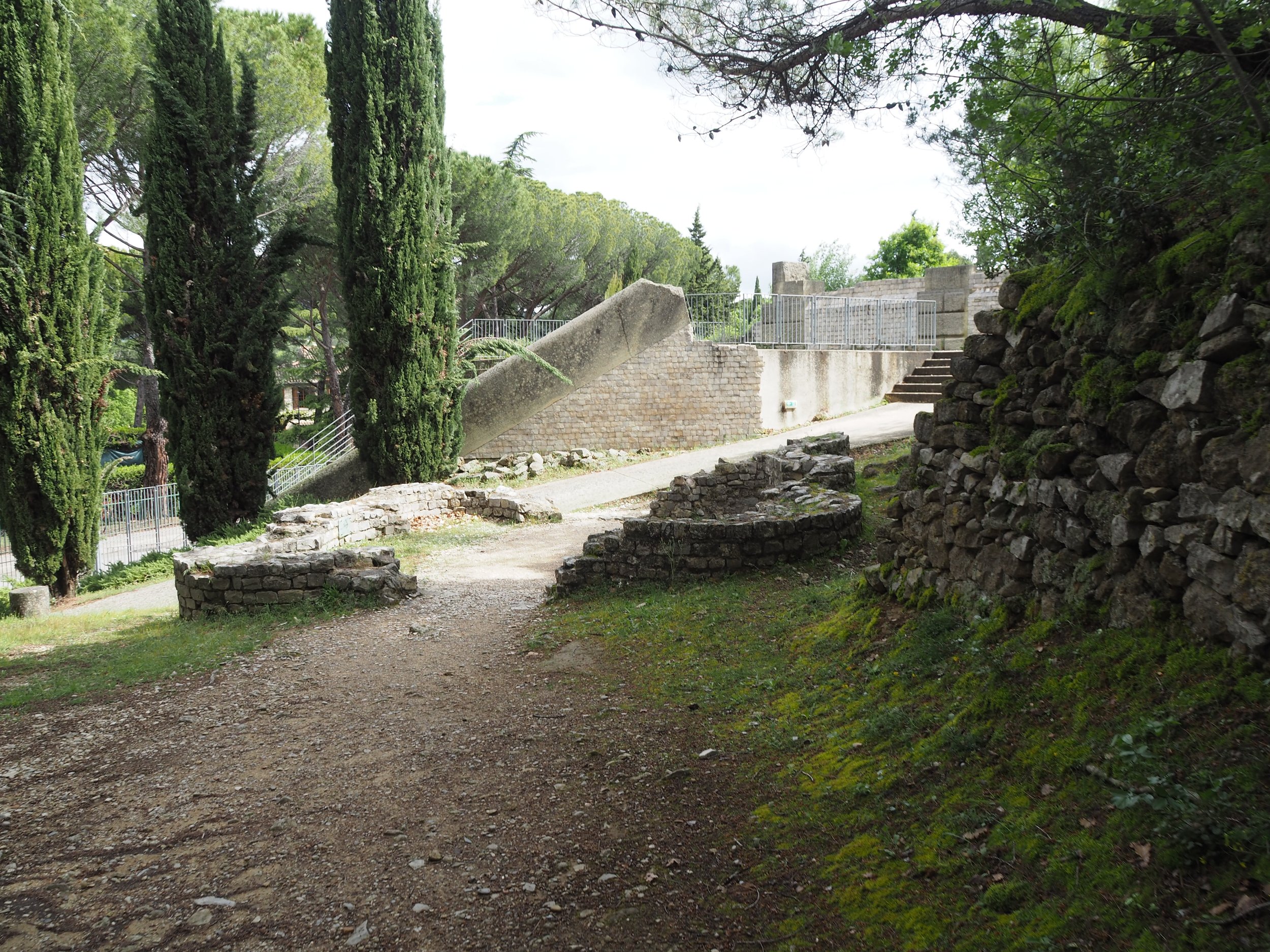
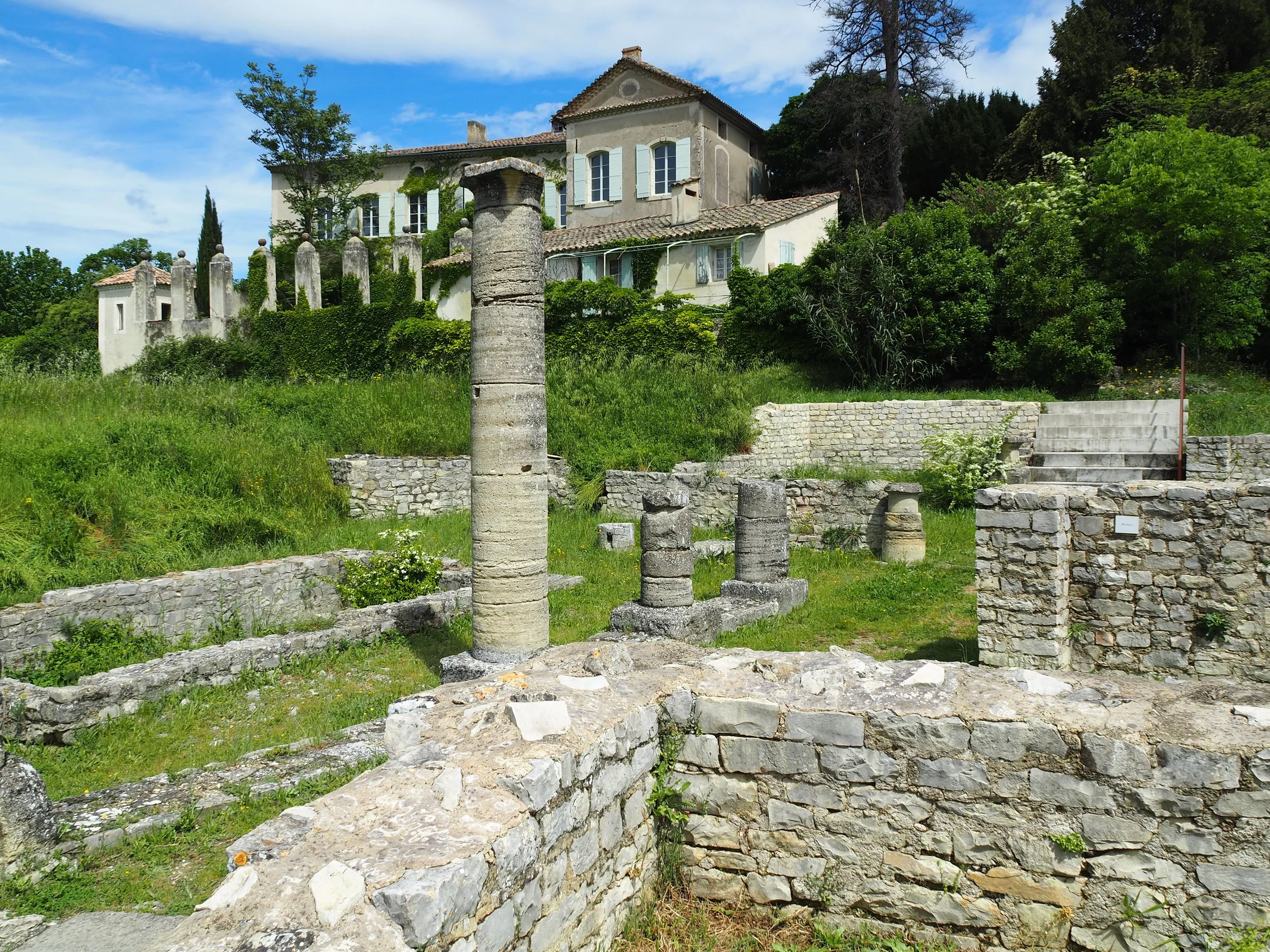
The day we headed back to Lyon was a bit better, though once again mixed for weather. We stopped not far out of Marseille at Vaison-la-Romaine. We parked over by the roman bridge and walked into the charming old city. The cobblestones led us over to the two sections of the city that had the roman remains. There is parking right by the site, but I’m glad we parked where we did. The main section had some nicely presented sections and a nice little museum. It wasn’t anything really beyond what is seen in other places but in some ways I appreciated how it was less restored. The other section was smaller but had some nice mosaics in preserved roman houses. We had lunch at Le Forum, and I think we were the only tourists around.
After that, we had planned to stop in Vienne, but didn’t due to the weather. I want to go back since I’ve read more about medieval and early medieval Europe and there are some spots I want to visit there. We returned our car at the train station in Lyon and headed back to my new favorite hotel in Lyon, Villa Florentine. It’s up overlooking the city and has some beautiful art inside that dates back to when it was a convent. I want to go back. Also, it’s an easy walk from there down to the lower city for a traditional Lyonnaise meal. We then took the Funicular back up and had an easy walk down to the hotel.
We took the train back to the Paris airport and then headed home. It was in many ways an excellent trip, but was challenging in other ways. As I said, I’ve taken this long to do this post due to some mental health issues. Travel can take you away from worry but can create its own stress, especially if you feel like it’s your job to make the trip perfect. But I hope this blog helps you plan your own trip.